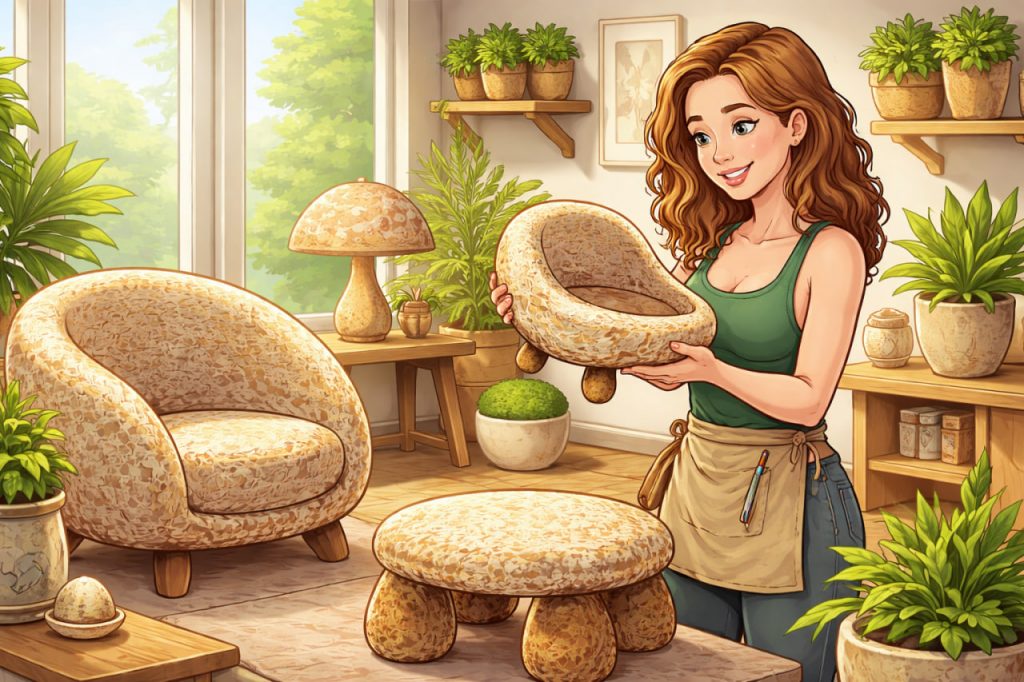
Furniture made from mushrooms may sound futuristic, but it is already becoming a real and promising alternative to traditional materials. At the center of this innovation is mycelium, the root-like network of fungi that grows underground and binds organic matter together. Designers and material scientists have discovered that mycelium can be cultivated, shaped, and dried into strong, lightweight structures suitable for furniture production. Unlike plastic or conventional composites, mushroom-based furniture is biodegradable, low-energy to produce, and environmentally responsible. As sustainability becomes a priority in architecture and design, mycelium furniture is gaining attention as a symbol of a circular economy. Understanding how this material works reveals why fungi may play a major role in the future of interior design.
What Is Mycelium and Why It Is So Strong
Mycelium is the vegetative part of fungi, consisting of vast networks of microscopic fibers that naturally grow through organic substrates such as agricultural waste. As it expands, mycelium acts like a natural glue, binding materials together into a dense and resilient structure. When growth is stopped through heat, the resulting material becomes dry, stable, and surprisingly strong. Scientists compare its internal structure to lightweight foams or cork, offering an excellent balance between durability and flexibility. According to materials researcher Dr. Elena Brooks:
“Mycelium combines biological intelligence with structural efficiency,
creating materials that are grown rather than manufactured.”
This natural strength makes it suitable for chairs, tables, shelves, and even modular interior systems.
How Mushroom Furniture Is Produced
The production process of mushroom-based furniture is fundamentally different from traditional manufacturing. First, organic waste—such as sawdust or straw—is placed into molds shaped like furniture components. Mycelium is then introduced and allowed to grow for several days or weeks, filling the mold completely. Once the desired shape and density are achieved, heat treatment stops growth and stabilizes the structure. The result is a solid object that requires minimal additional processing. Because the material grows at room temperature, energy consumption is drastically lower compared to metal, plastic, or concrete production. This process also allows designers to create custom shapes without cutting, drilling, or welding.
Environmental Benefits and Sustainability
One of the most compelling advantages of mushroom furniture is its environmental performance. Mycelium materials are biodegradable, compostable, and produced from renewable resources. Unlike plastic furniture, they do not persist in landfills for centuries, and unlike wood, they do not require cutting down mature trees. Additionally, mycelium production emits very little carbon dioxide, making it attractive for climate-conscious design. Many experts see mushroom furniture as part of a broader shift toward bio-based materials that reduce industrial waste. These qualities align closely with modern sustainability goals in architecture, urban design, and consumer products.
Design, Aesthetics, and Practical Use
Visually, mycelium furniture has a unique organic appearance that reflects its natural origins. Its texture often resembles soft stone, cork, or compressed fiber, giving each piece a distinct character. Designers frequently combine mushroom-based components with wood, metal, or fabric to enhance strength and visual contrast. While early designs focused mainly on experimental art pieces, modern mycelium furniture increasingly meets functional requirements for everyday use. Properly treated pieces can withstand regular indoor loads, making them suitable for homes, offices, and exhibition spaces. As research advances, durability and moisture resistance continue to improve.
Challenges and Future Potential
Despite its promise, mushroom furniture still faces several challenges. Sensitivity to moisture, limited long-term durability data, and scaling production for mass markets remain key obstacles. However, ongoing research focuses on coatings, hybrid materials, and optimized growth techniques to address these issues. Designers and scientists believe that as production methods mature, costs will decrease and performance will improve. Many experts predict that mycelium furniture will not replace all traditional materials but will occupy an important niche in sustainable design. Its future lies in environments where ecology, innovation, and aesthetics intersect.
Interesting Facts
- Mycelium can grow to full furniture size in less than two weeks under controlled conditions.
- Mushroom-based materials are often fire-resistant due to their natural structure.
- The same mycelium technology is used in eco-packaging and building insulation.
- Each mycelium furniture piece has a unique texture, shaped by natural growth patterns.
- After disposal, mycelium furniture can fully decompose within months in composting conditions.
Glossary
- Mycelium — the underground network of fungal fibers that forms the structural base of mushrooms.
- Bio-based Materials — materials derived from living or renewable biological sources.
- Circular Economy — a system focused on reuse, regeneration, and waste reduction.
- Biodegradable — capable of breaking down naturally without harming the environment.
- Organic Substrate — natural material that supports biological growth, such as straw or sawdust.