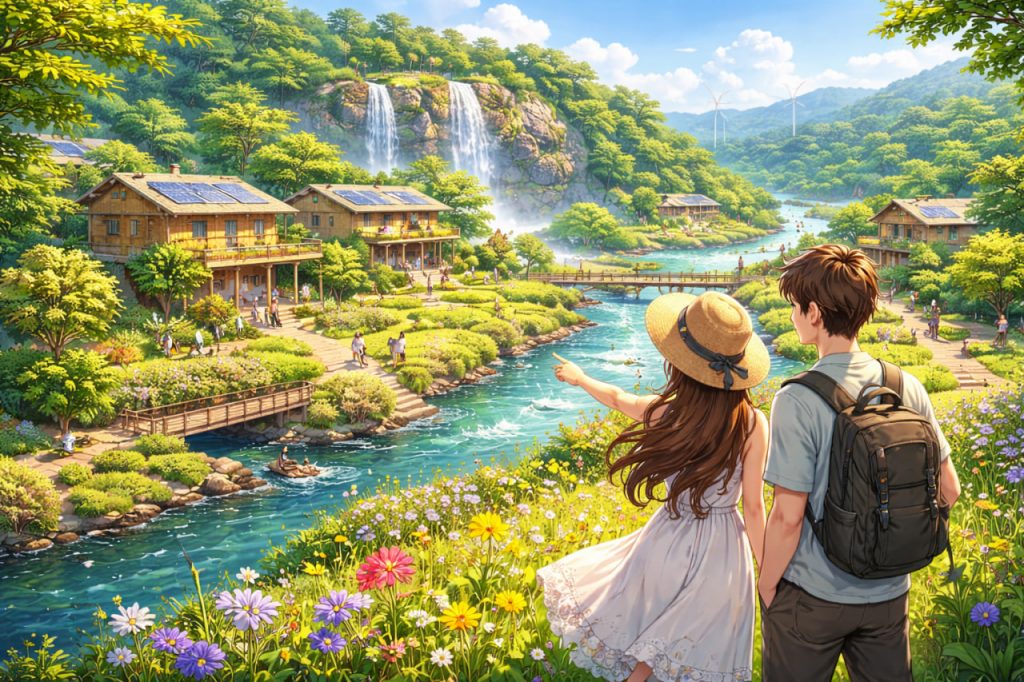
Imagining a world where humans live in true harmony with nature means rethinking not only technology, but values, priorities, and daily habits. Such harmony does not imply abandoning progress or returning to a primitive lifestyle. Instead, it suggests aligning human activity with natural systems rather than working against them. In this scenario, ecosystems are respected as living partners, not resources to be endlessly exploited. Exploring this idea helps clarify what kind of future is environmentally sustainable, socially stable, and psychologically healthier for humanity.
Cities Designed Around Nature
In a world living in harmony with nature, cities would be built to coexist with ecosystems rather than replace them. Green spaces would be integrated into urban design, allowing plants, animals, and humans to share space. Buildings would follow natural light, airflow, and climate conditions, reducing energy consumption. Urban environments would become quieter, cleaner, and healthier, with improved air quality and reduced heat stress. Nature would no longer be something people escape to—it would be part of everyday life.
A Shift in Energy and Resources
Harmony with nature would require a fundamental shift in how energy is produced and consumed. Renewable sources such as sunlight, wind, and water would dominate, minimizing pollution and waste. Resource use would focus on regeneration rather than extraction, ensuring that ecosystems can recover. Products would be designed for durability, repair, and reuse instead of disposability. This approach would reduce environmental damage while promoting long-term economic stability.
Food Systems in Balance
Agriculture would move toward methods that work with natural cycles. Diverse crops, healthy soils, and respect for seasonal patterns would replace intensive monocultures. Food would be grown closer to where people live, reducing transportation and waste. Diets would naturally become more varied and sustainable, supporting both human health and biodiversity. Hunger and food insecurity would decrease as ecosystems become more resilient and productive over time.
Human Health and Well-Being
Living in harmony with nature would significantly affect physical and mental health. Cleaner air and water would reduce chronic illness. Daily contact with natural environments would lower stress levels and improve emotional balance. Physical activity would become more integrated into daily life through walking, outdoor work, and recreation. Health systems would shift from treating symptoms to supporting long-term well-being through prevention and lifestyle alignment.
Economy Redefined by Sustainability
Economic systems would prioritize long-term stability over short-term profit. Success would be measured not only by growth, but by environmental health, social equity, and quality of life. Jobs would focus on restoration, innovation, and stewardship of natural systems. This economy would be more resilient to crises, as it depends on renewable processes rather than finite resources. Cooperation would replace excessive competition as the dominant economic principle.
Cultural and Ethical Transformation
Harmony with nature would reshape cultural values. Respect for life, moderation, and responsibility would guide decisions at both individual and collective levels. Education would emphasize ecological literacy, teaching people how natural systems function and why balance matters. Ethical considerations would extend beyond human society to include ecosystems and future generations. This shift would foster a deeper sense of purpose and connection.
Global Stability and Peace
Environmental harmony would reduce many sources of conflict. Scarcity of water, food, and energy often fuels political instability. By managing resources sustainably, societies would lower competition and tension. Cooperation on environmental protection would encourage stronger international relationships. A stable natural foundation would support a more peaceful and predictable world.
P.S. Living in harmony with nature is something without which we will not have a future. The sooner everyone understands this and starts taking action every day to ensure a future for themselves and their children, the sooner we will become a true Humanity.
Interesting Facts
- Access to green spaces is linked to lower stress and better mental health.
- Ecosystems managed sustainably become more productive over time.
- Environmental degradation often increases social conflict.
- Nature-based solutions can outperform artificial systems in efficiency.
- Long-term sustainability supports economic resilience.
Glossary
- Harmony With Nature — living in balance with natural ecosystems rather than exploiting them.
- Sustainability — meeting present needs without harming future generations.
- Ecosystem — a community of living organisms and their environment.
- Regenerative Practices — methods that restore and renew natural systems.
- Ecological Literacy — understanding how natural systems function.