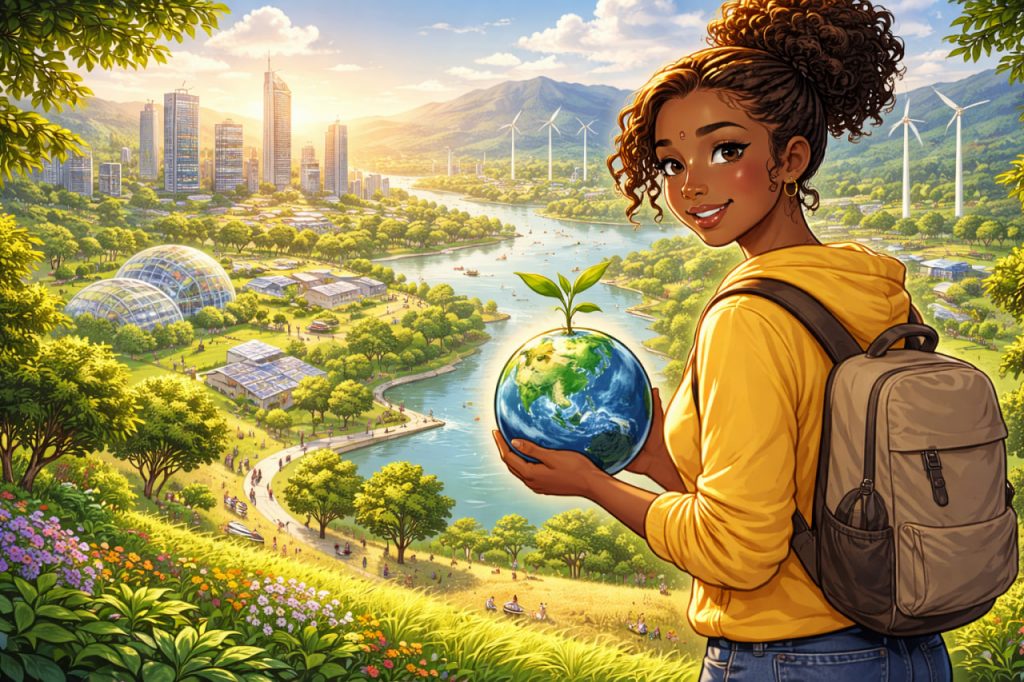
Modern civilization stands at a crossroads. Technological advancement, industrial expansion, and rapid economic growth have delivered unprecedented prosperity, yet they have also intensified environmental degradation, social inequality, and geopolitical tension. The same systems that generate innovation can also amplify instability when guided by short-term priorities. Shifting from a trajectory of extraction and competition toward one of sustainability and cooperation requires more than technological fixes. It demands structural, cultural, and ethical transformation. Civilizations evolve when values align with long-term survival rather than immediate gain. The question is not whether change is possible, but how intentionally it can be directed.
Redefining Progress
For decades, progress has often been measured primarily through economic output and consumption. While growth can improve living standards, unchecked expansion can also strain ecosystems and social systems. Economist Dr. Laura Bennett explains:
“A civilization becomes sustainable
when it measures success not only by production,
but by long-term well-being.”
Redefining progress means integrating environmental health, education quality, public trust, and social cohesion into national priorities. Broader metrics such as well-being indices and sustainability benchmarks help guide policy beyond short-term economic targets.
Technological Responsibility
Technology itself is not inherently destructive; its impact depends on application and governance. Renewable energy systems, circular manufacturing models, and efficient infrastructure demonstrate that innovation can reduce environmental pressure. At the same time, unregulated exploitation of resources accelerates degradation. Ethical technology development requires transparency, long-term planning, and public oversight. Investing in sustainable design reduces systemic risk. Responsible innovation ensures that technological power strengthens resilience rather than undermines it.
Education and Cultural Shift
Civilizational change begins with education. Critical thinking, scientific literacy, and ethical awareness shape long-term decision-making. Cultural narratives that emphasize cooperation over dominance influence social priorities. Sociologist Dr. Marcus Hill notes:
“Societies shift direction
when collective values evolve.
Education is the mechanism of that evolution.”
Encouraging systems thinking helps individuals understand interconnected global challenges. A population equipped with knowledge is better prepared to support constructive policies.
Economic Systems and Incentives
Economic incentives strongly influence behavior. Policies that reward sustainable practices and penalize destructive ones create structural change. Transitioning to circular economies reduces waste and encourages resource efficiency. Supporting local communities and equitable access to opportunity strengthens social stability. When incentives align with sustainability, constructive behavior becomes economically rational.
Global Cooperation
Many global challenges — climate change, biodiversity loss, economic instability — transcend national borders. Effective responses require international collaboration rather than competition. Shared research, cooperative policy frameworks, and conflict reduction mechanisms promote stability. Trust-building between nations supports long-term resilience. Civilizations flourish when cooperation outweighs rivalry.
Individual Agency Within Systemic Change
Systemic transformation requires leadership, but individual action also contributes to momentum. Responsible consumption, civic engagement, and informed participation influence larger structures. Small actions gain power when multiplied across populations. Long-term change depends on both institutional reform and personal accountability. Constructive civilization emerges from aligned collective effort.
From Awareness to Implementation
Awareness alone does not create change; structured implementation does. Clear policy targets, measurable sustainability goals, and transparent evaluation frameworks ensure accountability. Long-term planning cycles must extend beyond electoral timelines. When societies integrate ecological limits and human well-being into core strategy, resilience increases. Turning from destruction to creation is a gradual but achievable process grounded in deliberate choice.
Interesting Facts
- Alternative progress metrics include sustainability and well-being indices.
- Circular economies aim to eliminate waste through reuse and recycling.
- Renewable energy capacity has grown significantly worldwide in recent decades.
- Education strongly correlates with long-term societal stability.
- International cooperation reduces conflict risk and resource competition.
Glossary
- Sustainability — meeting present needs without compromising future generations.
- Circular Economy — economic model focused on reuse and resource efficiency.
- Systemic Change — transformation affecting entire structures rather than isolated parts.
- Resilience — the ability of systems to adapt and recover from disruption.
- Well-Being Index — measurement that includes social and environmental indicators beyond GDP.