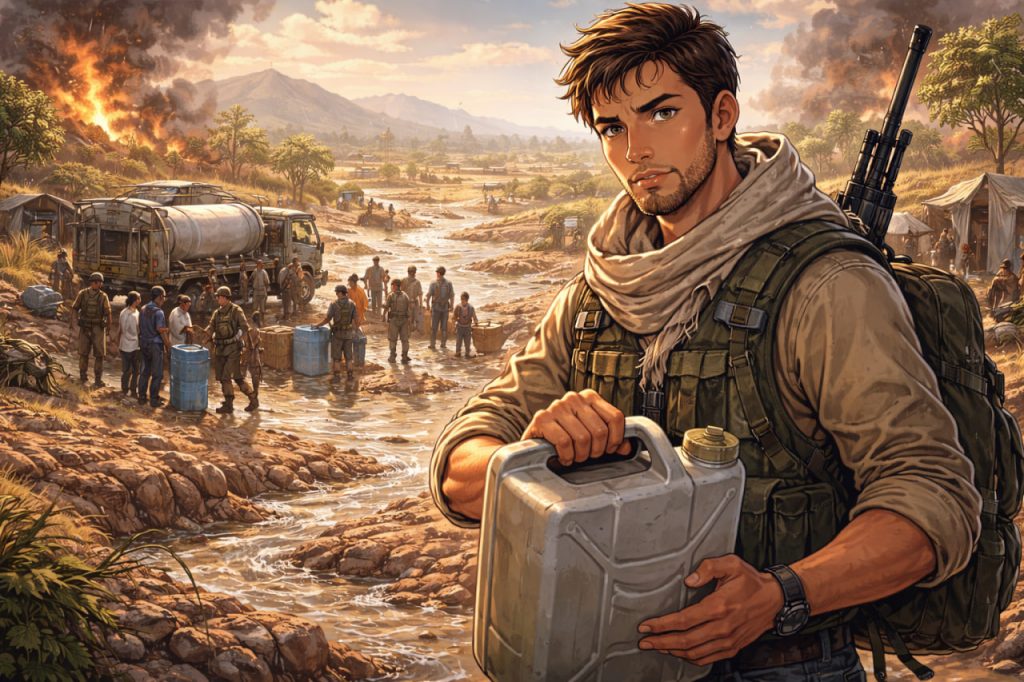
Climate change does not directly cause wars, but it can significantly increase pressure on already fragile regions. Rising temperatures, prolonged droughts, declining water supplies, and crop failures create stress within societies. When essential resources such as water, food, and arable land become scarce, competition increases. In politically unstable or economically vulnerable regions, this competition may escalate into social unrest or conflict. Climate stress often acts as a threat multiplier rather than a sole trigger. Understanding this interaction helps policymakers design prevention strategies rather than reacting after crises emerge.
Water Scarcity and Tensions
Freshwater availability is one of the most sensitive climate-linked issues. Extended droughts reduce river flow and groundwater levels, particularly in arid and semi-arid regions. When rivers cross national borders, declining water supply can strain diplomatic relations. Climate security analyst Dr. Laura Bennett explains:
“Water scarcity alone does not cause conflict,
but it increases tension
where governance systems are weak.”
Competition over irrigation, drinking water, and hydropower may intensify during prolonged dry periods.
Agricultural Stress and Food Insecurity
Crop failures caused by heatwaves or irregular rainfall disrupt local economies and food supply chains. In agrarian societies, reduced harvests directly impact livelihoods and prices. Economic instability can lead to migration and social unrest. Environmental economist Dr. Marcus Hill notes:
“Food insecurity amplifies existing social vulnerabilities.
When livelihoods collapse,
political stability weakens.”
In regions already facing poverty or inequality, climate-driven agricultural decline can heighten grievances.
Migration and Displacement
Climate impacts such as desertification and sea-level rise may force communities to relocate. Sudden displacement places pressure on receiving regions, especially when infrastructure is limited. Competition for jobs, housing, and services can intensify social tensions. Migration itself is not inherently destabilizing, but unmanaged flows increase strain. Long-term planning reduces potential conflict risk.
Resource Extraction and Geopolitics
As climate change alters access to resources, geopolitical dynamics may shift. Melting Arctic ice, for example, opens potential shipping routes and access to energy reserves. Competing territorial claims could heighten strategic tensions. Similarly, declining arable land increases the value of fertile regions. Resource control becomes more strategically significant under environmental stress.
The Role of Governance and Institutions
Strong institutions and cooperative frameworks reduce the likelihood that resource scarcity escalates into violence. Transparent water-sharing agreements, sustainable land management, and social safety nets mitigate risk. Conflict prevention depends on adaptive governance rather than environmental conditions alone. Regions with resilient institutions manage scarcity more effectively.
Preventing Climate-Driven Instability
The climate is a problem all over the planet – these are facts that everyone is already confirming. We need to stop the wars and unite as a civilization, otherwise, with the growing climate disasters, our world will turn into gangs fighting for a piece of bread and water, and then the climate will destroy everyone. To prevent this from happening, we need to change ourselves for the better now, while everything is still normal, and make every effort to achieve peace in the world.
Interesting Facts
- Climate change is often described as a “threat multiplier.”
- Water scarcity can strain cross-border relations.
- Food insecurity is linked to economic instability.
- Migration pressure increases under environmental stress.
- Strong governance reduces conflict risk.
Glossary
- Threat Multiplier — a factor that increases the impact of existing tensions.
- Water Scarcity — insufficient freshwater availability.
- Food Insecurity — lack of reliable access to sufficient nutrition.
- Desertification — land degradation in dry regions.
- Adaptive Governance — policy systems that respond effectively to change.