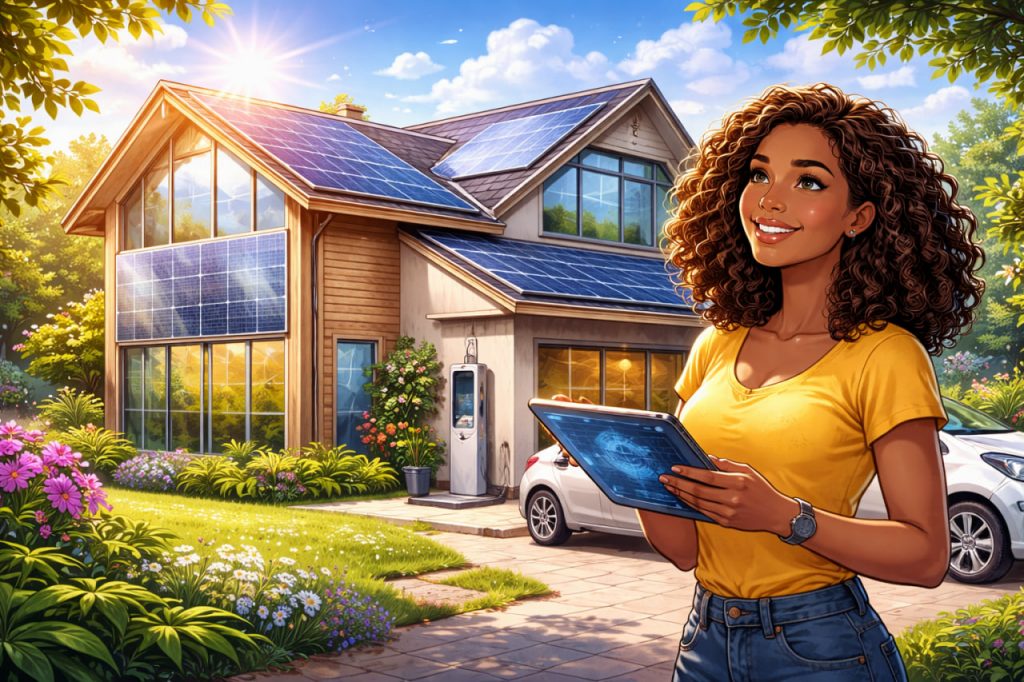
The idea that every building could generate its own electricity is becoming increasingly realistic as solar technologies evolve. Traditionally, solar power systems were installed as large panels mounted on rooftops or in dedicated solar farms. Today, however, engineers are developing new solutions that integrate solar cells directly into building materials such as roofs, walls, and glass facades. This approach, often referred to as building-integrated photovoltaics (BIPV), transforms ordinary structures into small power stations capable of producing clean electricity. As cities grow and energy demand increases, solar roofs and facades offer a promising way to generate renewable energy without requiring additional land. These technologies represent a shift toward decentralized energy systems where homes and buildings actively contribute to electricity production.
How Solar Roofs Work
Solar roofs function similarly to traditional photovoltaic systems but are designed to blend directly into the structure of a building. Instead of installing separate solar panels on top of roofing materials, the solar cells themselves become part of the roof. These systems can take the form of solar shingles, tiles, or specially designed panels that replace conventional roofing materials. According to renewable energy engineer Dr. Laura Bennett:
“Solar roofing technologies allow buildings to generate electricity while maintaining the architectural appearance of traditional structures.”
Electricity generated by these systems can power household appliances, charge batteries, or be supplied back to the power grid.
Solar Facades and Vertical Energy Generation
While roofs receive the most direct sunlight, building facades also offer significant potential for solar energy generation. Modern solar facade systems use specially designed photovoltaic panels or transparent solar glass integrated into exterior walls and windows. These installations are particularly useful in urban environments where rooftop space may be limited. Vertical solar surfaces can capture sunlight during different parts of the day, helping extend energy production beyond peak midday hours. Some modern skyscrapers are already incorporating solar facades as part of their architectural design.
Energy Independence and Smart Homes
One of the most exciting aspects of solar roofs and facades is their potential to support energy independence for households. When combined with battery storage systems, homes can store excess electricity produced during sunny periods and use it later when sunlight is not available. Smart home energy systems can also optimize electricity consumption by automatically adjusting when appliances operate based on available solar power. Energy systems researcher Dr. Marco Alvarez explains:
“Decentralized solar generation allows homes to become active participants in energy systems rather than passive consumers.”
This shift toward distributed energy production can increase grid resilience and reduce transmission losses.
Architectural and Design Innovations
Modern solar technologies are increasingly designed with aesthetics in mind. Solar tiles can mimic the appearance of traditional roofing materials, while solar glass can be tinted or textured to match architectural styles. These innovations allow renewable energy systems to blend seamlessly into buildings without dramatically altering their visual appearance. Architects and engineers are now collaborating to design structures where solar energy generation is an integrated part of the building concept from the beginning.
Challenges and Future Development
Despite their promise, solar roofs and facades still face challenges related to cost, installation complexity, and energy efficiency compared to conventional solar panels. However, ongoing research is improving the durability, efficiency, and affordability of building-integrated photovoltaic systems. As technology advances and production scales increase, these systems may become more widely accessible. In the future, entire neighborhoods and cities could be designed as networks of energy-producing buildings, significantly reducing reliance on centralized power plants.
Interesting Facts
- Solar roof tiles can sometimes replace traditional roofing materials entirely.
- Modern photovoltaic glass can generate electricity while still allowing light to pass through windows.
- Some buildings with solar facades can generate a large portion of their own electricity demand.
- Urban buildings have vast unused surface areas that could potentially be used for solar energy generation.
- Building-integrated photovoltaics help reduce the need for large ground-based solar installations.
Glossary
- Building-Integrated Photovoltaics (BIPV) — solar cells that are integrated directly into building materials such as roofs or walls.
- Solar Roof — a roofing system that incorporates photovoltaic technology to generate electricity.
- Solar Facade — photovoltaic panels or glass integrated into the exterior walls of a building.
- Photovoltaic Cell — a device that converts sunlight directly into electrical energy.
- Decentralized Energy — energy generation that occurs at or near the point of consumption rather than at large centralized power plants.