Artificial intelligence (AI) is rapidly becoming a powerful tool in addressing global environmental challenges. From analyzing vast datasets to optimizing complex systems, AI enables more efficient and informed decision-making in efforts to restore ecosystems. As climate change, pollution, and biodiversity loss intensify, traditional methods alone are often not enough to respond effectively. AI offers new ways to monitor environmental conditions, predict changes, and implement targeted solutions. By combining technology with ecological knowledge, scientists and policymakers can develop smarter strategies for sustainability. Understanding the role of AI in environmental restoration reveals how innovation can support the recovery of the planet.
Monitoring Ecosystems and Detecting Changes
One of the key advantages of AI is its ability to process large amounts of data quickly and accurately. Satellite imagery, sensor networks, and environmental databases generate enormous volumes of information that can be analyzed using machine learning algorithms. These systems can detect patterns such as deforestation, ocean pollution, and wildlife migration. By identifying changes in real time, AI helps researchers respond more quickly to environmental threats. Environmental scientist Dr. Rachel Kim explains:
“AI allows us to see environmental changes as they happen,
turning data into actionable insights for conservation.”
This capability significantly improves monitoring and early intervention.
Optimizing Resource Use
AI can improve the efficiency of resource use in areas such as agriculture, water management, and energy production. Smart systems can analyze soil conditions, weather patterns, and crop health to optimize irrigation and reduce waste. In energy systems, AI helps balance supply and demand, increasing the use of renewable energy sources. These optimizations reduce environmental impact while maintaining productivity, making sustainability more achievable at scale.
Restoring Ecosystems and Biodiversity
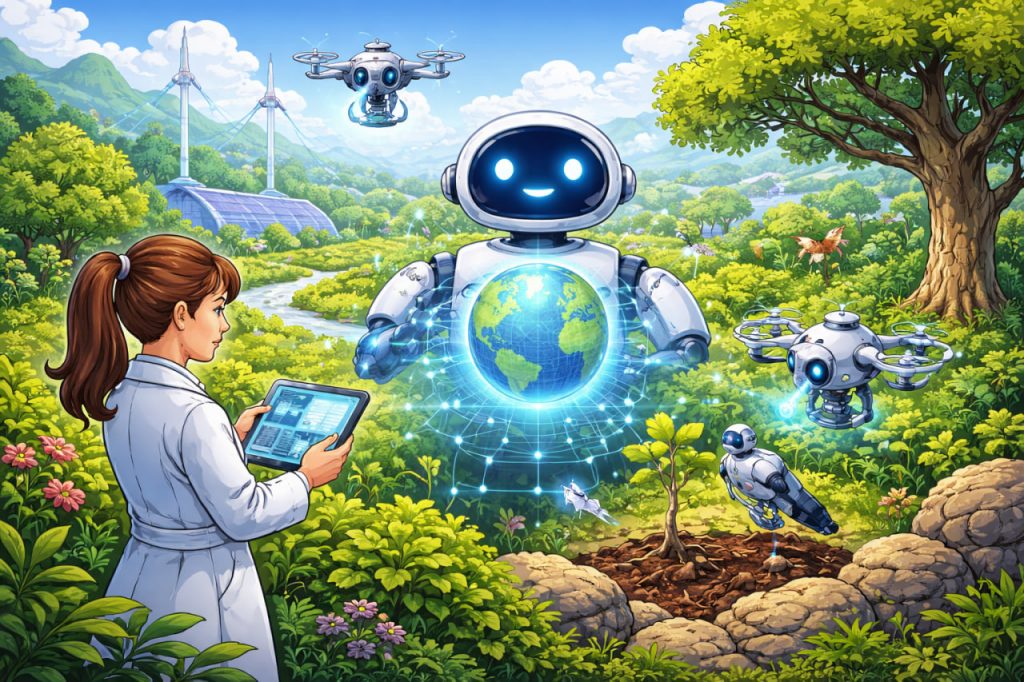
AI is increasingly used in projects aimed at restoring ecosystems and protecting biodiversity. For example, machine learning models can identify areas suitable for reforestation and track the success of planting efforts. AI-powered drones can plant trees, monitor wildlife populations, and even detect illegal activities such as poaching. These technologies enable more precise and large-scale conservation efforts, improving the chances of long-term ecological recovery.
Predicting Environmental Risks
Another important application of AI is in predicting environmental risks such as floods, wildfires, and climate shifts. By analyzing historical data and current conditions, AI systems can forecast potential disasters and help authorities prepare in advance. This predictive capability reduces damage, saves lives, and supports more resilient ecosystems. Early warnings allow for better planning and more effective responses to environmental challenges.
Challenges and Ethical Considerations
Despite its potential, the use of AI in ecology also raises challenges. Developing and maintaining AI systems requires energy and resources, which can contribute to environmental impact if not managed carefully. There are also ethical considerations related to data use, privacy, and decision-making. Ensuring that AI is used responsibly and sustainably is essential for maximizing its benefits. Collaboration between technologists, scientists, and policymakers is key to achieving this balance.
Interesting Facts
- AI can analyze satellite data to detect deforestation in near real time.
- Some drones powered by AI can plant thousands of trees per day.
- AI systems help optimize renewable energy usage, reducing carbon emissions.
- Machine learning can track animal populations and identify endangered species trends.
- Predictive AI models can forecast natural disasters with increasing accuracy.
Glossary
- Artificial Intelligence (AI) — technology that enables machines to perform tasks requiring human-like intelligence.
- Machine Learning — a type of AI that learns from data to make predictions or decisions.
- Reforestation — the process of planting trees to restore forests.
- Ecosystem — a community of living organisms interacting with their environment.
- Sustainability — the ability to maintain processes without harming future generations.