Energy poverty remains one of the most pressing global challenges, affecting hundreds of millions of people who lack reliable access to electricity and modern energy services. Without sufficient energy, communities face limitations in healthcare, education, economic development, and quality of life. Renewable energy sources (RES), such as solar, wind, and small-scale hydro, offer a promising pathway to address this issue. Unlike traditional energy systems that require large centralized infrastructure, renewables can be deployed locally and scaled according to need. However, ensuring universal access to clean energy involves not only technology, but also policy, investment, and social infrastructure. Understanding the relationship between energy poverty and renewable energy is key to building a more equitable and sustainable future.
What Is Energy Poverty?
Energy poverty refers to the lack of access to affordable, reliable, and modern energy services. This includes electricity for lighting, heating, cooking, and communication. In many regions, especially in rural and developing areas, people rely on traditional fuels such as wood or charcoal, which can be harmful to both health and the environment. According to development expert Dr. Samuel Ortiz:
“Access to energy is not a luxury—it is a fundamental requirement
for human development and social progress.”
This highlights the importance of energy as a basic need.
How Renewable Energy Can Help
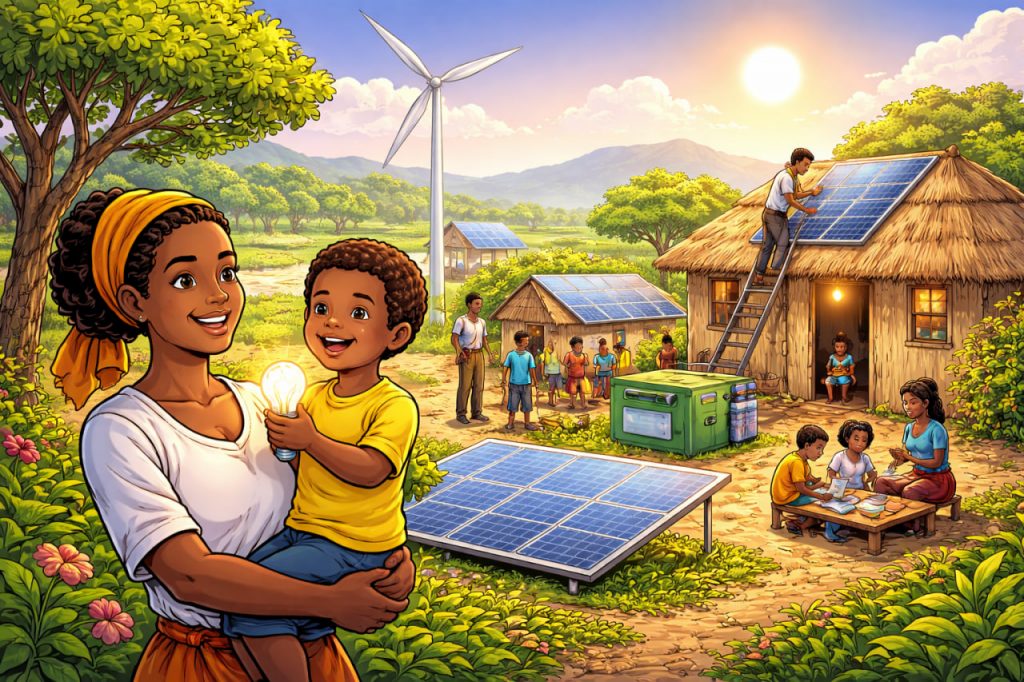
Renewable energy technologies provide flexible solutions for addressing energy poverty. Solar panels, microgrids, and small wind systems can be installed in remote areas without the need for extensive infrastructure. These systems allow communities to generate their own electricity, reducing dependence on centralized grids. Renewable solutions are also becoming more affordable, making them accessible to a wider population. This decentralization is a key advantage in regions where traditional energy expansion is slow or costly.
Challenges to Implementation
Despite its potential, the adoption of renewable energy in low-income regions faces several barriers. These include high initial costs, lack of financing, limited technical expertise, and inadequate infrastructure. In some cases, political and regulatory challenges can also slow progress. Ensuring long-term success requires not only installing technology but also maintaining and managing it effectively. Education and local capacity building are essential components of sustainable energy solutions.
Innovative Solutions and Approaches
New models are emerging to make clean energy more accessible. Pay-as-you-go solar systems, community microgrids, and mobile payment technologies allow users to access electricity without large upfront investments. Partnerships between governments, private companies, and non-profit organizations are helping expand these solutions. Combining innovation with local engagement increases the chances of success and scalability.
Towards Universal Clean Energy Access
Achieving universal access to clean energy requires a coordinated global effort. Renewable energy alone is not enough—it must be supported by policy frameworks, financial mechanisms, and international cooperation. Investments in infrastructure, education, and technology are essential for long-term impact. By integrating renewable energy into broader development strategies, it is possible to reduce energy poverty while also addressing environmental challenges. The goal is not only to provide electricity, but to create sustainable and resilient energy systems for all.
Interesting Facts
- Over 700 million people worldwide still lack access to electricity.
- Solar home systems can provide basic power for lighting and mobile charging.
- Renewable microgrids can operate independently of national grids.
- Pay-as-you-go models make energy accessible with small payments.
- Clean energy access improves health, education, and economic opportunities.
Glossary
- Energy Poverty — lack of access to reliable and affordable energy services.
- Renewable Energy (RES) — energy from sources such as solar, wind, and water.
- Microgrid — a small, localized energy system that can operate independently.
- Decentralization — distribution of energy production across multiple local sources.
- Infrastructure — physical systems needed to support energy production and distribution.