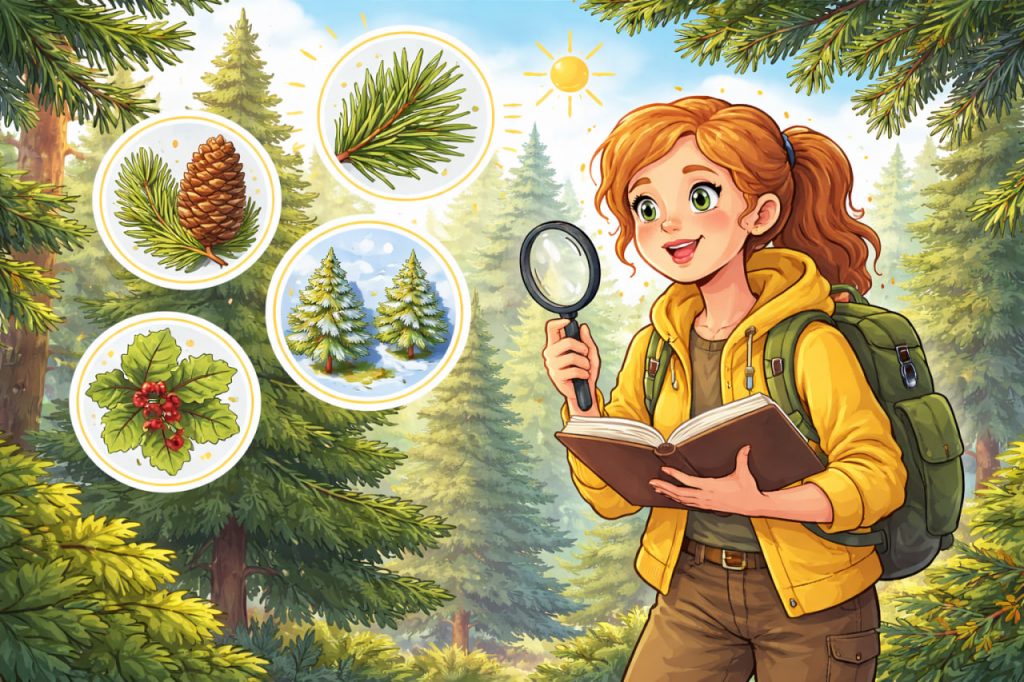
Evergreen trees are plants that retain their leaves throughout the entire year, unlike deciduous trees that shed their leaves seasonally. These trees remain green even in winter, providing a constant presence in forests and landscapes. Their ability to survive harsh conditions is due to unique structural and biological adaptations. Evergreen trees play an important role in ecosystems by offering shelter, stabilizing soil, and maintaining oxygen production year-round. They are commonly found in cold climates but also exist in warmer regions. Understanding evergreen trees helps explain how nature adapts to different environmental challenges. Their resilience makes them one of the most fascinating groups of plants.
What Makes a Tree Evergreen?
Evergreen trees do not lose all their leaves at once. Instead, they gradually replace them over time, allowing them to stay green continuously. Most evergreen species have needle-like or thick waxy leaves that reduce water loss and protect against cold temperatures. Botanist Dr. Emily Carter explains:
“Evergreen trees are built for endurance,
conserving resources while surviving in conditions where other trees cannot.”
This adaptation allows them to thrive in environments with limited resources.
Adaptations for Survival
Evergreen trees have several features that help them survive extreme conditions. Their needle-shaped leaves reduce surface area, minimizing water loss. A waxy coating protects them from drying out and freezing temperatures. Additionally, their dark green color helps absorb more sunlight, which is especially useful during winter months when light is limited. These adaptations allow evergreen trees to continue photosynthesis even when other plants are dormant.
Where Evergreen Trees Grow
Evergreens are commonly found in cold and mountainous regions, such as northern forests and high altitudes. However, they also grow in warmer climates, including tropical and subtropical areas. Pine, spruce, and fir trees are well-known examples in colder regions, while other evergreen species exist in rainforests.
Ecological Importance
Evergreen trees provide year-round shelter and food for many animals. Birds and small mammals rely on them during winter when other plants are bare. They also help prevent soil erosion and play a role in maintaining climate stability by absorbing carbon dioxide. Their continuous presence supports ecosystems even in difficult seasons.
Why Evergreen Trees Matter
Evergreen trees are essential for maintaining balance in natural environments. Their ability to stay active throughout the year supports biodiversity and contributes to environmental stability. They are also widely used in landscaping and cultural traditions, symbolizing endurance and continuity.
Interesting Facts
- Evergreen trees can keep their leaves for several years
- Their needles are adapted to cold and dry conditions
- They can perform photosynthesis even in winter
- Pine trees are among the most common evergreen species
- Evergreen forests cover large parts of the Northern Hemisphere
Glossary
- Evergreen — a plant that retains its leaves year-round
- Deciduous — plants that shed leaves seasonally
- Photosynthesis — process of converting sunlight into energy
- Needles — thin, pointed leaves of certain trees
- Ecosystem — a system of interacting living organisms