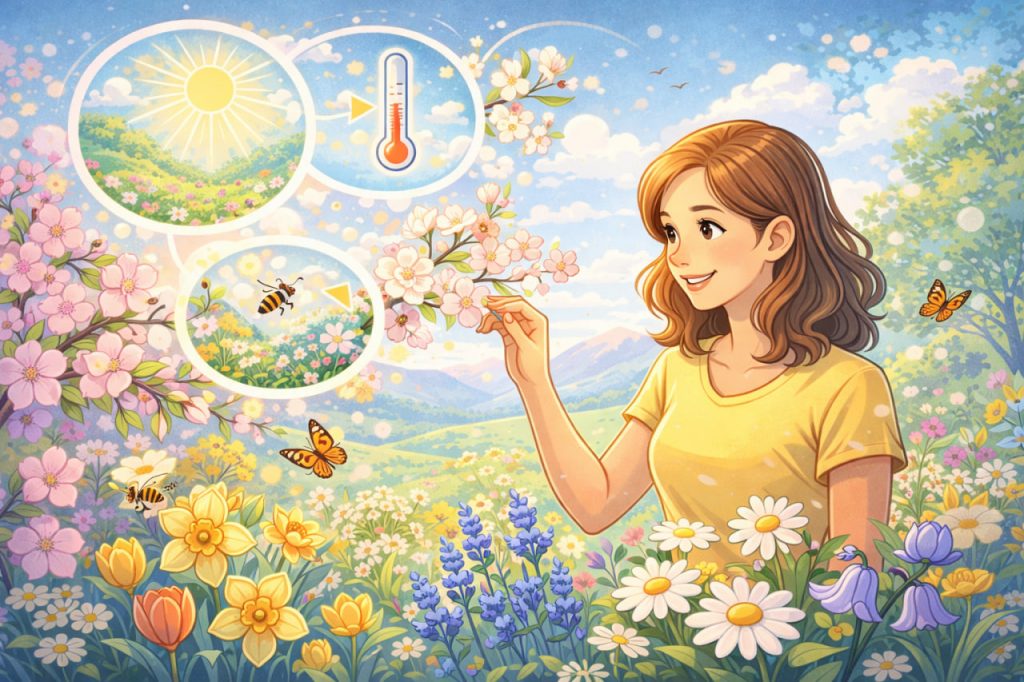
The blooming of nature is one of the most visible and beautiful signs of seasonal change. As winter fades, plants begin a complex transformation driven by temperature, sunlight, and biological rhythms. Flowers emerge, trees regain their leaves, and ecosystems come back to life after a period of dormancy. This process is not random but carefully regulated by internal mechanisms within plants. Blooming plays a crucial role in reproduction, pollination, and maintaining biodiversity. Understanding how nature blooms reveals the delicate balance between environmental conditions and living organisms. It is both a scientific process and a powerful symbol of renewal.
What Triggers Blooming?
The primary triggers of blooming are increased daylight and rising temperatures. Plants are sensitive to changes in light duration, a process known as photoperiodism. As days become longer, plants receive signals that it is time to grow and reproduce. Temperature also plays a key role, as warmer conditions activate metabolic processes. Botanist Dr. Elena Morris explains:
“Blooming is not just a reaction to warmth—
it is a finely tuned response to seasonal signals.”
These triggers ensure that flowering occurs at the optimal time.
The Role of Plant Hormones
Plant hormones, such as auxins, gibberellins, and cytokinins, regulate growth and flowering. These chemical signals control when buds form, when they open, and how plants develop. Hormones interact with environmental factors to coordinate the timing of blooming. This internal regulation allows plants to adapt to changing conditions and maximize their chances of successful reproduction.
Pollination and Ecosystem Interaction
Blooming is closely linked to pollination, a process essential for plant reproduction. Flowers attract pollinators such as bees, butterflies, and birds through color, scent, and nectar. This interaction supports entire ecosystems, as pollinators rely on flowers for food while helping plants reproduce. The timing of blooming must align with the activity of pollinators, creating a synchronized natural system.
Adaptation and Climate Influence
Different plants bloom at different times depending on their environment and genetic adaptation. Some species flower early in spring, while others wait for warmer conditions. Climate change is affecting these patterns, sometimes causing plants to bloom earlier than usual. This can disrupt ecological balance if pollinators are not active at the same time. Studying these changes helps scientists understand how ecosystems respond to environmental shifts.
Why Blooming Matters
The blooming of nature is more than a visual transformation—it is a critical phase in the life cycle of plants and ecosystems. It supports food chains, maintains biodiversity, and contributes to the stability of natural environments. For humans, it also has psychological benefits, promoting well-being and a sense of renewal. The return of blooming each year reminds us of the resilience and continuity of life.
Interesting Facts
- Some plants require a period of cold, called vernalization, before they can bloom.
- Flowers use color and scent to attract specific pollinators.
- Cherry blossoms bloom for only a short period, making them highly symbolic.
- Bees can see ultraviolet patterns on flowers invisible to humans.
- Blooming times can shift due to climate change.
Glossary
- Photoperiodism — plant response to the length of day and night.
- Pollination — transfer of pollen for plant reproduction.
- Auxins — plant hormones that regulate growth.
- Vernalization — exposure to cold that triggers flowering.
- Ecosystem — a system of interacting living organisms and environment.