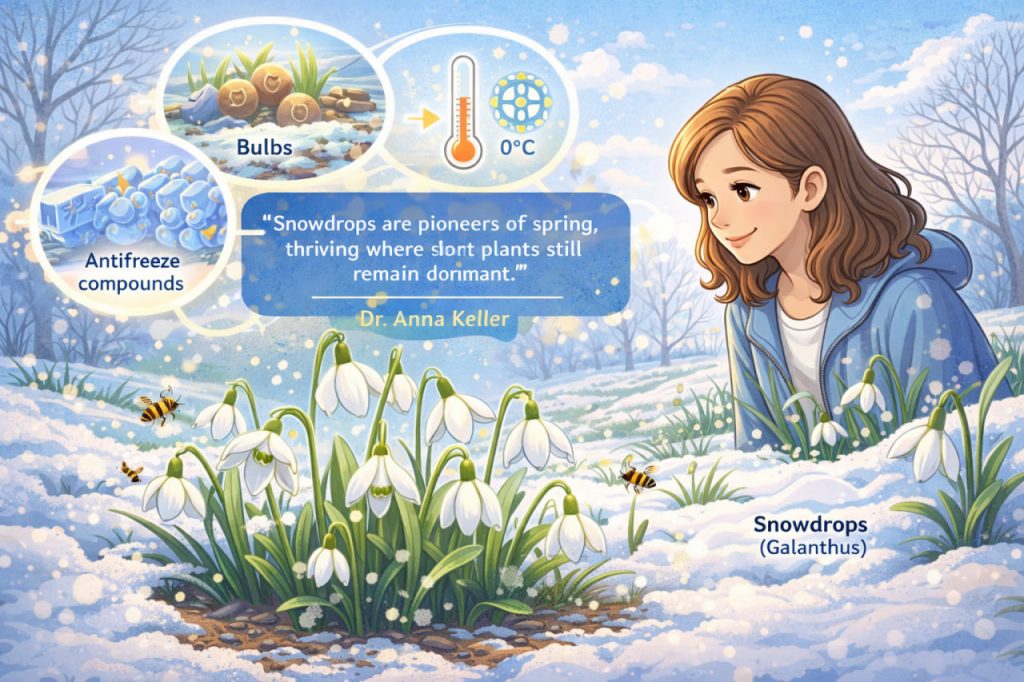
Snowdrops are among the earliest flowers to bloom, often appearing while snow still covers the ground. These delicate white blossoms symbolize renewal, resilience, and the arrival of spring. Despite their fragile appearance, snowdrops are remarkably hardy and able to survive in freezing conditions, pushing through frozen soil. Their early flowering gives them an ecological advantage, allowing them to grow before other plants compete for sunlight. Snowdrops are not only beautiful but also scientifically fascinating, demonstrating how plants adapt to extreme environments. Their presence marks a turning point in the seasonal cycle, signaling the end of winter and the beginning of new life.
What Are Snowdrops?
Snowdrops belong to the genus Galanthus, a group of small perennial plants known for their drooping white flowers. They typically bloom in late winter or very early spring, often pushing through snow. Botanist Dr. Anna Keller explains:
“Snowdrops are pioneers of spring,
thriving where most plants still remain dormant.”
Their structure helps them survive cold temperatures and harsh conditions.
How They Survive the Cold
Snowdrops have unique adaptations that allow them to bloom in freezing environments. Their cells contain natural compounds that act as antifreeze, preventing damage from ice crystals. The shape of their buds also helps protect inner tissues from cold winds and frost. Additionally, they store energy in underground bulbs, which allows them to grow quickly as soon as conditions become favorable.
Role in the Ecosystem
As one of the first flowering plants of the year, snowdrops provide an early source of nectar and pollen for insects such as bees. This makes them an important part of the ecosystem, supporting pollinators emerging after winter. Their early growth also helps stabilize soil and contributes to the seasonal renewal of plant life.
Cultural Meaning and Symbolism
Snowdrops have long been associated with hope, purity, and new beginnings. In many cultures, they symbolize the transition from winter to spring. They are often seen as a sign of optimism, appearing when conditions are still harsh but improving. This symbolism has made them popular in literature, art, and gardening traditions.
Why Snowdrops Matter
Beyond their beauty, snowdrops are a reminder of nature’s resilience and adaptability. They demonstrate how life can thrive even in difficult conditions. Studying these plants helps scientists understand how organisms respond to climate and environmental changes. Their early blooming also provides valuable insight into seasonal patterns and ecosystem health.
Interesting Facts
- Snowdrops can bloom at temperatures close to 0°C
- Their bulbs store energy for rapid early growth
- Some species are mildly toxic to animals
- They are vital for early pollinators
- Snowdrops have been cultivated for centuries
Glossary
- Snowdrop (Galanthus) — an early-flowering plant with white drooping flowers
- Bulb — an underground storage organ that supports plant growth
- Pollination — transfer of pollen for reproduction
- Perennial — a plant that lives for multiple years
- Antifreeze Compounds — substances preventing freezing damage in cells