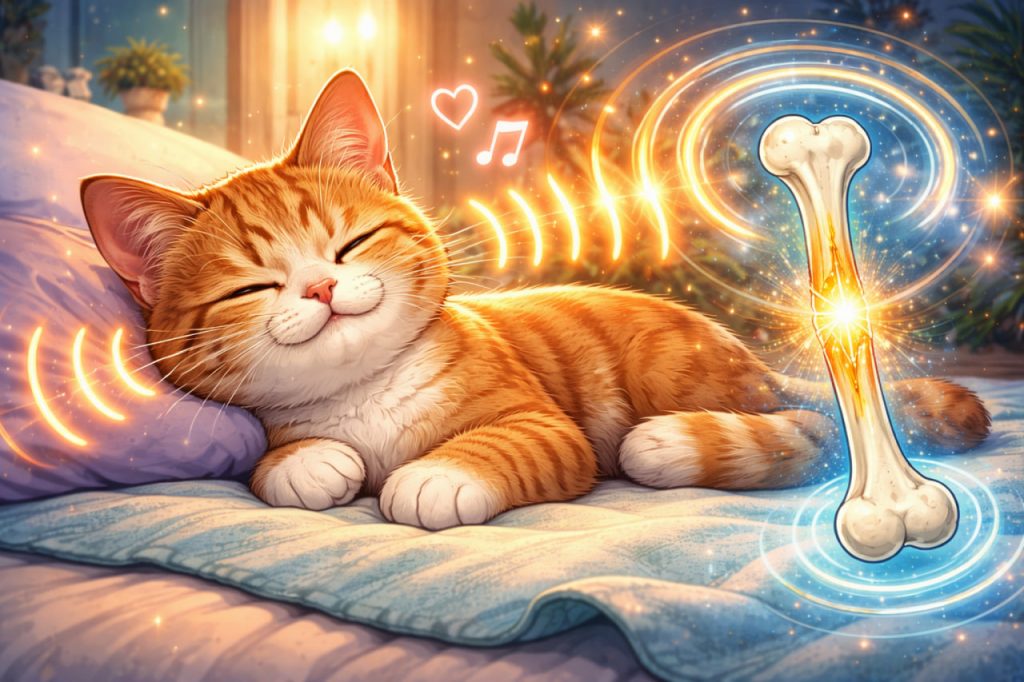
The gentle sound of a cat’s purr is often associated with comfort and relaxation, but scientists have discovered that it may have biological effects beyond emotional soothing. Research suggests that the frequency of cat purring falls within a range that can stimulate tissue regeneration and support bone healing. This has led to growing interest in how natural vibrations produced by animals might influence physical recovery processes. While cats purr for many reasons—including communication and self-soothing—the potential link to healing opens fascinating possibilities for both biology and medicine. Understanding this connection helps reveal how seemingly simple natural phenomena can have complex physiological effects.
The Science Behind the Purr
Cats typically purr at frequencies between 25 and 150 Hz, a range that has been associated with healing and regeneration in medical studies. Vibrations within this range are known to promote bone density, improve circulation, and support tissue repair. According to bioacoustics researcher Dr. Helen Morris:
“The frequency of a cat’s purr overlaps with therapeutic vibration ranges,
suggesting a natural mechanism that may support healing.”
This makes purring more than just a comforting sound—it may have measurable physical benefits.
How Vibrations Affect the Body
Low-frequency vibrations can stimulate cellular activity, encouraging the growth and repair of tissues. In medical contexts, similar frequencies are used in therapies to enhance bone healing and reduce inflammation. These vibrations may help improve blood flow and activate cells responsible for rebuilding damaged structures. The fact that cats naturally produce such frequencies has led scientists to explore whether purring could serve a similar function.
Why Cats Might Benefit From Purring
Cats spend a large portion of their time resting, which could make them more vulnerable to bone loss or injury. Purring may act as a natural mechanism to maintain bone strength and promote recovery, even during periods of inactivity. This could explain why cats often recover quickly from injuries compared to other animals.
Potential Benefits for Humans
While humans cannot naturally produce purring vibrations, the concept has inspired research into vibration therapy. Devices that mimic similar frequencies are being studied for their ability to support bone healing, reduce pain, and improve recovery after injury. Although more research is needed, the connection between purring and healing could influence future medical treatments.
What Science Still Needs to Confirm
Despite promising findings, the exact relationship between cat purring and bone healing is still being studied. Scientists continue to investigate how these vibrations interact with biological systems and whether the effects observed in animals can be applied to humans. The idea remains compelling, but further evidence is required to fully understand the mechanisms involved.
Interesting Facts
- Cats purr within a frequency range of 25–150 Hz.
- These frequencies are used in some forms of medical therapy.
- Cats often purr when injured or stressed, not just when relaxed.
- Vibrations can help improve bone density and tissue repair.
- Purring may serve as a natural self-healing mechanism for cats.
Glossary
- Purring — a rhythmic vibration produced by cats through their vocal cords.
- Frequency — the number of vibrations per second, measured in Hertz (Hz).
- Tissue Regeneration — the process of repairing or replacing damaged cells.
- Vibration Therapy — a treatment using mechanical vibrations to stimulate healing.
- Bone Density — the strength and solidity of bones.