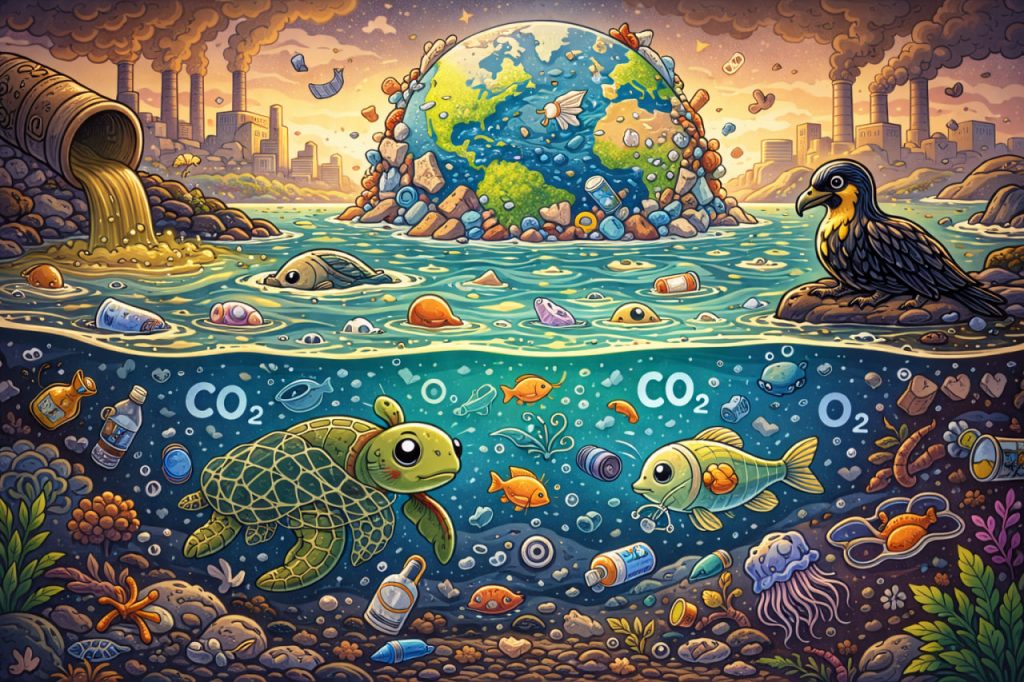
The world’s oceans cover more than 70% of Earth’s surface and play a critical role in maintaining climate stability, biodiversity, and life-support systems. However, human activity has introduced massive amounts of pollution into marine environments, threatening not only ocean life but the health of the entire planet. From plastic waste to chemical runoff, ocean pollution disrupts natural processes that regulate climate and sustain ecosystems. Understanding these impacts reveals how closely connected human actions are to the global environmental balance.
Types of Ocean Pollution
Ocean pollution comes from many sources, most of them linked to human activity. The most significant types include:
Plastic Pollution
Millions of tons of plastic enter the oceans every year. These materials break down into microplastics, which are consumed by marine organisms and spread through the food chain.
Chemical Pollution
Agricultural runoff, industrial waste, and oil spills introduce toxic substances into the ocean. These chemicals can damage ecosystems and accumulate in marine life.
Nutrient Pollution
Excess nutrients from fertilizers lead to algal blooms, which deplete oxygen in the water and create “dead zones” where life cannot survive.
Impact on Marine Life
Ocean pollution has devastating effects on marine organisms at all levels.
- Fish and seabirds ingest plastic, mistaking it for food
- Toxic chemicals disrupt reproduction and growth
- Coral reefs suffer from pollution and environmental stress
“When oceans are polluted, the entire web of life is affected,
from microscopic plankton to the largest marine mammals.”
As species decline, the balance of marine ecosystems becomes unstable.
Disruption of the Climate System
Oceans are one of the planet’s most important climate regulators. They absorb carbon dioxide, distribute heat, and support oxygen production.
Pollution interferes with these processes:
- Damage to plankton reduces oxygen production and carbon absorption
- Warmer, polluted waters accelerate climate change
- Dead zones reduce the ocean’s ability to support life
This weakens Earth’s natural systems that help control global temperatures.
Human Health Consequences
Ocean pollution does not stay in the ocean—it eventually affects humans.
Food Chain Contamination
Microplastics and toxins accumulate in fish and seafood, which are then consumed by people.
Water and Air Quality
Polluted oceans can release harmful substances into the air and affect coastal water quality.
Economic Impact
Fishing industries, tourism, and coastal communities suffer from declining ocean health.
Loss of Biodiversity
Healthy oceans support an incredible variety of life. Pollution reduces biodiversity by:
- Destroying habitats like coral reefs
- Causing species decline or extinction
- Disrupting food chains
A loss of biodiversity weakens ecosystems and makes them less resilient to environmental changes.
Can the Damage Be Reversed?
While the problem is serious, solutions do exist.
Reducing Plastic Use
Limiting single-use plastics can significantly decrease ocean waste.
Improving Waste Management
Better recycling systems and waste control prevent pollution from reaching the ocean.
Protecting Marine Areas
Conservation efforts help ecosystems recover and maintain balance.
Global Cooperation
Ocean pollution is a global issue that requires international action and shared responsibility.
Why It Matters
The ocean is not separate from the rest of the planet—it is deeply connected to climate, air, food, and life itself. When oceans suffer, the entire Earth system is affected.
Protecting the ocean means protecting:
- The air we breathe
- The food we eat
- The climate we depend on
Interesting Facts
- Oceans produce about 50% of Earth’s oxygen.
- Over 8 million tons of plastic enter the ocean each year.
- There are hundreds of dead zones in oceans worldwide.
- Microplastics have been found in human blood and lungs.
- Coral reefs support about 25% of marine species.
Glossary
- Ocean Pollution — contamination of marine environments by harmful substances.
- Microplastics — tiny plastic particles formed from larger debris.
- Dead Zone — an area with low oxygen where marine life cannot survive.
- Biodiversity — the variety of life in an ecosystem.
- Ecosystem — a system of living organisms interacting with their environment.