Plankton are tiny organisms that drift through oceans, seas, and freshwater environments, forming the base of aquatic ecosystems. Despite their microscopic size, plankton play an enormous role in sustaining life on Earth. They are responsible for producing a significant portion of the planet’s oxygen, supporting marine food chains, and regulating the global climate. Without plankton, life in the oceans—and much of life on land—would not exist in its current form. These organisms may be invisible to the naked eye, but their impact is planetary in scale.
What Is Plankton
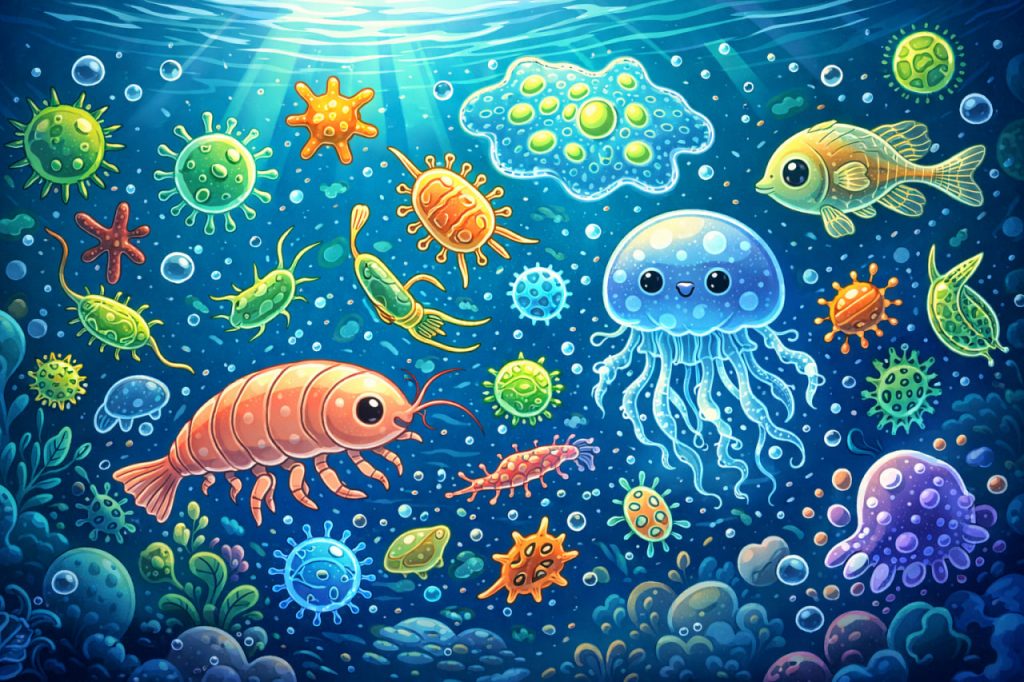
The term “plankton” refers not to a single species but to a wide variety of organisms that drift with water currents. They are generally divided into two main groups: phytoplankton (plant-like organisms) and zooplankton (animal-like organisms). Phytoplankton perform photosynthesis, converting sunlight into energy, while zooplankton feed on other plankton and organic matter. Together, they form a complex and dynamic system that supports marine life.
According to marine ecologist Dr. Hannah Clarke:
“Plankton may be tiny, but they are responsible for processes that sustain the entire biosphere.”
Phytoplankton: The Oxygen Producers
Phytoplankton are among the most important organisms on Earth because they produce a large percentage of the planet’s oxygen through photosynthesis. Using sunlight, carbon dioxide, and nutrients, they generate energy and release oxygen as a byproduct. In fact, it is estimated that phytoplankton contribute around half of the oxygen in Earth’s atmosphere. This makes them just as important as forests in maintaining breathable air.
Zooplankton: The Drifters of the Food Chain
Zooplankton include a wide range of organisms, from microscopic protozoa to small crustaceans and larval stages of larger animals. They play a crucial role in the marine food web, serving as a primary food source for fish, whales, and other marine species. By feeding on phytoplankton, they transfer energy up the food chain, supporting larger and more complex life forms.
Plankton and the Climate System
Plankton are deeply connected to the global climate system. Phytoplankton absorb carbon dioxide during photosynthesis, helping regulate atmospheric carbon levels. When plankton die, some of their carbon sinks to the ocean floor, effectively removing it from the atmosphere. This process, known as the biological carbon pump, plays a key role in controlling climate change.
Diversity and Adaptation
Plankton exist in a vast range of forms and sizes, from single-celled organisms to gelatinous creatures visible to the naked eye. They have evolved unique adaptations, such as transparency to avoid predators, spines to increase surface area, and the ability to glow through bioluminescence. This diversity allows them to survive in different environments, from sunlit surface waters to the deep ocean.
Threats to Plankton
Despite their importance, plankton populations are vulnerable to environmental changes. Rising ocean temperatures, pollution, and acidification can disrupt their growth and distribution. Changes in plankton populations can have cascading effects on marine ecosystems and global climate, making their protection a critical issue.
Why Plankton Matter
Plankton are essential not only for ocean life but for the entire planet. They support fisheries, regulate climate, and produce oxygen. Understanding and protecting plankton is vital for maintaining the balance of Earth’s ecosystems and ensuring the health of future generations.
Interesting Facts
- Phytoplankton produce about 50% of Earth’s oxygen.
- Some plankton can glow due to bioluminescence.
- Plankton form the base of nearly all marine food chains.
- They can be found from the ocean surface to deep waters.
- Massive plankton blooms can sometimes be seen from space.
Glossary
- Plankton — drifting organisms in aquatic environments.
- Phytoplankton — photosynthetic plankton that produce energy from sunlight.
- Zooplankton — animal-like plankton that feed on other organisms.
- Biological Carbon Pump — the process of carbon transfer from the surface to deep ocean.
- Bioluminescence — the ability of organisms to produce light.