Freshwater is one of the most essential resources for life on Earth. Every human, animal, and ecosystem depends on clean water to survive. However, the world is facing a growing freshwater crisis. Population growth, pollution, climate change, and excessive consumption are placing enormous pressure on global water supplies. Scientists warn that water scarcity may become one of the most serious challenges of the 21st century.
Understanding the causes and possible solutions is critical for the future of humanity.
Why Freshwater Is So Important
Freshwater is necessary for:
- Drinking
- Agriculture
- Industry
- Energy production
- Sanitation
Although Earth appears to have abundant water, most of it is saltwater.
Only about:
- 2.5% of Earth’s water is freshwater
- Much of that is trapped in glaciers or underground
Accessible freshwater is surprisingly limited.
What Causes Freshwater Shortages?
There are several major causes behind global water scarcity.
Population Growth
The global population continues to increase.
More people means:
- Higher water consumption
- Greater demand for food production
- Increased industrial use
Water demand rises as societies expand.
Climate Change
Climate change disrupts natural water cycles.
Effects include:
- Droughts
- Reduced snowfall
- Changing rainfall patterns
- Faster evaporation
Some regions become drier while others face floods.
Pollution
Water pollution reduces the amount of usable freshwater.
Sources include:
- Industrial waste
- Agricultural chemicals
- Plastic pollution
- Untreated sewage
Contaminated water becomes unsafe for humans and ecosystems.
Overuse of Groundwater
Many countries rely heavily on underground aquifers.
Excessive pumping can:
- Deplete water reserves
- Cause land sinking
- Reduce long-term water availability
Groundwater often refills very slowly.
Agriculture and Water Consumption
Agriculture uses around 70% of global freshwater supplies.
Large amounts are needed for:
- Irrigation
- Livestock
- Food processing
Inefficient farming methods waste enormous quantities of water.
Expert Insight
Hydrologist Peter Gleick, a leading water expert, explains:
“Water is at the center of human survival, economic development, and environmental sustainability.”
His work emphasizes that water security is closely tied to global stability.
Possible Solutions to Water Scarcity
While the problem is serious, many solutions already exist.
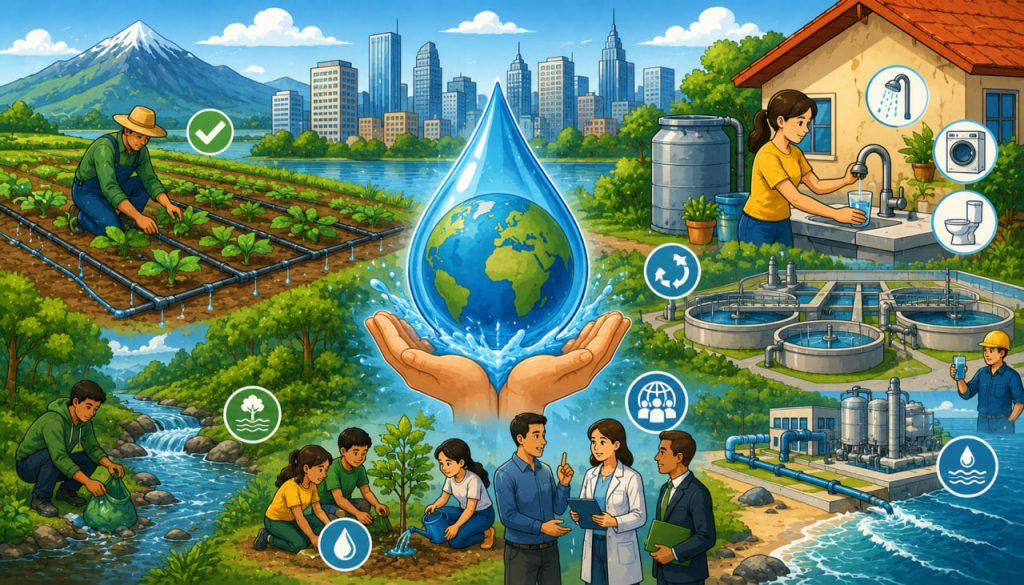
Water Conservation
Reducing waste is one of the most effective strategies.
Simple actions include:
- Fixing leaks
- Using efficient appliances
- Reducing unnecessary consumption
Small savings across millions of people create major impact.
Improved Agriculture
Modern farming technologies can reduce water use.
Methods include:
- Drip irrigation
- Precision agriculture
- Drought-resistant crops
Efficient irrigation dramatically lowers water waste.
Desalination
Desalination removes salt from seawater.
Advantages:
- Provides new freshwater sources
- Useful for coastal regions
Challenges:
- High energy cost
- Environmental concerns from salt waste
Despite limitations, desalination is becoming more common.
Wastewater Recycling
Used water can be treated and reused.
Recycled water may be used for:
- Agriculture
- Industry
- Even drinking after advanced purification
This reduces pressure on freshwater supplies.
Protecting Ecosystems
Healthy ecosystems help regulate water cycles.
Protecting:
- Forests
- Wetlands
- Rivers
helps maintain natural freshwater systems.
Technology and Innovation
New technologies are improving water management.
Examples include:
- Smart water monitoring systems
- Advanced filtration
- Atmospheric water generation
Innovation may play a major role in solving future shortages.
Why Water Scarcity Matters
Water shortages affect:
- Food security
- Public health
- Economic stability
- International relations
In some regions, competition for water can increase conflict risk.
Can Humanity Solve the Problem?
Experts believe the crisis can be managed if action is taken early.
Key priorities include:
- Sustainable use
- Better infrastructure
- International cooperation
- Public awareness
The future depends on responsible management of freshwater resources.
Interesting Facts
- Less than 1% of Earth’s water is easily accessible freshwater.
- Agriculture uses most of the world’s freshwater.
- Some cities already face severe water shortages.
- Desalination plants operate in many dry regions.
- Water recycling technology continues to improve rapidly.
Glossary
- Freshwater — Water with very low salt content.
- Aquifer — Underground layer containing water.
- Desalination — Process of removing salt from seawater.
- Irrigation — Artificial watering of crops.
- Water Scarcity — Lack of sufficient accessible water.