Cypress trees are among the most recognizable and historically significant trees in the world. Their tall, elegant shape has inspired artists, poets, architects, and civilizations for thousands of years. Found in Mediterranean landscapes, mountain regions, wetlands, and ornamental gardens, cypress trees symbolize endurance, immortality, protection, and spiritual reflection in many cultures.
Beyond their beauty, cypress trees are biologically fascinating. These evergreen conifers evolved remarkable adaptations allowing them to survive drought, harsh climates, poor soils, and even flooding in some species. Scientists study cypress trees not only for their ecological importance, but also for their valuable wood, medicinal compounds, and climate resilience.
Today, cypress species remain important in:
- Landscaping
- Forestry
- Ecosystem protection
- Urban design
- Cultural heritage
Their combination of elegance and durability makes them some of the most admired trees on Earth.
What Is a Cypress Tree?
Cypress trees belong mainly to the family Cupressaceae, a large group of evergreen conifers.
Different cypress species grow across:
- Europe
- Asia
- North America
- Africa
Most cypress trees are characterized by:
- Tall narrow shapes
- Dense evergreen foliage
- Small cone structures
- Aromatic wood
Some species grow as towering vertical trees, while others spread more broadly depending on climate and environment.
Why Cypress Trees Are Evergreen
Unlike deciduous trees that lose leaves seasonally, cypress trees remain green throughout the year.
Their needle-like or scale-like leaves are specially adapted to reduce water loss.
This evergreen strategy allows them to:
- Continue photosynthesis year-round
- Survive dry climates
- Conserve nutrients efficiently
Botanists consider evergreen foliage one of the key evolutionary advantages of many conifers.
The Famous Mediterranean Cypress
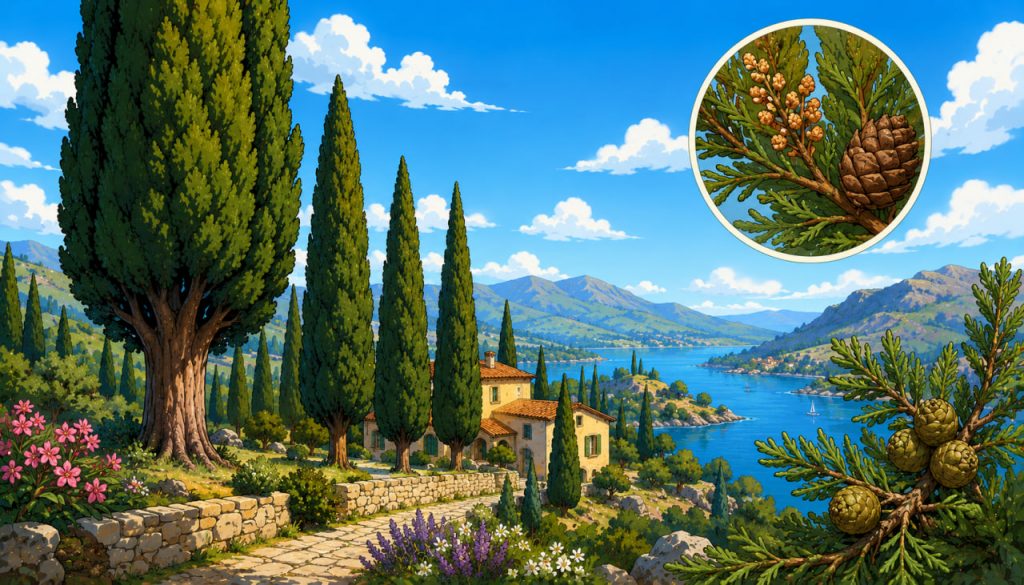
One of the most iconic species is the Mediterranean cypress (Cupressus sempervirens).
This tree became strongly associated with:
- Italy
- Greece
- Ancient Persia
- Mediterranean landscapes
Its tall, column-like shape often appears in:
- Paintings
- Cemeteries
- Historic gardens
- Religious sites
Landscape architect Russell Page once described Mediterranean cypress trees as:
“Vertical poetry written into the landscape.”
Their elegant silhouettes became symbols of timeless beauty.
Cypress Trees and Ancient Civilizations
Cypress trees held symbolic importance for many ancient cultures.
In different societies, they represented:
- Eternity
- Mourning
- Spirituality
- Protection
- Immortality
Ancient Greeks and Romans often planted cypress trees near temples and burial grounds.
Because cypress wood resists decay, some civilizations associated the tree with eternal life and permanence.
How Cypress Trees Adapt to Harsh Conditions
Cypress species evolved impressive survival abilities.
Many can tolerate:
- Drought
- Poor soils
- Heat
- Wind
- Salty environments
Certain wetland species, such as bald cypress trees, even survive prolonged flooding.
These adaptations help cypress trees thrive in diverse ecosystems.
Bald Cypress and Swamp Ecosystems
The bald cypress (Taxodium distichum) differs from many evergreen cypress species because it sheds needles seasonally.
It commonly grows in:
- Swamps
- Wetlands
- Flooded forests
Bald cypress trees develop unusual root structures called knees protruding above waterlogged soil.
Scientists continue studying the exact function of these structures.
Wetland cypress forests provide critical habitats for:
- Birds
- Fish
- Amphibians
- Insects
Why Cypress Wood Is Valuable
Cypress wood is highly valued because of its:
- Durability
- Resistance to rot
- Aromatic oils
- Insect resistance
Historically, cypress wood was used for:
- Ships
- Furniture
- Temples
- Coffins
- Construction
Some ancient cypress wood artifacts survived for centuries due to the tree’s natural chemical protection.
Cypress Trees and Climate Change
Scientists increasingly study cypress trees for climate resilience.
Many species tolerate:
- Heat stress
- Water shortages
- Variable environmental conditions
This makes them useful in:
- Reforestation projects
- Urban landscaping
- Climate adaptation planning
However, some cypress populations still face threats from:
- Drought extremes
- Disease
- Habitat destruction
Cypress Trees and Air Quality
Like many trees, cypress species help improve environmental quality by:
- Absorbing carbon dioxide
- Producing oxygen
- Stabilizing soil
- Reducing erosion
Urban trees also help:
- Lower temperatures
- Improve air quality
- Reduce noise pollution
Large tree systems play important ecological roles in modern cities.
How Cypress Trees Reproduce
Cypress trees reproduce through cones rather than flowers.
Male cones release pollen, while female cones contain seeds.
Wind usually carries pollen between trees.
Seeds may spread through:
- Wind
- Water
- Animals
Some species produce cones that remain closed until triggered by heat or fire, helping regeneration after wildfires.
Cypress Trees in Modern Landscaping
Cypress trees remain highly popular in landscaping because they provide:
- Vertical structure
- Privacy screens
- Wind protection
- Decorative elegance
Their strong visual form makes them especially valuable in formal gardens and Mediterranean-style landscapes.
Some dwarf varieties are also cultivated for smaller spaces.
Why Humans Are Drawn to Cypress Trees
Psychologists and landscape designers suggest humans naturally respond to:
- Symmetry
- Height
- Evergreen stability
- Natural fragrance
The calm, upright appearance of cypress trees often creates feelings of:
- Peace
- Reflection
- Permanence
This may explain their long cultural and spiritual significance.
Interesting Facts
- Some cypress trees can live for many centuries.
- Bald cypress trees grow successfully in flooded wetlands.
- Cypress wood naturally resists decay and insects.
- Mediterranean cypress trees are famous in classical landscape art.
- Certain cypress species tolerate extreme environmental conditions.
Glossary
- Conifer — A cone-producing tree or plant, usually evergreen.
- Evergreen — A plant that remains green throughout the year.
- Cone — The reproductive structure of many conifer trees.
- Wetland — An ecosystem where water covers the soil for long periods.
- Reforestation — The process of planting trees to restore forests.