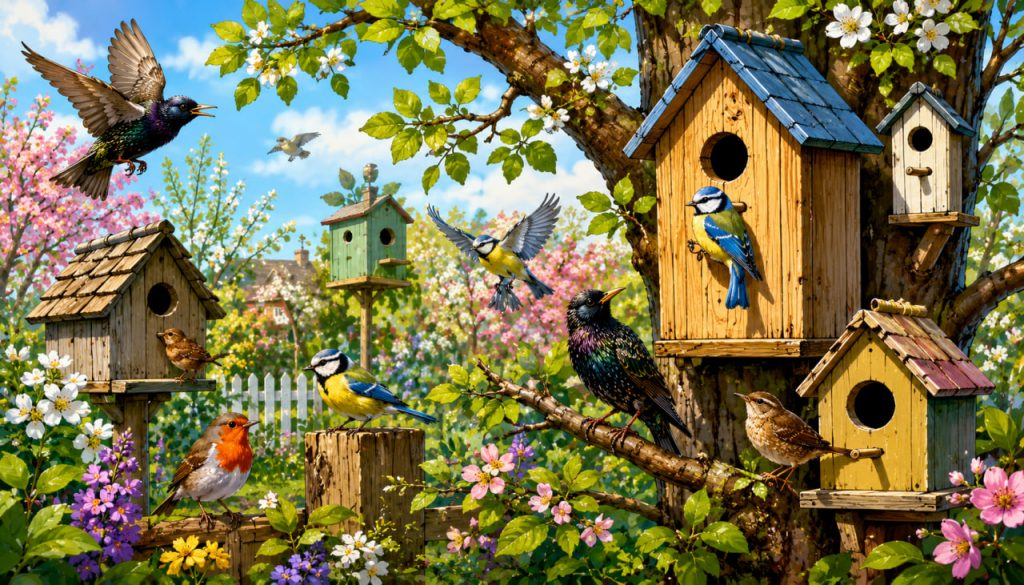
Birdhouses are a familiar sight in gardens, parks, forests, and rural landscapes around the world. For many people, building and installing birdhouses is an enjoyable hobby that combines craftsmanship, nature appreciation, and outdoor activity. But do birdhouses truly help birds, or are they mainly decorative objects created for human enjoyment?
The answer is more interesting than many people realize. Properly designed and correctly placed birdhouses can provide significant benefits for wildlife, especially in areas where natural nesting sites have become scarce. However, poorly designed birdhouses may offer little value and can sometimes even create risks for their feathered residents.
Understanding how birdhouses affect bird populations reveals that this popular hobby can become an important tool for conservation.
Why Birds Need Nesting Sites
Most bird species require safe locations to lay eggs and raise their young.
Natural nesting places include:
- Tree cavities
- Hollow branches
- Rock crevices
- Dense vegetation
- Abandoned woodpecker holes
For thousands of years, these habitats were widely available.
However, modern landscapes have changed dramatically.
Urbanization, agriculture, and forestry often remove older trees that naturally develop cavities suitable for nesting.
As a result, many bird species face increasing competition for suitable breeding locations.
What Is a Birdhouse?
A birdhouse, sometimes called a nest box, is an artificial structure designed to provide birds with a safe nesting cavity.
Unlike decorative garden ornaments, effective birdhouses are built according to the biological needs of specific species.
Important features include:
- Proper entrance size
- Appropriate interior dimensions
- Ventilation
- Drainage
- Predator protection
When designed correctly, birdhouses can closely mimic natural nesting sites.
Which Birds Use Birdhouses?
Not all birds nest in cavities.
Many species prefer trees, shrubs, or ground nests.
Birdhouses primarily benefit cavity-nesting birds such as:
- Bluebirds
- Chickadees
- Tits
- Nuthatches
- Tree swallows
- Wrens
- Some owls
- Certain ducks
Different species require different box designs.
A nest box suitable for a small chickadee may be completely unsuitable for a larger owl.
How Habitat Loss Increased the Need for Birdhouses
One of the main reasons birdhouses became important is the reduction of natural nesting opportunities.
Modern forestry often removes:
- Dead trees
- Aging trees
- Hollow trunks
Although these trees may appear unimportant, they provide critical habitat for wildlife.
In many regions, birdhouses help compensate for the loss of natural cavities.
This is especially true in urban and suburban environments.
Scientific Evidence of Their Benefits
Research has shown that nest boxes can significantly improve breeding success for some bird species.
Successful conservation programs have used birdhouses to support populations of:
- Eastern bluebirds
- Kestrels
- Purple martins
- Various owl species
In some areas, nest-box projects helped reverse local population declines.
Birdhouses are now widely used by conservation organizations worldwide.
The Famous Bluebird Success Story
One of the best-known examples involves the Eastern Bluebird in North America.
During the twentieth century, bluebird populations declined due to:
- Habitat loss
- Competition from invasive species
- Reduced nesting opportunities
Large-scale nest-box programs provided suitable breeding sites.
As a result, bluebird numbers recovered significantly in many regions.
This success story is often cited as one of the most effective community-based bird conservation efforts.
When Birdhouses Become Harmful
Not every birdhouse benefits birds.
Poor designs may create problems.
Potential issues include:
- Excessive heat
- Water accumulation
- Inadequate ventilation
- Easy predator access
- Unsafe materials
Decorative birdhouses sold for aesthetic purposes often fail to meet the biological needs of birds.
A beautiful design is not always a functional one.
The Importance of Proper Placement
Location is just as important as design.
Factors to consider include:
- Height above ground
- Exposure to sunlight
- Nearby vegetation
- Predator presence
- Species requirements
Some birds prefer open habitats, while others seek forest edges or dense cover.
Improper placement may result in the birdhouse remaining unused.
Maintenance Matters
Many people assume birdhouses require no maintenance.
In reality, periodic cleaning is essential.
Old nesting material can:
- Accumulate parasites
- Harbor pathogens
- Reduce available space
Cleaning birdhouses between breeding seasons helps improve safety for future occupants.
Responsible maintenance greatly increases the long-term value of nest boxes.
Birdhouses and Citizen Science
Birdhouses also contribute to scientific research.
Volunteers frequently participate in monitoring programs that collect information about:
- Nesting success
- Breeding timing
- Population trends
- Migration patterns
These observations help scientists better understand bird ecology and conservation needs.
Birdhouse projects often connect communities with wildlife in meaningful ways.
Expert Perspective
Ornithologist David Allen Sibley, one of the world’s most respected bird experts, has emphasized that properly designed nest boxes can provide valuable nesting opportunities in landscapes where natural cavities have become limited.
His work highlights the importance of matching birdhouse designs to the requirements of specific species.
More Than Just a Hobby
Building birdhouses can certainly be an enjoyable pastime.
It encourages:
- Outdoor activity
- Woodworking skills
- Wildlife observation
- Environmental awareness
But when done correctly, it becomes much more than a hobby.
A simple wooden box can help birds raise their young, support local biodiversity, and contribute to conservation efforts.
Conclusion
Birdhouses are not merely decorative garden accessories. Properly designed and maintained nest boxes can provide real ecological benefits, particularly in areas where natural nesting sites have declined.
While birdhouses alone cannot solve all conservation challenges, they represent a practical way for ordinary people to help wildlife. The greatest value comes when craftsmanship is combined with an understanding of bird biology.
In that sense, a birdhouse is both a rewarding hobby and a genuine contribution to nature.
Interesting Facts
- Some owl species readily use specially designed nest boxes.
- Birdhouses have played a major role in the recovery of Eastern Bluebird populations.
- Entrance hole size determines which species can use a birdhouse.
- Certain ducks nest in elevated boxes near water.
- A single dead tree may provide nesting cavities for dozens of animal species.
Glossary
- Cavity-Nesting Bird — A bird that raises its young inside enclosed spaces such as tree holes or nest boxes.
- Nest Box — An artificial structure designed to provide a nesting site for birds.
- Urbanization — The expansion of cities and developed areas.
- Ornithologist — A scientist who studies birds.
- Biodiversity — The variety of living organisms within an ecosystem.