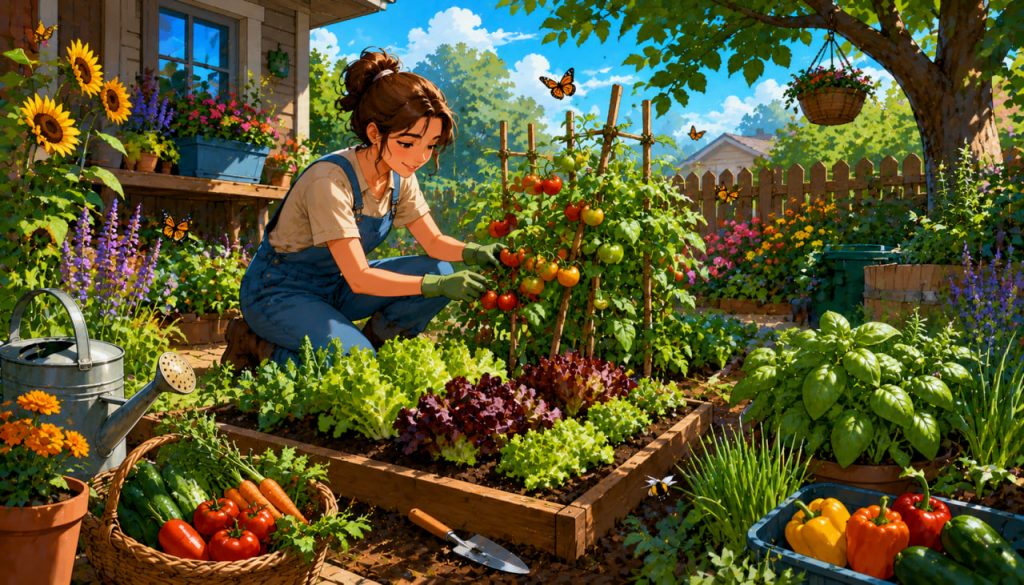
Growing your own vegetables, herbs, and fruits at home has become increasingly popular in recent years. Whether motivated by healthier food, sustainability, cost savings, or simply the joy of gardening, millions of people are discovering the rewards of cultivating their own small gardens.
A home garden does not require a large farm or even a backyard. Many successful gardeners grow impressive harvests on balconies, patios, rooftops, or even windowsills. The key is starting with realistic goals, choosing suitable plants, and learning a few fundamental principles.
For beginners, gardening may seem complicated at first, but nature is surprisingly forgiving. With patience and proper planning, even a small plot can produce fresh food and provide a satisfying connection to the natural world.
Why Start a Home Garden?
Home gardening offers many benefits beyond food production.
Advantages include:
- Fresh vegetables and herbs
- Better understanding of food systems
- Outdoor physical activity
- Reduced food transportation
- Educational opportunities for children
- Stress reduction and relaxation
Many gardeners report that spending time with plants improves their mood and overall well-being.
Start Small Rather Than Large
One of the most common beginner mistakes is planting too much.
A small garden is easier to:
- Water
- Weed
- Monitor
- Maintain
Starting with a few containers or a modest garden bed allows beginners to learn gradually without becoming overwhelmed.
Success with a small garden often leads to expansion later.
Choosing the Right Location
Location is one of the most important factors in gardening success.
Most vegetables require:
- At least 6–8 hours of sunlight daily
- Good air circulation
- Convenient access to water
Observe your available space throughout the day.
Areas receiving consistent sunlight are usually the best locations for food crops.
Understanding Your Soil
Healthy soil is the foundation of a productive garden.
Good garden soil should be:
- Rich in organic matter
- Well-drained
- Loose and airy
- Capable of retaining moisture
Adding compost can significantly improve soil quality.
Many gardening experts consider soil improvement the single best investment a beginner can make.
Container Gardening for Beginners
Container gardening is often ideal for first-time gardeners.
Benefits include:
- Easy management
- Reduced weed pressure
- Flexibility
- Suitable for small spaces
Common container crops include:
- Tomatoes
- Lettuce
- Basil
- Mint
- Peppers
- Strawberries
Even apartment dwellers can grow impressive harvests using containers.
Choose Easy Crops First
Some plants are more forgiving than others.
Beginner-friendly options include:
- Lettuce
- Radishes
- Green onions
- Spinach
- Bush beans
- Basil
- Parsley
These crops typically grow quickly and provide early success.
Positive early experiences help build confidence.
Watering the Right Way
Water is essential, but too much can be as harmful as too little.
General guidelines include:
- Water deeply rather than frequently
- Water early in the morning
- Avoid constantly saturated soil
- Monitor weather conditions
Different crops have different water requirements, so observation is important.
The Importance of Compost
Compost is often called “black gold” by gardeners.
It consists of decomposed organic material such as:
- Leaves
- Vegetable scraps
- Grass clippings
- Plant debris
Compost improves:
- Soil fertility
- Water retention
- Soil structure
- Microbial activity
Many successful gardens rely heavily on compost.
Managing Pests Naturally
Every garden eventually encounters pests.
Common examples include:
- Aphids
- Slugs
- Caterpillars
Fortunately, many problems can be managed naturally.
Methods include:
- Encouraging beneficial insects
- Hand removal
- Healthy soil management
- Crop diversity
A balanced garden ecosystem often controls many pests naturally.
Seasonal Planning
Successful gardening involves working with the seasons.
Cool-season crops include:
- Lettuce
- Spinach
- Peas
Warm-season crops include:
- Tomatoes
- Cucumbers
- Peppers
Understanding local growing seasons helps maximize harvests.
Many gardeners use planting calendars specific to their climate.
Expert Perspective
Gardening educator Charles Dowding is known for promoting simple, soil-focused gardening methods. He frequently emphasizes that healthy soil supports healthy plants and that beginners should focus on building soil quality rather than relying heavily on fertilizers or complicated techniques. His work demonstrates that productive gardens can often be created with less effort than many people expect.
Common Beginner Mistakes
New gardeners often encounter similar challenges.
Frequent mistakes include:
- Planting too much
- Overwatering
- Ignoring sunlight requirements
- Using poor soil
- Expecting immediate perfection
Gardening is a skill developed over time.
Even experienced gardeners continue learning every season.
Gardening and Mental Well-Being
Researchers have increasingly studied the psychological benefits of gardening.
Potential benefits include:
- Reduced stress
- Improved mood
- Increased physical activity
- Greater connection with nature
Many people discover that the process of gardening becomes as rewarding as the harvest itself.
The Future of Home Gardening
Interest in home gardening continues to grow worldwide.
Modern innovations include:
- Raised beds
- Vertical gardens
- Smart irrigation systems
- Hydroponic setups
- Indoor grow lights
These technologies make gardening accessible to people living in a wide variety of environments.
Conclusion
Starting a home garden is one of the most rewarding projects a beginner can undertake. By choosing a sunny location, improving soil quality, starting with easy crops, and learning basic watering and maintenance techniques, almost anyone can successfully grow fresh food at home.
The most important advice is simple: start small, observe carefully, and enjoy the learning process. Gardening is not about perfection—it is about working with nature and discovering the satisfaction of growing something with your own hands.
Interesting Facts
- A single tomato plant can produce dozens of tomatoes during one growing season.
- Compost contains billions of beneficial microorganisms.
- Many herbs grow successfully in containers on windowsills.
- Earthworms naturally improve soil structure and fertility.
- Some lettuce varieties can be harvested multiple times from the same plant.
- Gardening has been linked to lower stress levels in numerous studies.
Glossary
- Compost — Decomposed organic material used to improve soil.
- Organic Matter — Plant or animal material incorporated into soil.
- Container Gardening — Growing plants in pots or other containers.
- Raised Bed — An elevated planting area filled with prepared soil.
- Mulch — Material placed on soil to retain moisture and suppress weeds.
- Hydroponics — Growing plants without soil using nutrient-rich water.
- Growing Season — The period of the year suitable for plant growth.