Tourism is one of the world’s largest industries. Every year, billions of people travel to beaches, mountains, forests, deserts, and cultural landmarks. Tourism creates jobs, supports local economies, and helps people discover new places. However, uncontrolled tourism can also damage the very environments that attract visitors in the first place.
Crowded beaches, polluted trails, disturbed wildlife, and excessive resource consumption have become common challenges in many popular destinations. In response, a different approach to travel has emerged: ecotourism.
Ecotourism seeks to balance exploration, conservation, and community benefits. Rather than simply visiting natural areas, ecotourism encourages travelers to minimize their environmental impact while supporting local ecosystems and populations.
As environmental awareness grows worldwide, ecotourism has become one of the fastest-growing segments of the travel industry.
What Is Ecotourism?
Ecotourism is a form of responsible travel focused on natural environments and conservation.
Although definitions vary, most ecotourism programs emphasize:
- Environmental protection
- Sustainable practices
- Education
- Community involvement
- Respect for local cultures
Unlike traditional mass tourism, ecotourism aims to reduce negative impacts while creating positive outcomes for both people and nature.
The core principle of ecotourism is simple: leave a destination better protected than it was before.
This approach transforms tourism from a potential environmental threat into a conservation tool.
Why Traditional Tourism Can Harm Nature
Many tourist destinations experience environmental pressure due to large visitor numbers.
Common problems include:
- Habitat destruction
- Waste generation
- Water consumption
- Wildlife disturbance
- Air pollution
Popular destinations may receive millions of visitors each year.
Without proper management, natural ecosystems can become overwhelmed.
Examples include:
- Coral reef damage from excessive diving
- Erosion on hiking trails
- Disturbance of nesting birds
- Plastic pollution in protected areas
Even well-intentioned tourists can unintentionally harm fragile ecosystems.
How Ecotourism Supports Conservation
One of the most important advantages of ecotourism is its ability to create economic incentives for conservation.
Protected natural areas often require funding for:
- Rangers
- Scientific research
- Habitat restoration
- Visitor management
- Environmental monitoring
Ecotourism revenue can help finance these activities.
In some regions, local communities earn more from preserving wildlife than from activities that would destroy habitats.
As a result, conservation becomes economically valuable.
This relationship has helped protect numerous ecosystems around the world.
Protecting Wildlife Through Tourism
Wildlife tourism can be either beneficial or harmful depending on how it is managed.
Responsible ecotourism programs typically establish rules such as:
- Maintaining safe viewing distances
- Limiting visitor numbers
- Restricting feeding of animals
- Minimizing noise
- Protecting breeding areas
These measures reduce stress on wildlife while allowing visitors to observe animals in natural settings.
When properly managed, wildlife tourism can generate support for species conservation while educating visitors about environmental challenges.
Benefits for Local Communities
Successful ecotourism often focuses on local participation.
Rather than directing profits exclusively to large corporations, many programs support:
- Local guides
- Small businesses
- Indigenous communities
- Family-owned accommodations
- Regional conservation projects
This approach helps ensure that economic benefits remain within the destination itself.
Communities that benefit from tourism are often more motivated to protect natural resources that attract visitors.
Ecotourism in National Parks
National parks are among the most common ecotourism destinations.
Protected areas provide opportunities for:
- Hiking
- Wildlife observation
- Photography
- Birdwatching
- Nature education
Many parks use entrance fees to support conservation efforts.
Visitors gain access to extraordinary natural landscapes while helping finance their protection.
This model has been adopted successfully in numerous countries.
Marine Ecotourism
Ecotourism is not limited to terrestrial environments.
Marine ecotourism includes activities such as:
- Whale watching
- Reef snorkeling
- Sustainable diving
- Coastal wildlife observation
These activities can help raise awareness about marine conservation.
However, operators must carefully manage visitor behavior to avoid harming sensitive habitats.
For example, touching corals or chasing marine animals can cause significant ecological damage.
Responsible operators prioritize education alongside recreation.
The Role of Education
Education is one of the defining characteristics of ecotourism.
Visitors often learn about:
- Ecosystems
- Wildlife biology
- Conservation challenges
- Local cultures
- Environmental sustainability
This educational component distinguishes ecotourism from ordinary sightseeing.
People who understand ecological issues are often more likely to support conservation efforts after returning home.
In this way, ecotourism can have effects that extend far beyond the destination itself.
Expert Perspective
Conservation biologist Martha Honey has extensively studied the relationship between tourism and environmental protection.
Her work emphasizes that genuine ecotourism must go beyond marketing claims and produce measurable benefits for conservation and local communities.
According to Honey, successful ecotourism combines environmental responsibility, cultural respect, community participation, and education.
This perspective has influenced ecotourism standards worldwide.
Challenges and Criticism
Despite its potential benefits, ecotourism is not perfect.
Some challenges include:
- Greenwashing by tourism companies
- Excessive visitor numbers
- Habitat disturbance
- Infrastructure development
- Increased transportation emissions
Not every tour labeled “eco” actually meets high environmental standards.
For this reason, travelers should research operators carefully and look for credible sustainability certifications.
Responsible tourism requires accountability as well as good intentions.
How Travelers Can Practice Ecotourism
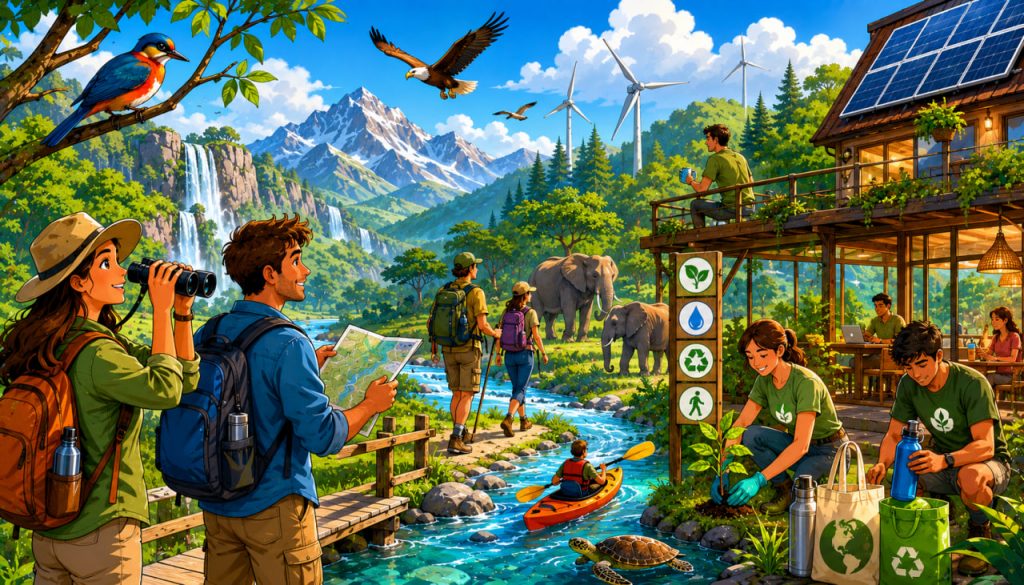
Individuals can reduce their environmental impact by:
- Following marked trails
- Avoiding wildlife disturbance
- Reducing waste
- Using reusable containers
- Supporting local businesses
- Choosing responsible tour operators
Small actions multiplied across millions of travelers can make a significant difference.
Ecotourism is ultimately a partnership between visitors, communities, and nature.
The Future of Sustainable Travel
As environmental concerns grow, many tourism destinations are adopting more sustainable practices.
Emerging trends include:
- Renewable energy in accommodations
- Visitor quotas
- Habitat restoration projects
- Carbon reduction programs
- Community-led tourism initiatives
Technology is also helping managers monitor environmental impacts and improve conservation outcomes.
The future of tourism may increasingly depend on balancing economic development with ecological protection.
Interesting Facts
- Ecotourism is one of the fastest-growing sectors of the global tourism industry.
- Costa Rica is often considered one of the world’s leading ecotourism destinations.
- Many national parks rely heavily on visitor fees to support conservation efforts.
- Whale watching generates billions of dollars annually while encouraging marine conservation.
- Some protected areas limit visitor numbers to reduce environmental impact.
- Community-based tourism projects often provide direct economic benefits to local residents.
Glossary
- Ecotourism — Responsible travel focused on conservation, sustainability, and community benefits.
- Conservation — The protection and management of natural resources and ecosystems.
- Sustainable Tourism — Tourism designed to minimize negative environmental and social impacts.
- Greenwashing — Marketing that falsely portrays a product or service as environmentally friendly.
- Protected Area — A region designated for the conservation of nature and biodiversity.
- Biodiversity — The variety of living organisms within an ecosystem.