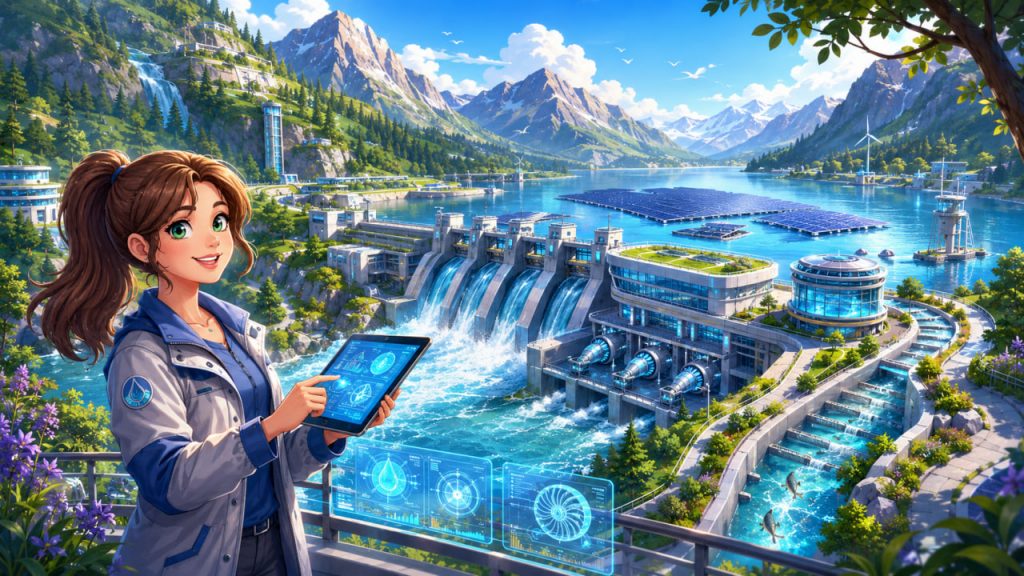
Hydropower is one of the oldest sources of renewable electricity, but it is far from outdated. While solar panels and wind turbines often dominate discussions about clean energy, hydropower remains a crucial part of the global electricity system. In 2024, hydropower generated around 4,500 terawatt-hours of electricity, or about 14% of global power generation, making it one of the world’s most important low-carbon energy sources.
The hydropower plants of the future will not simply be larger dams producing electricity in the traditional way. They will be smarter, more flexible, more environmentally sensitive, and more deeply connected to solar, wind, batteries, artificial intelligence, and modern water-management systems.
Why Hydropower Still Matters
Hydropower has one major advantage over many renewable energy sources: it can provide stable and controllable electricity.
Solar power depends on daylight. Wind power depends on weather. Hydropower, especially reservoir-based systems, can often respond quickly when electricity demand rises or when wind and solar output drops.
This makes hydropower valuable for:
- Grid stability
- Peak electricity demand
- Backup power
- Energy storage
- Flood control
- Water supply management
- Irrigation support
Future energy systems will need not only clean electricity, but also flexible electricity.
That is where modern hydropower becomes especially important.
Pumped Storage: The Giant Water Battery
One of the most important technologies in the future of hydropower is pumped storage hydropower.
It works like a giant rechargeable battery.
When electricity is abundant and cheap, usually during periods of strong wind or solar production, water is pumped from a lower reservoir to an upper reservoir. When electricity is needed, the water flows back down through turbines and generates power.
The International Hydropower Association describes pumped storage as a clean energy storage technology that supports grid reliability and helps balance wind and solar power.
This technology is especially valuable because it can store large amounts of energy for hours or even days.
Pumped storage is likely to become one of the backbone technologies of renewable electricity grids.
According to the International Hydropower Association, hydropower capacity grew by 24.6 GW in 2024, including 8.4 GW of pumped storage hydropower.
Smarter Hydropower with Artificial Intelligence
Future hydropower plants will increasingly use digital systems to improve performance.
Artificial intelligence and advanced sensors can help operators monitor:
- Water flow
- Turbine efficiency
- Sediment buildup
- Weather forecasts
- Electricity demand
- Equipment condition
- Reservoir levels
Instead of reacting only after problems occur, operators can predict maintenance needs before breakdowns happen.
This is known as predictive maintenance.
AI can also help decide when to store water, when to generate power, and how to balance electricity production with ecological requirements.
The hydropower plant of the future will be both an energy facility and a data-driven water-management system.
Fish-Friendly Turbines and Ecological Design
Traditional hydropower has often been criticized for its impact on rivers, fish migration, sediment transport, and local ecosystems.
Future hydropower development will need to address these concerns more seriously.
New ecological design approaches include:
- Fish-friendly turbines
- Fish ladders and bypass systems
- Environmental flow management
- Sediment release systems
- River habitat restoration
- Better dam placement
- Monitoring of aquatic biodiversity
Environmental flow means leaving enough water in the river to support fish, plants, wetlands, and downstream communities.
The goal is not only to generate power, but to maintain a functioning river ecosystem.
Future hydropower must be measured not only by megawatts, but also by ecological performance.
Small and Micro Hydropower
Not every future hydropower project will involve a massive dam.
Small and micro hydropower systems can provide electricity for rural communities, mountain regions, farms, islands, and remote settlements.
These systems may use:
- Small rivers
- Irrigation channels
- Existing water pipes
- Old mill sites
- Industrial water flows
Micro hydropower can be especially useful where solar or wind power is unreliable or where battery storage is expensive.
In many cases, small systems have a lower environmental footprint than large dams, especially when they use existing infrastructure.
However, even small hydropower must be planned carefully to avoid damaging streams and aquatic habitats.
Floating Solar Panels on Reservoirs
One exciting trend is combining hydropower reservoirs with floating solar power.
Solar panels can be installed on the surface of reservoirs, creating hybrid renewable energy systems.
This approach has several advantages:
- Solar panels generate electricity during sunny periods.
- Hydropower can balance solar fluctuations.
- Floating panels may reduce water evaporation.
- Existing grid connections can be used.
- Land use pressure is reduced.
A hydropower reservoir already has access roads, transmission lines, and energy infrastructure, making it a practical place for solar integration.
Hybrid hydro-solar plants can produce cleaner electricity with better stability than either technology alone.
Climate Change and Hydropower Risks
Hydropower depends on water, which makes it vulnerable to climate change.
Changing rainfall patterns, droughts, floods, glacier retreat, and altered snowmelt can all affect hydropower production.
A future hydropower plant must be designed for more extreme and unpredictable conditions.
Climate risks include:
- Lower river flows during droughts
- Increased flood pressure on dams
- Seasonal changes in water availability
- Sediment changes after intense storms
- Conflicts between electricity, agriculture, and drinking water needs
Research on future hydropower in Europe has shown that climate change can affect annual inflow, seasonal water availability, and the frequency of droughts and floods.
This means future hydropower planning must combine engineering with climate science.
Modernizing Existing Dams
One of the most practical strategies for future hydropower is upgrading existing plants rather than building entirely new dams.
Many older hydropower stations can produce more electricity with modern equipment.
Upgrades may include:
- More efficient turbines
- Digital control systems
- Better generators
- Improved spillways
- Safer dam monitoring
- Fish protection systems
- Pumped storage conversion where possible
Modernization can increase power output without flooding new land or creating major new ecological disruption.
In many regions, the cleanest hydropower project is not a new dam, but a smarter old one.
Expert Perspective
The International Energy Agency emphasizes that hydropower remains a key source of low-emissions electricity and an important provider of flexibility for power systems with growing shares of wind and solar. Its hydropower overview notes that hydro is currently the world’s third-largest source of electricity generation after coal and natural gas.
“Hydropower’s future role is not only to generate renewable electricity, but to stabilize energy systems built around variable renewables.”
This view reflects the central challenge of the energy transition.
A clean grid needs solar panels and wind turbines, but it also needs technologies that can respond when the weather changes. Hydropower, especially pumped storage, can provide that balancing role at large scale.
The Future Is Flexible, Not Just Bigger
The hydropower plants of the future will be judged by more than raw capacity.
The most successful projects will combine:
- Low-carbon electricity
- Grid flexibility
- Water security
- Ecosystem protection
- Digital intelligence
- Climate resilience
- Social responsibility
Large dams will still exist, but future hydropower will increasingly focus on smarter operations, better environmental standards, hybrid renewable systems, and storage.
Hydropower is evolving from a traditional power source into a flexible energy-and-water platform for the renewable age.
Interesting Facts
- Hydropower is one of the oldest renewable energy technologies still used at large scale.
- Pumped storage hydropower works like a giant battery made of water and gravity.
- Some hydropower plants can start generating electricity within minutes.
- Floating solar panels on reservoirs can reduce land use and help limit water evaporation.
- Modern turbines can be designed to reduce harm to fish.
- Many old dams can produce more electricity after modernization.
- Hydropower can support flood control, irrigation, drinking water supply, and electricity generation at the same time.
Glossary
- Hydropower — Electricity generated from the movement of water.
- Pumped Storage Hydropower — A system that stores energy by pumping water uphill and releases it later to generate electricity.
- Turbine — A machine that spins when water flows through it, driving a generator.
- Reservoir — An artificial or natural body of stored water used for power generation, irrigation, or water supply.
- Environmental Flow — The amount of water left in a river to support ecosystems and downstream communities.
- Predictive Maintenance — Using data and sensors to detect equipment problems before failure occurs.
- Hybrid Power Plant — An energy facility that combines two or more generation technologies, such as hydropower and solar.
- Grid Stability — The ability of an electricity system to maintain reliable power supply despite changes in demand or generation.
- Sediment Transport — The natural movement of sand, silt, and rocks through rivers.
- Climate Resilience — The ability of infrastructure to withstand and adapt to climate-related changes.