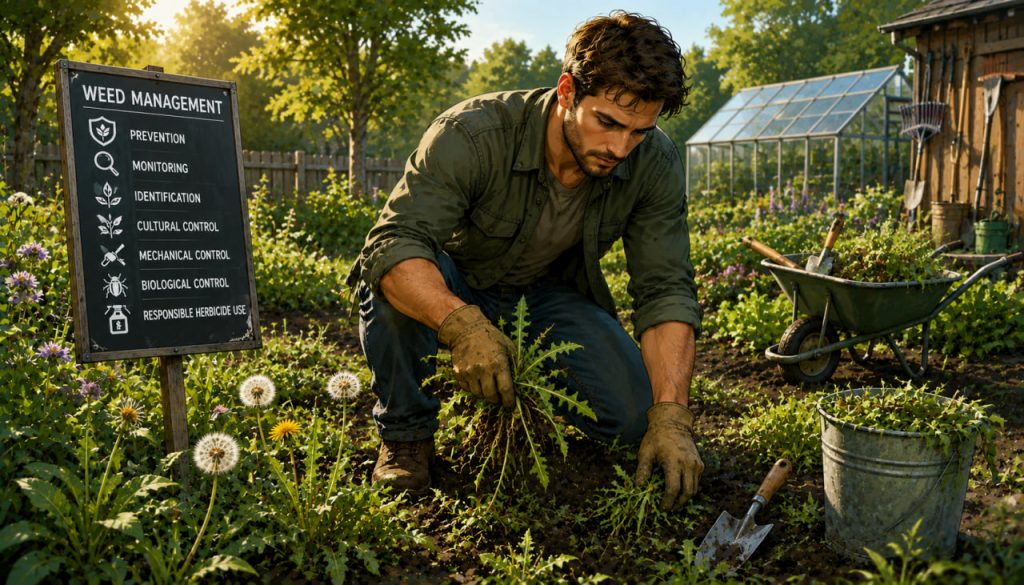
Weeds are among the most persistent challenges faced by gardeners, farmers, landscapers, and land managers worldwide. They seem to appear everywhere: in vegetable gardens, flower beds, agricultural fields, roadsides, abandoned lots, and even cracks in sidewalks. Despite centuries of effort to control them, weeds remain remarkably successful.
But what exactly is a weed? Why do they spread so effectively? Are they always harmful? And most importantly, what are the most effective ways to manage them?
Understanding weeds requires looking beyond the simple idea of “unwanted plants” and exploring the ecological processes that allow them to thrive.
What Is a Weed?
A weed is not a specific type of plant.
Instead, a weed is generally defined as a plant growing where it is not wanted.
The same species can be considered:
- A weed in a crop field
- A valuable wildflower in a meadow
- A medicinal plant in a garden
- An important food source for pollinators
For example, dandelions are often removed from lawns but provide early-season nectar for bees.
A weed is defined more by human objectives than by biology.
However, many weeds share characteristics that make them particularly successful competitors.
Why Are Weeds So Successful?
Weeds have evolved strategies that allow them to colonize disturbed environments rapidly.
Common advantages include:
- Fast growth
- High seed production
- Long-lived seeds
- Strong root systems
- Rapid reproduction
- Tolerance of poor conditions
- Ability to spread through roots or rhizomes
Some weeds can produce thousands or even tens of thousands of seeds in a single season.
Many seeds remain viable in the soil for years, creating what scientists call a seed bank.
This means that even after visible weeds are removed, new plants may continue appearing for a long time.
Who Is Responsible for Weed Problems?
The short answer is: humans.
Most serious weed outbreaks are linked to human activities.
Examples include:
- Soil disturbance
- Intensive agriculture
- Construction projects
- Deforestation
- Overgrazing
- Transport networks
- Introduction of non-native species
When natural ecosystems are disturbed, open space becomes available.
Weeds are often the first plants to exploit these opportunities.
Road construction, for example, creates ideal conditions for many invasive plants because soil is exposed and transportation spreads seeds over large distances.
In many cases, weeds are symptoms of environmental disturbance rather than the original problem.
Native Weeds vs. Invasive Weeds
Not all weeds are equally harmful.
Native weeds evolved within local ecosystems and often play ecological roles.
Invasive weeds, however, can be far more problematic.
An invasive species is a non-native organism that spreads aggressively and causes environmental, economic, or health damage.
Examples include:
- Kudzu in parts of the United States
- Japanese knotweed in Europe and North America
- Giant hogweed in many European regions
- Water hyacinth in tropical waterways
These species may outcompete native vegetation, alter habitats, and create significant management costs.
Are All Weeds Bad?
Surprisingly, no.
Many weeds provide ecological benefits.
They can:
- Prevent soil erosion
- Improve soil structure
- Support pollinators
- Provide wildlife habitat
- Add organic matter to soil
- Increase biodiversity
Some plants considered weeds have historical uses in food, medicine, and agriculture.
For example:
- Dandelion leaves are edible.
- Plantain has traditional medicinal uses.
- Clover can improve soil fertility through nitrogen fixation.
This does not mean weeds should be ignored, but it highlights the importance of distinguishing harmful weeds from harmless or beneficial species.
The Economic Impact of Weeds
Weeds can cause substantial financial losses.
In agriculture, they compete with crops for:
- Water
- Nutrients
- Sunlight
- Space
Yield reductions can be severe when weeds are left unmanaged.
Additional costs include:
- Herbicides
- Mechanical removal
- Labor
- Monitoring
- Equipment maintenance
According to agricultural research worldwide, weeds are among the most significant biological threats to crop production.
In many farming systems, weed competition can reduce yields more than insects or plant diseases if left uncontrolled.
What Is the Best Way to Control Weeds?
Modern weed management relies on integrated approaches rather than a single solution.
Prevention
Prevention is often the most effective strategy.
Methods include:
- Using clean seed material
- Cleaning equipment
- Preventing invasive species introduction
- Monitoring new infestations early
Stopping a weed from becoming established is usually far easier than eliminating it later.
Mechanical Control
Mechanical methods include:
- Hand pulling
- Hoeing
- Mowing
- Cultivation
- Mulching
These approaches work particularly well in gardens and smaller areas.
Mulch is especially effective because it blocks sunlight and suppresses weed germination.
Biological Control
Some weeds can be controlled using natural enemies such as:
- Insects
- Fungi
- Grazing animals
Biological control requires careful scientific evaluation to avoid unintended ecological consequences.
Chemical Control
Herbicides remain important tools in agriculture and land management.
However, excessive reliance on herbicides can create resistant weed populations.
For this reason, experts increasingly recommend combining chemical and non-chemical methods.
Herbicide Resistance: A Growing Challenge
One of the biggest modern problems is herbicide resistance.
When the same herbicide is used repeatedly, a small number of naturally resistant plants may survive.
Over time, these resistant individuals reproduce and become more common.
Today, resistant weeds are a major concern in many agricultural regions.
This demonstrates why relying on a single control method is rarely sustainable.
Effective weed management depends on diversity of strategies rather than dependence on one solution.
Expert Perspective
The Food and Agriculture Organization of the United Nations (FAO) has consistently emphasized the importance of integrated weed management as part of sustainable agriculture.
Rather than focusing solely on herbicides, integrated systems combine prevention, monitoring, cultural practices, biological controls, and targeted interventions.
“Sustainable weed management requires understanding ecological processes rather than simply eliminating plants.”
This approach reflects a growing recognition that weeds are part of broader ecosystem dynamics.
Understanding why weeds appear is often as important as removing them.
The Future of Weed Management
Technology is changing how weeds are managed.
Modern innovations include:
- AI-powered field monitoring
- Agricultural drones
- Robotic weed removal
- Precision spraying systems
- Satellite imaging
- Automated weed identification
These technologies allow farmers to target weeds more accurately while reducing chemical use.
Future weed control may become increasingly selective, minimizing environmental impacts while improving efficiency.
At the same time, ecological restoration and sustainable land management will continue playing important roles in preventing weed invasions before they begin.
Interesting Facts
- Some weed seeds can remain viable in soil for decades.
- A single weed plant may produce tens of thousands of seeds.
- Dandelions are considered weeds by many homeowners but are important early-season pollinator plants.
- Certain invasive weeds can grow several centimeters per day under favorable conditions.
- Weeds often colonize disturbed land before other plants.
- Many common weeds were intentionally introduced as ornamental or agricultural plants.
- Modern AI systems can identify individual weed species in crop fields.
Glossary
- Weed — A plant growing in an unwanted location.
- Invasive Species — A non-native organism that spreads aggressively and causes harm.
- Seed Bank — A reserve of viable seeds stored in the soil.
- Herbicide — A chemical substance used to control unwanted plants.
- Mulch — Material placed on the soil surface to suppress weeds and conserve moisture.
- Rhizome — An underground stem capable of producing new shoots and roots.
- Biological Control — The use of natural enemies to manage pests or weeds.
- Integrated Weed Management — A strategy that combines multiple weed-control methods for long-term effectiveness.