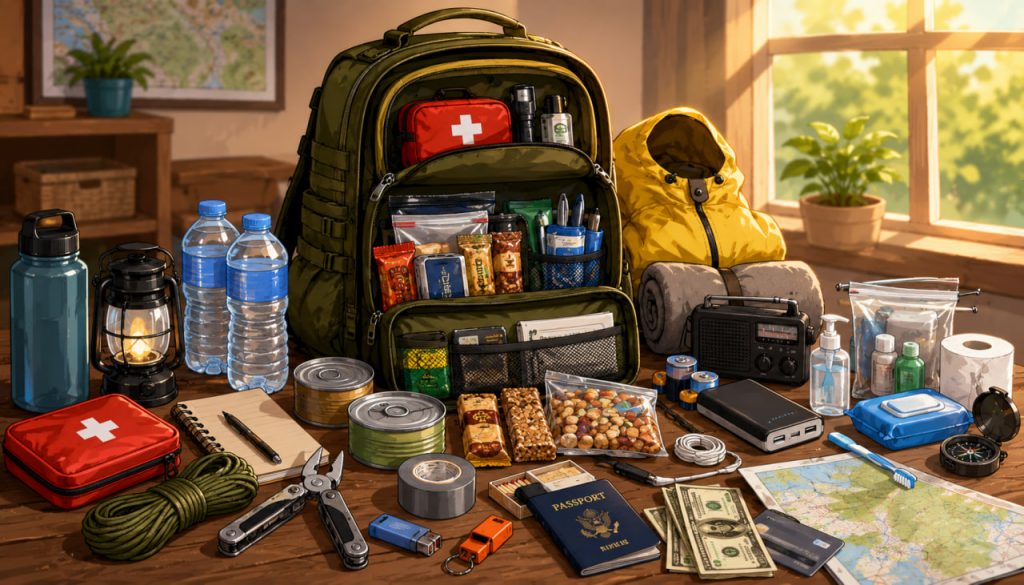
Whether it’s a natural disaster, severe storm, wildfire, flood, prolonged power outage, or another unexpected emergency, having an emergency go-bag can make a significant difference during the first critical hours. Also known as a 72-hour kit, evacuation backpack, or grab-and-go bag, it contains the essential supplies you may need if you must leave your home quickly.
Emergency preparedness experts agree that preparing in advance is far more effective than trying to gather supplies during a crisis. A well-organized go-bag helps reduce stress, saves valuable time, and ensures you have access to food, water, medical supplies, and important documents when normal services may be unavailable.
This guide explains what an emergency go-bag is, what experts recommend packing, common mistakes to avoid, and how to keep your kit ready for use throughout the year.
What Is an Emergency Go-Bag?
An emergency go-bag is a portable backpack filled with essential supplies designed to support one person for approximately 72 hours during an evacuation or emergency.
Unlike a camping backpack or travel suitcase, a go-bag focuses only on necessities that improve safety and self-sufficiency.
It may be useful during:
- Natural disasters
- Floods
- Hurricanes
- Wildfires
- Earthquakes
- Severe winter storms
- Extended power outages
- Civil emergencies
- Temporary evacuations
The objective is simple: carry enough essential supplies to remain safe until assistance becomes available or you reach a secure location.
Choose the Right Backpack First
The backpack itself is just as important as its contents.
A good emergency backpack should be:
- Durable
- Comfortable to carry
- Water-resistant
- Large enough without being bulky
- Equipped with multiple compartments
- Easy to access quickly
For most adults, experts recommend keeping the total weight around 10–15% of your body weight, although this may vary depending on age, health, and physical fitness.
Remember that in an emergency, you may need to walk for several hours.
A lighter backpack you can comfortably carry is always better than a heavy one filled with unnecessary items.
Water Should Always Be Your First Priority
Water is the single most important emergency supply.
The U.S. Centers for Disease Control and Prevention (CDC) recommends storing at least one gallon (about 3.8 liters) of water per person per day for emergencies, although carrying that much in a backpack may not be practical.
A balanced strategy includes:
- One or two liters of bottled water
- A compact water filter
- Water purification tablets
- A reusable water bottle
This combination provides both immediate hydration and the ability to obtain safe drinking water later if necessary.
Without safe drinking water, survival quickly becomes far more difficult than without food.
Pack Foods That Require No Preparation
Emergency food should provide energy while taking up minimal space.
Choose foods that are:
- Shelf-stable
- Ready to eat
- High in calories
- Easy to digest
- Lightweight
Recommended options include:
- Energy bars
- Mixed nuts
- Dried fruit
- Peanut butter packets
- Crackers
- Canned fish with pull-tab lids
- Ready-to-eat protein snacks
- Instant oatmeal if hot water may be available
Avoid foods that require refrigeration or lengthy cooking.
Check expiration dates every few months and replace supplies when necessary.
Simple foods with a long shelf life are the best choice for emergency preparedness.
Build a Practical First Aid Kit
Medical supplies should always be included.
A basic first aid kit should contain:
- Adhesive bandages
- Sterile gauze
- Medical tape
- Antiseptic wipes
- Disposable gloves
- Small scissors
- Tweezers
- Pain reliever
- Antihistamine
- Anti-diarrheal medication
- Thermometer
Do not forget your personal medical needs, including:
- Prescription medications
- Inhalers
- Spare eyeglasses
- Contact lenses
- Diabetes supplies
- Copies of prescriptions
If multiple family members require medication, prepare individual supplies whenever possible.
Medical emergencies rarely happen at convenient times, making preparation especially important.
Protect Your Documents and Cash
Important documents can be just as valuable as food and water during an evacuation.
Store waterproof copies of:
- Passport or identification card
- Driver’s license
- Health insurance information
- Emergency contacts
- Medical records
- Property documents
- Vaccination records if applicable
Also carry:
- Debit or credit cards
- Cash in small denominations
Electronic payment systems may not function during widespread power or communication outages.
Protecting critical documents before an emergency can save significant time and stress afterward.
Stay Connected and Informed
Reliable communication can be lifesaving.
Pack:
- Fully charged power bank
- Charging cables
- Flashlight
- Headlamp
- Spare batteries
- Battery-powered or hand-crank radio
- Emergency whistle
A whistle deserves special attention because it allows rescuers to locate you while conserving energy.
Modern emergency radios can also provide weather alerts and official information when internet access is unavailable.
Access to accurate information often improves decision-making during rapidly changing emergencies.
Clothing and Personal Protection
Your clothing should match your local climate.
Useful items include:
- Rain poncho
- Thermal blanket
- Warm socks
- Hat
- Gloves
- Spare underwear
- Face masks
- Small towel
Layered clothing provides greater flexibility than carrying bulky garments.
Even during warm seasons, nighttime temperatures may drop significantly.
Hygiene Matters More Than Many People Realize
Maintaining hygiene reduces the risk of illness during emergencies.
Include:
- Hand sanitizer
- Wet wipes
- Toothbrush
- Toothpaste
- Soap
- Toilet paper
- Tissues
- Menstrual hygiene products
- Garbage bags
- Resealable plastic bags
Garbage bags have many practical uses beyond waste disposal, including waterproofing equipment and protecting clothing.
Good hygiene helps prevent minor problems from becoming serious health issues.
Essential Tools for Everyday Problems
A few compact tools can solve many unexpected challenges.
Consider packing:
- Multitool
- Waterproof matches or lighter
- Duct tape
- Paracord
- Notebook
- Pencil
- Local paper map
- Compass
- Safety pins
- Small sewing kit
Choose tools that you already know how to use.
Complex equipment offers little benefit if you are unfamiliar with it.
Don’t Forget Children, Older Adults, and Pets
Every household has unique needs.
If you have children, include:
- Formula or baby food
- Diapers
- Wet wipes
- Favorite comfort item
- Children’s medications
For older adults, consider:
- Mobility aids
- Hearing aid batteries
- Prescription medications
- Reading glasses
For pets, pack:
- Food
- Water
- Leash
- Carrier
- Veterinary records
- Waste bags
- Medication
A family emergency plan should include every member of the household—including pets.
Expert Perspective
Emergency preparedness specialists from Ready.gov, the official emergency preparedness program of the U.S. government, emphasize that the most effective emergency kit is one prepared before disaster strikes—not during it. Their guidance recommends maintaining enough essential supplies to remain self-sufficient for at least 72 hours and reviewing emergency kits regularly to replace expired food, medications, batteries, and seasonal clothing.
This advice reflects a broader principle supported by emergency management professionals worldwide: preparation reduces panic, improves decision-making, and allows families to respond more effectively when unexpected situations occur.
Common Mistakes When Packing a Go-Bag
Many people unknowingly reduce the usefulness of their emergency kit.
Common mistakes include:
- Packing too many unnecessary items
- Forgetting prescription medications
- Storing the bag in a difficult-to-reach location
- Never replacing expired supplies
- Carrying excessive weight
- Relying only on digital copies of documents
- Forgetting pet supplies
- Packing foods that require cooking
The goal is not to carry everything you own.
It is to carry exactly what you are most likely to need.
A practical emergency backpack is built around preparation, not perfection.
Review Your Go-Bag Regularly
An emergency backpack should never be packed once and forgotten.
Review it every three to six months.
During each inspection:
- Replace expired food.
- Rotate stored water.
- Recharge power banks.
- Test flashlights.
- Check batteries.
- Update documents.
- Replace seasonal clothing.
- Review medications.
Small routine updates ensure that your emergency supplies remain ready whenever they are needed.
The best emergency go-bag is the one that is always ready before an emergency begins.
P.S. Looking at what is happening in the world, I realized that trouble will come to everyone sooner or later, so we must study what is happening with the climate and environment on our planet and prepare for the risks in our region.
Interesting Facts
- The idea of a 72-hour emergency kit is based on the possibility that emergency services may need several days to reach everyone after a large-scale disaster.
- Water is usually the heaviest item in a go-bag, which is why many experts recommend combining bottled water with portable filtration systems.
- A paper map can remain useful even when GPS navigation, mobile networks, or electricity are unavailable.
- Emergency whistles can often be heard from much farther away than a person’s voice while requiring far less energy.
- Many emergency preparedness professionals recommend keeping separate emergency kits at home, in the car, and at work.
- Simple garbage bags can serve dozens of purposes, including waterproof storage, rain protection, emergency shelter, and waste management.
Glossary
- Emergency Go-Bag – A portable backpack containing essential supplies for rapid evacuation during an emergency.
- 72-Hour Kit – An emergency supply kit designed to support one person for approximately three days.
- Evacuation – The organized movement of people away from a dangerous area to a safer location.
- Water Purification Tablet – A tablet used to disinfect water by reducing harmful microorganisms.
- Power Bank – A portable rechargeable battery used to charge electronic devices.
- Multitool – A compact handheld tool that combines several functions, such as pliers, knives, screwdrivers, and scissors.
- Paracord – A strong, lightweight nylon cord originally developed for parachutes and widely used in outdoor and emergency situations.
- Emergency Preparedness – The process of planning and assembling resources before disasters or other emergencies occur.