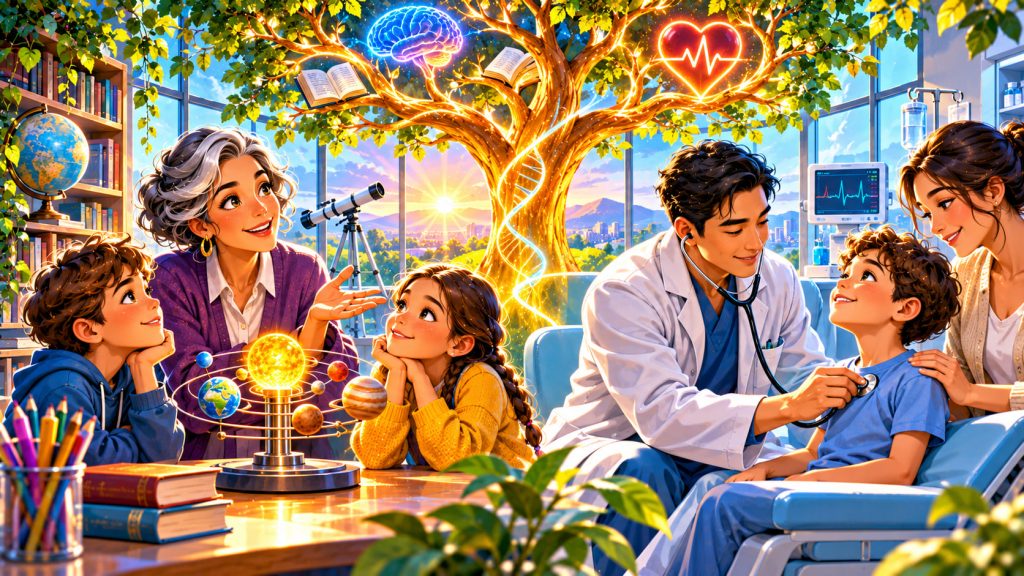
Imagine a society filled with successful entrepreneurs, talented engineers, and powerful politicians, but without enough good teachers or doctors. Who would educate the next generation, care for sick children, or help people recover from serious illness? Many achievements we admire would become impossible without the foundations these two professions provide.
Yet social prestige does not always reflect social importance. Wealth, celebrity, and public visibility frequently attract more attention than education or medicine. If prestige were measured by long-term contributions to human well-being, teachers and doctors would deserve a place at the very top of society’s professional hierarchy.
What Should Make a Profession Prestigious?
Professional prestige is a combination of public respect, trust, recognition, and perceived importance. Traditionally, it has been associated with advanced education, high earnings, and positions of authority. But these measures do not always capture how profoundly a profession influences society.
A more meaningful standard is social value: the benefits that work creates for individuals and communities. Teachers develop human potential, while doctors protect health and help preserve life. Their contributions spread far beyond the people they serve directly.
Why Teachers Shape the Future of Every Society
A teacher’s influence extends well beyond mathematics, history, or language lessons. Excellent educators help children develop curiosity, problem-solving abilities, confidence, and the capacity to evaluate information. These skills shape how people work, cooperate, and participate in society.
Educational psychologists describe self-efficacy as a person’s belief in their ability to accomplish tasks and overcome difficulties. Encouraging teachers can strengthen this belief by providing constructive feedback and meaningful challenges. A teacher who helps a child discover their abilities may influence decisions that child makes for decades.
Why Doctors Are Essential to Human Well-Being
Doctors diagnose illness, guide treatment, prevent complications, and help people navigate difficult medical decisions. Their responsibilities require scientific knowledge, practical judgment, and effective communication. A skilled physician can change the course of an individual’s life through timely diagnosis or treatment.
Modern medicine also emphasizes preventive healthcare, which aims to reduce disease before it causes serious harm. Vaccinations, screening, and management of chronic conditions can protect entire communities. The benefits extend to families, workplaces, and future generations.
Education and Health Are Deeply Connected
Healthy children are better able to attend school, concentrate, and learn. Education, in turn, helps people understand health information, recognize risks, and make informed decisions. This relationship makes teaching and medicine mutually reinforcing foundations of human development.
Epidemiologist Sir Michael Marmot has demonstrated the importance of social determinants of health, including education, income, and living conditions. His work highlights how health depends on much more than medical treatment alone. Strong schools and accessible healthcare contribute to healthier and more equitable communities.
How Teachers and Doctors Strengthen the Economy
Economists use the term human capital to describe the knowledge, skills, and health that enable people to reach their potential. Education develops capabilities, while healthcare helps individuals maintain them. Together, these services support productivity, innovation, and economic participation.
World Bank analyses indicate that an additional year of schooling is associated with approximately 10% higher earnings on average across countries, although returns vary considerably. Effective healthcare can also reduce avoidable illness, disability, and time away from work. Investing in teachers and doctors is therefore an investment in society’s long-term prosperity.
Why the World Needs More Teachers and Medical Professionals
Despite their importance, many countries struggle to recruit and retain qualified professionals. UNESCO estimated that 44 million additional primary and secondary teachers would be needed worldwide by 2030, including replacements for those leaving the workforce. Shortages affect educational quality and increase workloads.
The World Health Organization projects a global shortage of approximately 11 million health workers by 2030, including professionals beyond physicians. These gaps reflect differences in training capacity, working conditions, and access to services. They demonstrate how vulnerable essential systems become when their workforce needs are not adequately addressed.
Why Respect Must Include Fair Pay and Working Conditions
Society often praises teachers and doctors for their dedication while expecting them to tolerate excessive workloads. But admiration alone cannot compensate for inadequate staffing, exhaustion, or insufficient resources. Genuine recognition must extend beyond ceremonies and public expressions of gratitude.
A sustainable approach requires professional autonomy, competitive compensation, ongoing training, and safe working environments. It also requires sufficient time for teachers to prepare lessons and doctors to communicate with patients. Respect becomes meaningful when institutions give professionals the conditions necessary to do their work well.
Why Trust and Responsibility Matter So Much
Teachers and doctors work with people during especially important stages of life. Children depend on educators for guidance, while patients often share private information and make decisions under uncertainty. Both professions therefore carry exceptional ethical responsibilities.
Professional ethics includes honesty, competence, confidentiality, fairness, and accountability. High prestige should never mean unquestionable authority or immunity from criticism. It should reflect the combination of expertise, responsibility, compassion, and a commitment to improving people’s lives.
How Can Society Raise Their Professional Status?
Improving prestige begins with how communities value education and healthcare. Governments can strengthen professional training, support career development, and ensure that schools and medical facilities have adequate resources. Public recognition can also highlight achievements that rarely attract headlines.
Families and communities play an important role by supporting constructive cooperation with educators and medical professionals. Young people should see teaching and medicine as intellectually challenging, socially valuable careers with meaningful prospects. Other essential professions also deserve recognition, but teachers and doctors have a particularly far-reaching influence on society’s future.
Why Their Influence Lasts Across Generations
A good teacher may inspire a future scientist who develops a life-saving treatment. A doctor may help a child recover from an illness and return to school, where new possibilities begin. These ordinary interactions create chains of benefits that are rarely visible in salary rankings or public awards.
A society reveals its priorities through the people it chooses to value, support, and reward. Giving teachers and doctors greater prestige would recognize the extraordinary importance of knowledge, health, and human development. Do you believe teachers and doctors should receive the highest professional recognition, or would you place other professions alongside them? Share your opinion in the comments.
Interesting Facts
- UNESCO estimated that 44 million additional primary and secondary teachers would be needed globally by 2030.
- The World Health Organization projects a worldwide shortage of approximately 11 million health workers by 2030.
- World Bank analyses associate each additional year of schooling with roughly 10% higher earnings on average across countries.
- Education is an important social determinant of health, influencing knowledge, opportunities, and living conditions.
- A 2026 OECD analysis found that only 22% of surveyed teachers across participating OECD education systems felt their profession was valued by society.
- Preventive healthcare benefits society by reducing avoidable illness and supporting healthier lives.
Glossary
- Social Value — The benefits an activity or profession creates for individuals, communities, and society.
- Self-Efficacy — A person’s belief in their ability to complete tasks and achieve goals.
- Preventive Healthcare — Medical services and practices designed to prevent disease or detect health problems early.
- Social Determinants of Health — Social, economic, and environmental conditions that influence health outcomes.
- Human Capital — The knowledge, skills, abilities, and health that support people’s productive potential.
- Professional Autonomy — The ability of qualified professionals to make appropriate decisions using their expertise and judgment.
- Professional Ethics — Standards of honesty, responsibility, competence, and appropriate conduct within a profession.