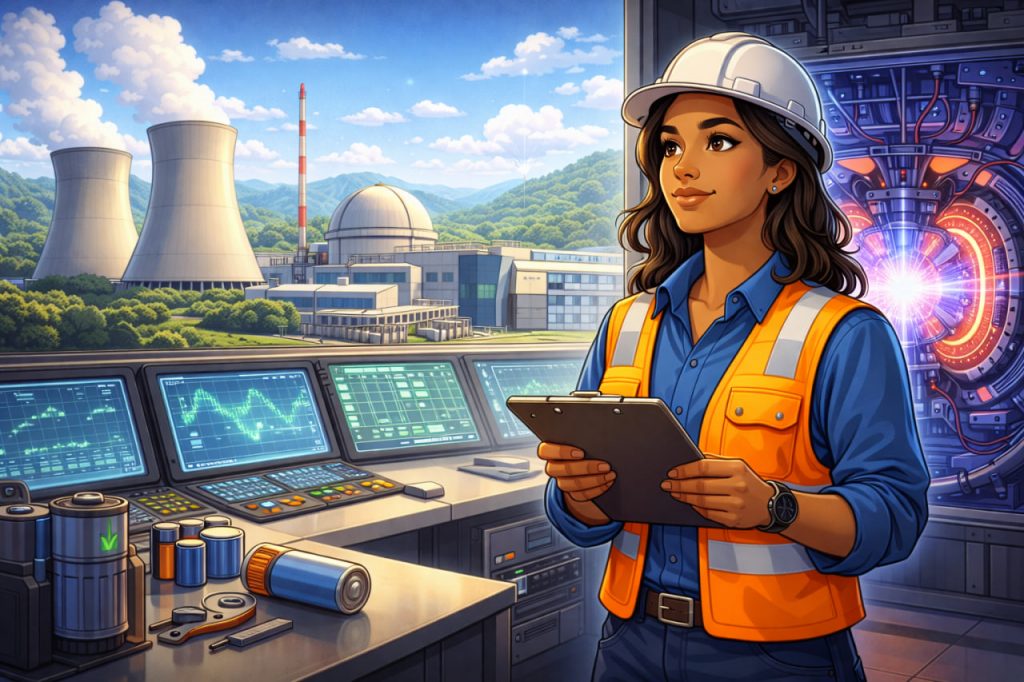
Nuclear energy remains one of the most debated sources of electricity in the modern world. On one hand, nuclear power plants generate large amounts of electricity with very low direct carbon emissions, making them attractive in the fight against climate change. On the other hand, concerns about radioactive waste, safety risks, and high construction costs continue to raise questions about its long-term sustainability. As countries search for reliable low-carbon energy sources, nuclear technology is once again at the center of global energy discussions. New reactor designs, improved safety systems, and the possibility of nuclear fusion are reshaping the conversation about whether nuclear energy can be considered part of a “green” energy future. Understanding these debates requires looking at both the advantages and the challenges associated with nuclear power.
How Nuclear Power Plants Generate Electricity
Nuclear power plants produce electricity through a process known as nuclear fission, in which the nucleus of heavy atoms such as uranium splits into smaller fragments. This reaction releases a large amount of heat, which is used to produce steam that drives turbines connected to generators. The basic operating principle is similar to many conventional power plants, but the heat source comes from atomic reactions rather than fossil fuels. Because fission reactions release enormous amounts of energy from very small amounts of fuel, nuclear power plants can generate electricity continuously for long periods. According to energy systems analyst Dr. Pierre Laurent:
“Nuclear power offers a unique combination of high energy density and extremely low operational carbon emissions.”
This characteristic makes nuclear energy attractive for maintaining stable electricity supply in large power systems.
Why Some Experts Consider Nuclear Energy Low-Carbon
Unlike coal or natural gas power plants, nuclear reactors do not burn fuel to produce heat, which means they release very little carbon dioxide during electricity generation. Life-cycle analyses show that the total emissions associated with nuclear power—taking into account mining, construction, and decommissioning—are comparable to those of wind or solar energy. Because nuclear plants can operate continuously regardless of weather conditions, they are often described as a reliable low-carbon energy source. In countries where nuclear power forms a significant part of the electricity mix, carbon emissions from the power sector tend to be lower.
Concerns About Safety and Nuclear Waste
Despite these advantages, nuclear power faces serious concerns related to safety and long-term waste management. Accidents at nuclear facilities in the past have demonstrated the potential risks associated with radioactive materials. Even under normal operation, nuclear reactors produce radioactive waste that must be carefully stored for long periods. Developing safe storage solutions and maintaining strict regulatory oversight are essential aspects of nuclear energy management. Critics argue that these long-term responsibilities make nuclear energy fundamentally different from other renewable technologies.
New Reactor Technologies
In response to these challenges, engineers are developing advanced nuclear reactors designed to improve safety, efficiency, and flexibility. Some modern designs use passive safety systems that rely on natural physical processes rather than active mechanical controls to prevent overheating. Small modular reactors (SMRs) are another emerging technology that aims to reduce construction costs and allow reactors to be built in smaller, scalable units. These innovations could make nuclear energy more adaptable to modern energy systems and easier to integrate alongside renewable sources.
The Promise of Nuclear Fusion
Beyond fission reactors, scientists are also researching nuclear fusion, a process that powers the Sun and stars. Fusion occurs when light atomic nuclei combine under extremely high temperatures and pressures, releasing enormous amounts of energy. Unlike fission, fusion does not produce long-lived radioactive waste and uses abundant fuel sources such as hydrogen isotopes. Although fusion research has made significant progress, practical fusion power plants are still under development. If successfully achieved, fusion could provide a nearly limitless source of clean energy.
A Continuing Global Debate
The future role of nuclear energy remains an active topic of debate among scientists, policymakers, and the public. Some experts view nuclear power as an essential tool for reducing carbon emissions while maintaining reliable electricity supply. Others believe renewable technologies and energy storage systems may eventually reduce the need for nuclear energy. As new technologies emerge and energy systems evolve, the discussion around nuclear power will continue to shape the path toward a sustainable energy future.
Interesting Facts
- Nuclear fuel contains millions of times more energy per kilogram than fossil fuels.
- Some nuclear reactors can operate continuously for more than a year without refueling.
- Nuclear power currently provides a significant share of low-carbon electricity worldwide.
- The first commercial nuclear power plant began operating in the 1950s.
- Experimental fusion projects aim to recreate the same energy process that powers the Sun.
Glossary
- Nuclear Fission — a reaction in which a heavy atomic nucleus splits into smaller nuclei, releasing energy.
- Nuclear Fusion — a reaction where light atomic nuclei combine to form a heavier nucleus, releasing large amounts of energy.
- Radioactive Waste — materials produced by nuclear reactions that require careful long-term management.
- Small Modular Reactor (SMR) — a compact nuclear reactor designed for flexible and scalable energy production.
- Energy Density — the amount of energy stored in a given mass of fuel.