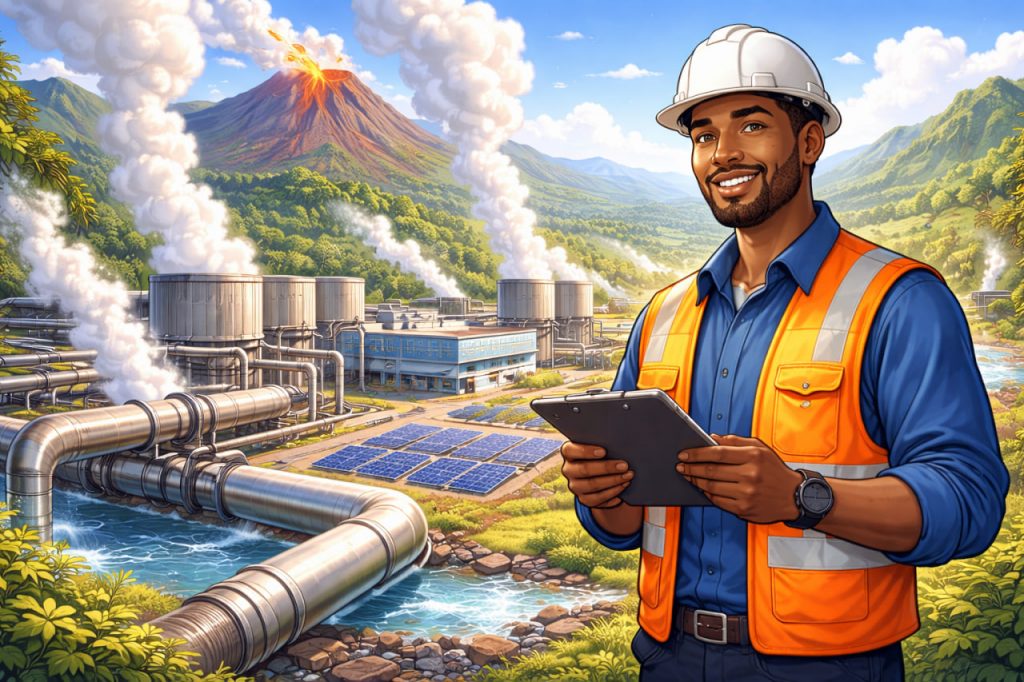
Geothermal energy is one of the most stable and reliable renewable energy sources available today. Unlike solar or wind power, which depend on weather conditions, geothermal energy originates from the natural heat stored deep inside the Earth. This heat has been building within the planet since its formation billions of years ago and continues to be generated by radioactive processes in the Earth’s crust and mantle. In certain regions, this underground heat can reach the surface through hot water reservoirs, steam fields, or volcanic activity. By accessing these natural heat sources, humans can generate electricity, heat buildings, and support industrial processes with minimal environmental impact. As global demand for clean energy grows, geothermal systems are becoming increasingly important in the transition toward sustainable energy infrastructure.
How Geothermal Energy Works
Geothermal energy systems tap into underground reservoirs of hot water or steam that exist beneath the Earth’s surface. Wells are drilled deep into geothermal reservoirs to bring hot fluids to the surface, where they can drive turbines connected to electric generators. After the heat is extracted, the cooled water is often reinjected into the ground to maintain the pressure and sustainability of the system. According to energy engineer Dr. Stefan Richter:
“Geothermal energy offers a rare advantage among renewable sources—it can provide continuous power day and night.”
This constant availability makes geothermal energy particularly valuable for maintaining stable electricity supply in power grids.
Types of Geothermal Power Plants
There are several different technologies used to convert geothermal heat into electricity. Dry steam power plants use steam directly from underground reservoirs to spin turbines. Flash steam plants operate by bringing hot water to the surface, where pressure changes convert it into steam. Binary cycle power plants use a secondary fluid with a lower boiling point to generate energy from moderately hot geothermal water. Each system is designed for specific temperature and geological conditions. Advances in drilling technology and reservoir management continue to expand the regions where geothermal power can be used effectively.
Direct Uses of Geothermal Heat
Beyond electricity production, geothermal energy has many practical applications for direct heating. In some countries, geothermal water is used to heat homes, greenhouses, and public buildings. Geothermal heating systems can also support agricultural activities, such as maintaining warm conditions in fish farms or growing crops in colder climates. Ground-source heat pumps, which use stable underground temperatures to regulate indoor heating and cooling, are becoming increasingly popular in residential and commercial buildings. These systems provide efficient climate control while reducing energy consumption.
Environmental Benefits and Challenges
Geothermal energy produces very low greenhouse gas emissions compared to fossil fuel power plants. Because geothermal plants require relatively small land areas and operate continuously, they can supply large amounts of clean energy without major environmental disruption. However, geothermal projects must be carefully managed to avoid issues such as mineral deposits, small seismic events, or depletion of underground reservoirs. Modern monitoring technologies help engineers maintain long-term stability and minimize environmental risks.
The Future of Geothermal Technology
Scientists are now exploring advanced technologies such as enhanced geothermal systems (EGS), which aim to access geothermal energy in regions where natural reservoirs are limited. These systems create artificial pathways for water to circulate through hot rock deep underground, allowing heat to be extracted even in non-volcanic regions. If these technologies continue to improve, geothermal energy could become a much more widely available source of renewable power around the world.
Interesting Facts
- The Earth’s internal heat is estimated to be thousands of times greater than the world’s annual energy consumption.
- Iceland generates a large portion of its electricity using geothermal energy from volcanic regions.
- Some geothermal reservoirs contain water heated to over 300°C deep underground.
- Geothermal plants can operate continuously for decades with proper reservoir management.
- The oldest geothermal power plant still operating today began generating electricity in 1913 in Italy.
Glossary
- Geothermal Energy — heat energy originating from the Earth’s interior that can be used for electricity generation or heating.
- Geothermal Reservoir — underground areas where hot water or steam accumulate in porous rock formations.
- Binary Cycle Plant — a geothermal power plant that transfers heat to a secondary fluid to drive turbines.
- Enhanced Geothermal System (EGS) — a technology designed to extract heat from deep hot rock where natural water reservoirs are limited.
- Ground-Source Heat Pump — a system that uses stable underground temperatures to heat or cool buildings.