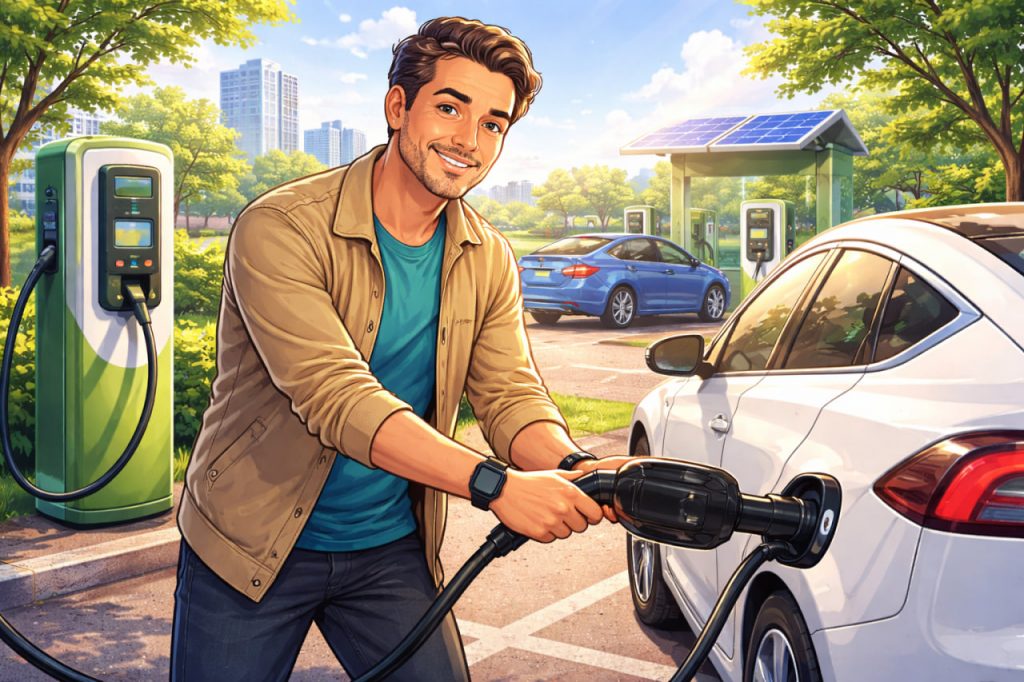
Electric vehicles (EVs) are becoming an increasingly important part of the global transition toward cleaner transportation. Unlike conventional vehicles that rely on internal combustion engines, electric cars use electric motors powered by rechargeable batteries. These vehicles produce no direct exhaust emissions during operation, which helps reduce air pollution in cities and lower greenhouse gas emissions from transportation. However, the environmental benefits of electric vehicles depend not only on the vehicles themselves but also on the charging infrastructure and the source of electricity used to power them. As governments and industries invest in expanding charging networks, electric mobility is gradually becoming more accessible and practical for everyday use.
How Electric Vehicles Work
Electric vehicles operate using electric motors that convert electrical energy stored in batteries into mechanical motion. The battery pack stores energy that is used to power the motor and other onboard systems. When the driver presses the accelerator, electricity flows from the battery to the motor, which turns the wheels. According to transportation technology specialist Dr. Laura Bennett:
“Electric motors are highly efficient because they convert a large portion of electrical energy directly into motion.”
This efficiency allows electric vehicles to use energy more effectively than traditional gasoline-powered cars.
Types of Charging Stations
Charging infrastructure plays a critical role in the widespread adoption of electric vehicles. There are several different types of charging stations designed for different situations. Home charging stations allow drivers to recharge their vehicles overnight using residential electricity. Public charging stations are commonly installed in parking areas, shopping centers, and workplaces. Faster DC fast chargers can provide a large amount of electricity in a shorter time, making them useful for long-distance travel. As charging networks expand, drivers gain more flexibility and confidence when using electric vehicles.
Environmental Impact of Electric Vehicles
Electric vehicles can significantly reduce urban air pollution because they produce no tailpipe emissions during operation. However, the overall environmental impact depends on how electricity is generated. When EVs are charged using renewable energy sources such as solar, wind, or hydropower, the total carbon footprint of transportation can be greatly reduced. Energy systems researcher Dr. Marcus Hill explains:
“The environmental benefits of electric vehicles increase as power grids transition to renewable energy sources.”
As renewable energy becomes more widespread, the sustainability of electric transportation continues to improve.
Smart Charging and Energy Systems
Modern charging infrastructure increasingly includes smart charging technologies that allow energy use to be managed efficiently. Smart charging systems can adjust the timing and speed of charging based on electricity demand and grid conditions. For example, vehicles may charge more slowly during peak electricity demand and faster when renewable energy production is high. Some systems also allow electric vehicles to supply electricity back to the grid through technologies known as vehicle-to-grid (V2G) systems.
The Future of Electric Mobility
Electric mobility continues to evolve as battery technology improves and charging networks expand. Advances in battery capacity, charging speed, and energy efficiency are making electric vehicles more practical for a wide range of drivers. As cities develop better charging infrastructure and integrate renewable energy into power systems, electric vehicles may become one of the key components of sustainable transportation in the coming decades.
Interesting Facts
- Electric vehicles convert more energy into motion than traditional gasoline engines.
- Some modern fast chargers can recharge batteries in less than an hour.
- Many countries are expanding public charging networks to support electric mobility.
- Electric vehicles can help reduce urban air pollution.
- Some EV systems allow cars to store and return electricity to the power grid.
Glossary
- Electric Vehicle (EV) — a vehicle powered by an electric motor using energy stored in rechargeable batteries.
- Charging Station — equipment used to recharge the batteries of electric vehicles.
- DC Fast Charging — a high-speed charging technology that delivers electricity directly to a vehicle’s battery.
- Smart Charging — technology that manages charging times and power levels based on grid conditions.
- Vehicle-to-Grid (V2G) — a system that allows electric vehicles to send electricity back to the power grid.