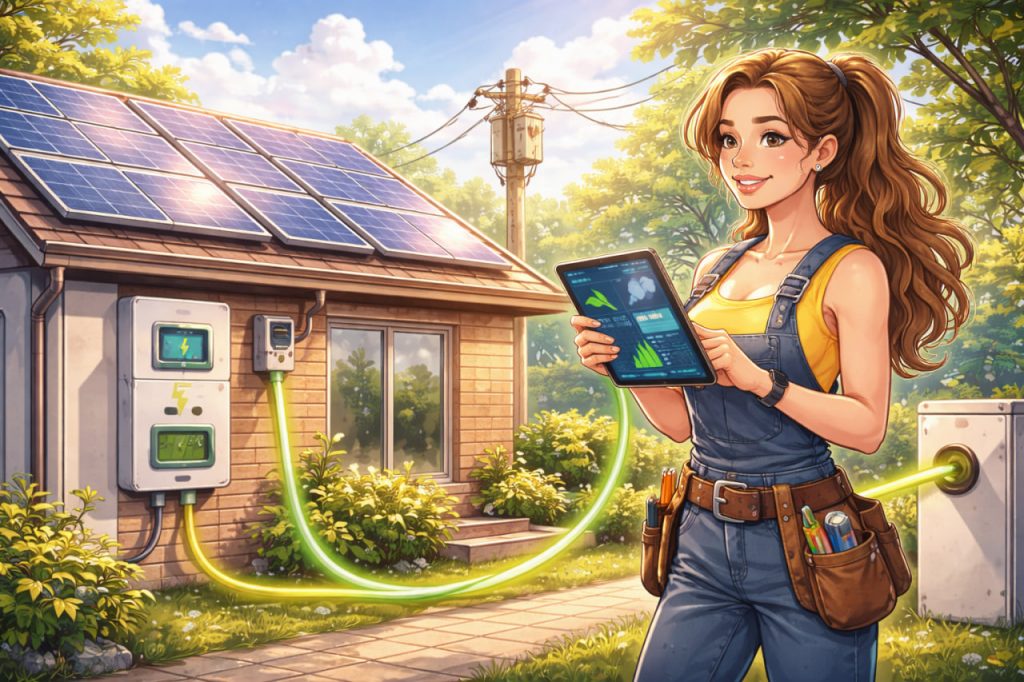
As solar energy systems become more common in homes and businesses, many electricity networks have introduced policies that allow individuals to sell surplus electricity back to the power grid. One of the most well-known mechanisms supporting this process is the green tariff, often referred to as feed-in tariffs or net energy compensation programs. These policies encourage the adoption of renewable energy by allowing owners of solar panels to receive financial credit or payments for the electricity they generate but do not use themselves. Instead of wasting unused electricity, solar producers can supply it to the public energy network, helping increase the share of renewable energy in the overall electricity system. Green tariffs have played an important role in accelerating the growth of small-scale renewable energy installations around the world.
How Solar Systems Produce Excess Energy
Solar panels generate electricity when sunlight reaches photovoltaic cells that convert solar radiation into electrical power. During sunny periods, particularly in the middle of the day, a home solar system may produce more electricity than the building currently consumes. Without a mechanism to use or store this extra energy, it would be lost. With green tariff programs, however, the excess electricity can be exported to the grid and distributed to other consumers. According to renewable energy analyst Dr. Marco Alvarez:
“Allowing small producers to feed electricity into the grid transforms households into active participants in energy generation.”
This approach supports decentralized energy systems where power is generated by many smaller sources rather than only by large power plants.
The Role of Smart Meters
To measure how much electricity flows between a home and the energy grid, many systems use smart meters. These devices record both the electricity consumed from the grid and the electricity supplied back to it. Smart meters allow utilities to calculate the amount of surplus solar energy exported by the household. In some systems, this exported electricity is credited against the homeowner’s energy bill through a process known as net metering. In other cases, the energy producer may receive direct payments for the electricity supplied to the grid.
Benefits for Households and Energy Systems
Green tariff programs create several advantages for both individuals and the broader energy system. For homeowners, selling excess electricity can help offset the cost of installing solar panels and reduce overall energy expenses. For energy providers, distributed solar generation helps diversify electricity sources and reduce dependence on fossil fuels. In addition, local renewable energy production can lower the strain on transmission infrastructure, especially during peak daylight hours when solar generation is strongest.
Challenges and Policy Differences
Although green tariffs have been widely adopted in many countries, the details of these programs vary significantly between regions. Payment rates, eligibility requirements, and connection procedures are often determined by national or local regulations. Some programs offer fixed long-term prices for renewable electricity, while others adjust compensation based on market conditions. Policymakers continue to refine these systems to balance incentives for renewable energy adoption with the stability of electricity markets.
The Future of Decentralized Energy
As solar technologies continue to become more affordable and efficient, more households and businesses are expected to install their own energy systems. In the future, buildings equipped with solar panels, energy storage, and smart grid connections could play a major role in electricity generation. Green tariff policies and other energy-sharing systems may help create more resilient and sustainable energy networks where individuals contribute directly to clean energy production.
Interesting Facts
- Solar panels can generate electricity even on partly cloudy days.
- In some countries, homeowners can earn energy credits for electricity supplied to the grid.
- Smart meters record both energy consumption and exported electricity.
- Distributed solar systems help reduce electricity transmission losses.
- Millions of homes worldwide now participate in small-scale renewable energy generation.
Glossary
- Green Tariff — a policy that allows renewable energy producers to sell electricity to the power grid.
- Feed-in Tariff — a pricing system where energy providers pay renewable energy producers for electricity they supply.
- Net Metering — a system that credits solar energy system owners for electricity they add to the grid.
- Smart Meter — a device that records electricity use and production in real time.
- Photovoltaic Cell — a device that converts sunlight into electrical energy.