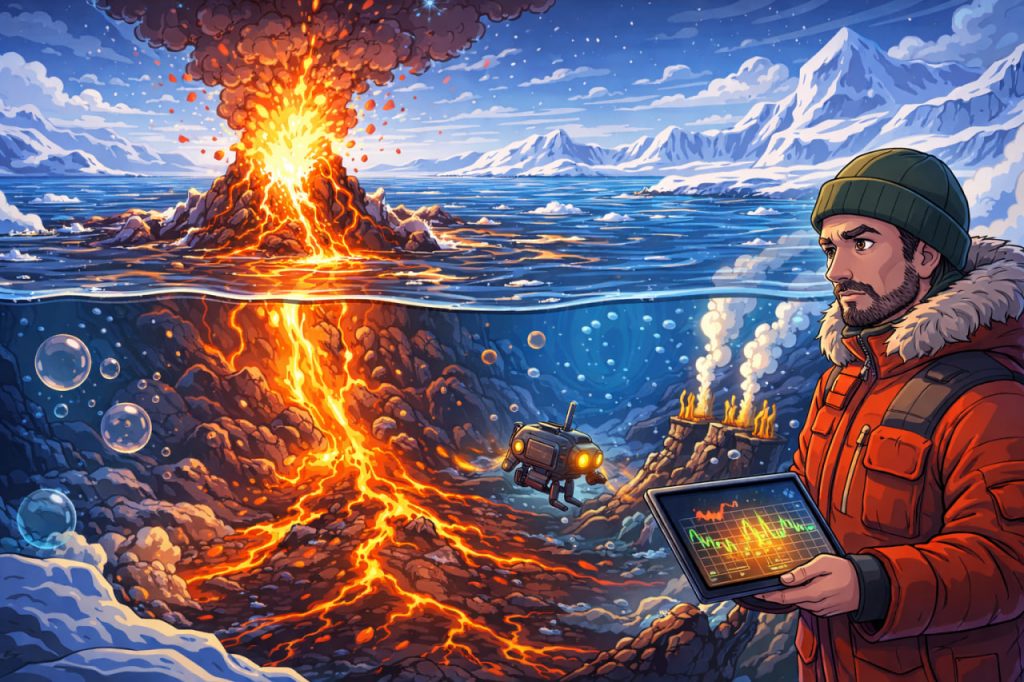
The Earth’s interior remains one of the least understood regions of our planet. Even with modern technology, scientists continue to discover new geological processes occurring beneath the ocean floor. One such area of active research is the Bransfield Strait, a region located between the Antarctic Peninsula and the South Shetland Islands. In recent years, scientists have observed signs of magma uplift and tectonic activity in this area, highlighting the dynamic processes shaping the Earth’s crust beneath the polar oceans.
Where the Bransfield Strait Is Located
The Bransfield Strait lies in the Southern Ocean near Antarctica. This region is part of a complex tectonic environment where the Antarctic Plate interacts with nearby microplates and geological structures. Over millions of years, these interactions have created underwater volcanic ridges, deep basins, and fault systems. Because much of the region is covered by ice or deep ocean water, scientific exploration has been challenging.
Evidence of Magma Movement
In recent studies, researchers have detected changes in the seafloor that may indicate magma rising beneath the crust. Instruments placed on the ocean floor have recorded unusual seismic activity and slight deformations in the seabed. These signals suggest that molten rock may be moving upward from deeper layers of the Earth.
Geophysicist explains:
“Seafloor deformation and earthquake patterns can indicate the movement of magma beneath the crust.”
Such observations help scientists understand the hidden processes occurring beneath the ocean floor.
Underwater Volcanoes and Hydrothermal Activity
The Bransfield Strait contains several submarine volcanoes and hydrothermal systems. These underwater geological features release heat and mineral-rich fluids into the surrounding water. Hydrothermal vents in the region create unique ecosystems where specialized organisms thrive in extreme conditions. These environments provide valuable insights into how life can exist in places without sunlight.
Why Magma Uplift Matters
The movement of magma beneath the seafloor can influence tectonic activity and potentially lead to underwater volcanic eruptions or the formation of new geological structures. Monitoring these processes helps scientists understand how the Earth’s crust evolves over time. Studying magma movement is also important for understanding earthquake patterns and geological hazards.
Challenges of Studying the Antarctic Seafloor
Research in the Southern Ocean is extremely difficult due to harsh weather conditions, sea ice, and remote locations. Scientists rely on specialized research vessels, underwater sensors, and satellite observations to gather data. Because of these challenges, many geological processes occurring beneath Antarctic waters remain poorly understood.
A Reminder of Earth’s Hidden Dynamics
The activity observed in the Bransfield Strait reminds scientists that the Earth’s interior is constantly evolving. Even in remote regions of the planet, geological forces continue shaping the crust beneath oceans and ice. As research technologies improve, scientists hope to gain deeper insight into these hidden processes and better understand the dynamic nature of our planet.
P.S. I didn’t mention it for nothing – this magma rise is an example of how our models may not work and how disasters can occur much faster than we expect…
Interesting Facts
- The Bransfield Strait lies between the Antarctic Peninsula and the South Shetland Islands.
- The region contains several underwater volcanic structures.
- Hydrothermal vents there support unique deep-sea ecosystems.
- Scientists use seafloor sensors and satellites to study tectonic activity.
- Much of the Antarctic ocean floor remains poorly explored.
Glossary
- Magma — molten rock located beneath the Earth’s surface.
- Seafloor Deformation — changes in the shape or position of the ocean floor caused by geological processes.
- Hydrothermal Vent — an opening on the ocean floor that releases heated mineral-rich water.
- Tectonic Plate — a large section of the Earth’s crust that moves slowly over geological time.
- Submarine Volcano — a volcano located beneath the ocean surface.