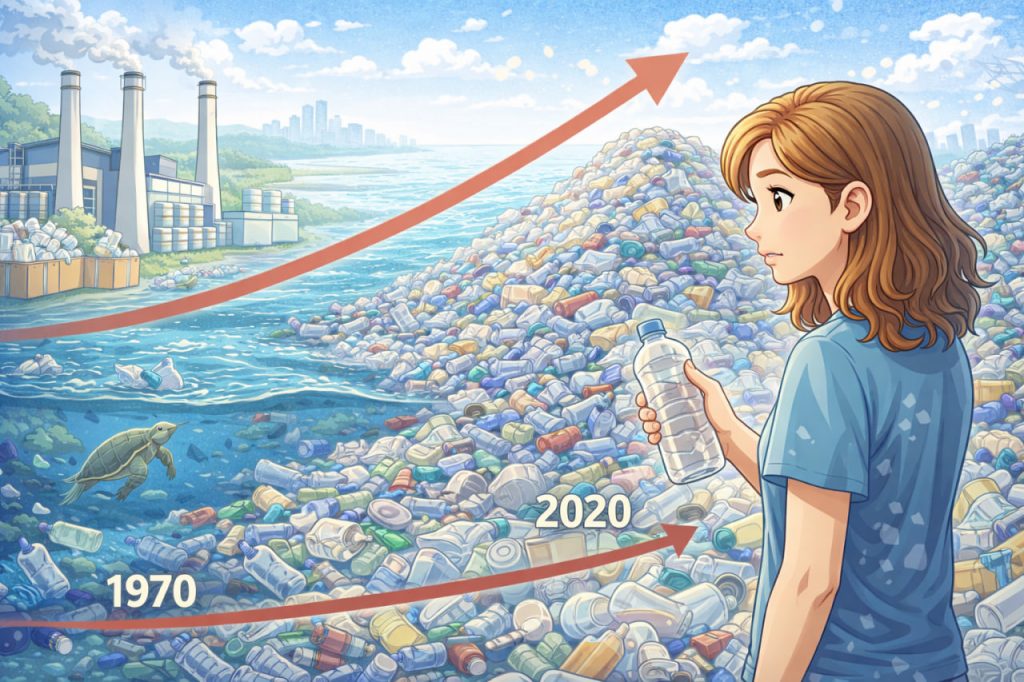
Over the past half-century, the world has witnessed an explosive increase in both plastic production and plastic pollution. What began as a revolutionary material for convenience and durability has turned into one of the most serious environmental challenges of our time. Since the 1970s, global plastic production has grown more than twentyfold, driven by demand in packaging, manufacturing, and consumer goods. At the same time, plastic waste has accumulated in landfills, oceans, and ecosystems at an alarming rate. Because most plastics do not biodegrade, they persist in the environment for hundreds of years. Understanding this parallel growth helps explain why plastic pollution has become a global crisis requiring urgent solutions.
The Rise of Plastic Production
Plastic production began to accelerate rapidly in the second half of the 20th century. Cheap raw materials, versatility, and mass manufacturing made plastic an essential part of modern life. Today, plastics are used in everything from food packaging and electronics to construction and medicine. Environmental analyst Dr. Karen Lewis explains:
“Plastic became indispensable because it is lightweight, durable,
and inexpensive—but those same qualities make it a long-term pollutant.”
This dual nature is at the heart of the problem.
How Pollution Has Increased
As production increased, so did waste. A significant portion of plastic is designed for single-use applications, such as packaging and disposable products. These items are often discarded quickly and not properly recycled. As a result, millions of tons of plastic enter the environment each year. Oceans are particularly affected, with plastic debris forming massive accumulation zones and breaking down into microplastics that spread globally.
Environmental and Health Impacts
Plastic pollution affects ecosystems on multiple levels. Marine animals can ingest plastic or become entangled in it, leading to injury or death. Over time, plastic breaks down into microplastics, which can enter food chains and potentially impact human health. Chemicals associated with plastics may also pose risks to organisms and ecosystems. These impacts make plastic pollution not only an environmental issue but also a public health concern.
Why Recycling Is Not Enough
Although recycling is an important part of waste management, it has not kept pace with the growth of plastic production. Only a relatively small percentage of plastic waste is actually recycled, while the rest is incinerated, landfilled, or released into the environment. Challenges include contamination, economic costs, and the complexity of different plastic types. This highlights the need for broader solutions beyond recycling alone.
Towards a Sustainable Future
Addressing plastic pollution requires a combination of strategies, including reducing production, improving waste management, and developing biodegradable alternatives. Policies, innovation, and public awareness all play crucial roles in this transition. Moving toward a more sustainable system involves rethinking how materials are produced, used, and disposed of. While the challenge is significant, coordinated global efforts can help reduce the impact of plastic on the planet.
Interesting Facts
- Global plastic production has increased more than 20 times since the 1970s
- Around half of all plastic is used only once
- Millions of tons of plastic enter the oceans every year
- Microplastics have been found in water, air, and food
- Plastic can take hundreds of years to decompose
Glossary
- Plastic Pollution — accumulation of plastic waste in the environment
- Microplastics — tiny plastic particles resulting from breakdown of larger items
- Single-Use Plastic — plastic designed for one-time use
- Biodegradable — capable of being broken down by natural processes
- Recycling — process of converting waste into reusable material