The Earth is experiencing one of the most significant periods of environmental change in human history. Climate change, biodiversity loss, pollution, deforestation, freshwater shortages, and resource depletion are no longer isolated problems—they are interconnected global crises that affect ecosystems, economies, and human health worldwide.
While technological progress has improved living standards for billions of people, it has also placed unprecedented pressure on the planet’s natural systems. Scientists increasingly agree that addressing these environmental challenges requires international cooperation, innovation, and sustainable development.
Understanding the causes and consequences of today’s global environmental crisis is the first step toward creating a healthier future for both humanity and the natural world.
What Is the Global Environmental Crisis?
The global environmental crisis refers to the collection of large-scale ecological problems caused primarily by human activity that threaten the stability of Earth’s ecosystems.
Major components of this crisis include:
- Climate change
- Biodiversity loss
- Air pollution
- Water pollution
- Plastic waste
- Ocean degradation
- Deforestation
- Soil degradation
- Freshwater scarcity
- Overconsumption of natural resources
Rather than existing independently, these issues reinforce one another. For example, deforestation accelerates climate change, while climate change increases the frequency of wildfires that destroy even more forests.
Scientists emphasize that the health of ecosystems directly affects the health, security, and prosperity of human societies.
Climate Change: The Defining Challenge
Climate change has become one of the most widely discussed environmental issues of the 21st century.
Human activities—primarily the burning of fossil fuels, industrial processes, and deforestation—have increased concentrations of greenhouse gases such as carbon dioxide and methane in the atmosphere.
As a result, global average temperatures have risen significantly since the Industrial Revolution.
The consequences include:
- More frequent heatwaves
- Stronger storms
- Rising sea levels
- Melting glaciers
- Longer droughts
- More intense flooding
- Shifting weather patterns
These changes affect agriculture, water supplies, infrastructure, and public health across nearly every region of the world.
Even relatively small increases in average global temperature can produce substantial environmental and economic impacts.
Biodiversity Loss and Mass Extinction
Earth is home to millions of species that form complex ecosystems supporting all life.
However, habitat destruction, pollution, invasive species, overfishing, and climate change have dramatically accelerated species decline.
According to conservation scientists, many species are disappearing at rates far above the natural background extinction rate.
The loss of biodiversity weakens ecosystems by reducing their ability to adapt to environmental changes.
Healthy ecosystems provide essential services, including:
- Pollination of crops
- Clean drinking water
- Soil fertility
- Carbon storage
- Natural pest control
- Flood protection
Protecting biodiversity is therefore not only about saving wildlife but also about maintaining the natural systems that human civilization depends upon.
Pollution: A Threat to Every Ecosystem
Pollution affects nearly every part of the planet.
Air pollution contributes to respiratory diseases and millions of premature deaths annually.
Plastic pollution has spread from the deepest ocean trenches to Arctic ice and even microscopic particles found in human blood and tissues.
Water pollution threatens freshwater supplies while harming aquatic ecosystems.
Major pollution sources include:
- Industrial emissions
- Vehicle exhaust
- Agricultural chemicals
- Untreated wastewater
- Plastic waste
- Electronic waste
- Mining activities
Reducing pollution requires improvements in waste management, cleaner technologies, stricter environmental regulations, and more sustainable consumption patterns.
Deforestation and Habitat Destruction
Forests play an essential role in regulating Earth’s climate.
They absorb carbon dioxide, produce oxygen, stabilize soils, regulate rainfall, and provide habitats for countless species.
Yet millions of hectares of forests continue to disappear due to agriculture, logging, mining, and urban expansion.
The destruction of tropical rainforests is particularly concerning because these ecosystems contain extraordinary biodiversity and store enormous amounts of carbon.
Protecting forests is one of the most effective natural strategies for combating climate change and preserving biodiversity.
Freshwater Under Pressure
Although water covers about 71% of Earth’s surface, only a small fraction is available as accessible freshwater.
Growing populations, pollution, inefficient agriculture, and climate change are placing increasing pressure on freshwater resources.
Many regions already experience:
- Seasonal droughts
- Groundwater depletion
- Water shortages
- Declining river flows
- Increased competition for water resources
Water conservation, efficient irrigation systems, wastewater recycling, and improved infrastructure are becoming increasingly important for long-term sustainability.
Can Technology Help Solve the Crisis?
Technology is both part of the problem and part of the solution.
Modern innovations are helping reduce environmental impacts through:
- Renewable energy
- Electric transportation
- Smart electrical grids
- Carbon capture technologies
- Precision agriculture
- Sustainable construction materials
- Artificial intelligence for environmental monitoring
- Satellite observation systems
While technology alone cannot solve every environmental challenge, it provides powerful tools for reducing emissions, improving efficiency, and protecting ecosystems.
The greatest progress is likely to come from combining scientific innovation with effective environmental policies and responsible consumer behavior.
Expert Perspective
Climate scientist Dr. Katharine Hayhoe, one of the world’s leading experts on climate communication, emphasizes that environmental solutions already exist but require collective action.
“The most important thing you can do to fight climate change is to talk about it.”
Her work highlights an essential principle: public awareness encourages policy changes, technological innovation, and individual action. Scientific evidence consistently shows that informed societies are more likely to support effective environmental solutions.
Similarly, reports from the Intergovernmental Panel on Climate Change (IPCC) conclude that rapid reductions in greenhouse gas emissions, combined with ecosystem protection and sustainable development, can significantly reduce future environmental risks.
What Can Individuals Do?
Although governments and industries play critical roles, individual choices also contribute to environmental protection.
Examples include:
- Conserving electricity
- Reducing food waste
- Recycling properly
- Using public transportation or cycling
- Supporting renewable energy
- Conserving water
- Choosing durable products
- Protecting local ecosystems
Small actions performed by millions of people can collectively produce meaningful environmental benefits.
At the same time, experts agree that large-scale policy decisions and international cooperation remain essential for addressing global environmental challenges effectively.
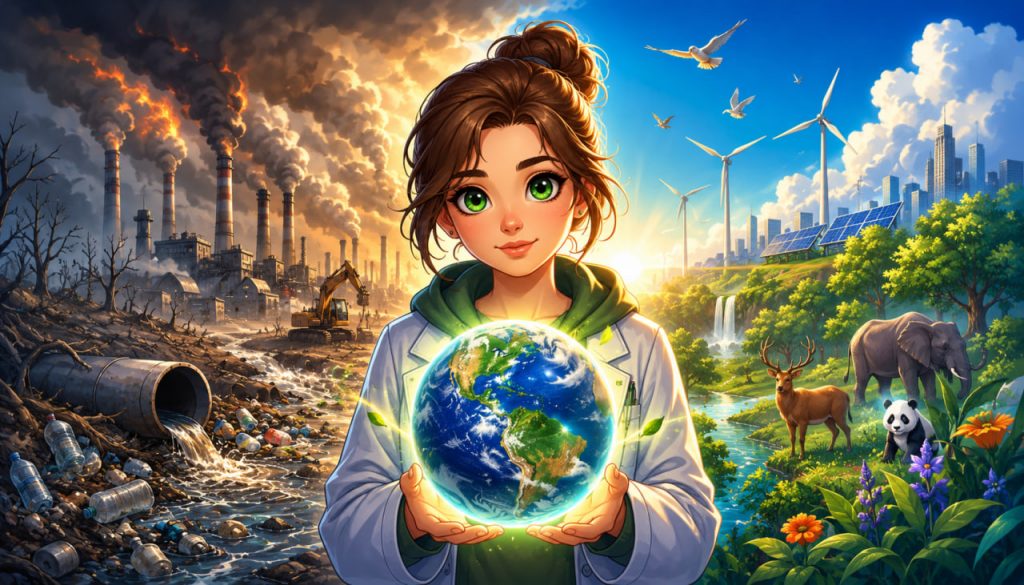
P.S. Nowadays, even a single “warrior” can do a lot to make our planet a blooming garden and to live in a world of kindness and love. All we need to do is take action, use neural networks, learn, and do our part to become true Human beings…
Let’s make this world a better place to live!
Interesting Facts
- Earth has lost approximately half of its wetlands since the beginning of the 20th century.
- Tropical rainforests contain more than half of the world’s terrestrial plant and animal species.
- A mature tree can absorb significant amounts of carbon dioxide over its lifetime while producing oxygen.
- Coral reefs occupy less than 1% of the ocean floor but support roughly 25% of all marine species.
- More than eight million tons of plastic enter the oceans every year.
- Renewable energy is now among the fastest-growing sources of electricity worldwide.
- Scientists monitor environmental change using satellites that continuously observe Earth’s atmosphere, forests, oceans, and ice sheets.
Glossary
- Climate Change — Long-term changes in Earth’s average temperatures and weather patterns, driven by both natural processes and human activities.
- Greenhouse Gas — A gas, such as carbon dioxide or methane, that traps heat in Earth’s atmosphere.
- Biodiversity — The variety of living organisms within ecosystems, regions, or the entire planet.
- Deforestation — The large-scale removal of forests, often for agriculture, development, or logging.
- Carbon Footprint — The total amount of greenhouse gases produced directly or indirectly by an individual, organization, product, or activity.
- Renewable Energy — Energy generated from naturally replenishing sources such as sunlight, wind, water, or geothermal heat.
- Ecosystem — A community of living organisms interacting with each other and with their physical environment.
- Sustainability — Meeting present needs while preserving natural resources and environmental quality for future generations.