Renewable energy innovation in 2026 is no longer focused only on making solar panels and wind turbines cheaper. The industry is increasingly solving a more complex problem: how to build an electricity system that remains affordable, reliable, and flexible when large amounts of power come from variable sources.
Solar photovoltaic and wind power already generate electricity at lower levelized costs than coal or gas in many locations. The International Energy Agency reports that around 80% of global solar and wind generation now operates at lower levelized costs than fossil-fuel alternatives, while battery prices have fallen by roughly 75% over the past decade.
The most important renewable energy innovations of 2026 therefore combine better generation with storage, intelligent grids, advanced materials, geothermal power, distributed systems, and new ways of producing clean fuels.
Perovskite and Tandem Solar Cells
Traditional solar modules are usually made from crystalline silicon. Silicon is reliable and commercially mature, but researchers are approaching practical limits on how efficiently a single silicon layer can convert sunlight into electricity.
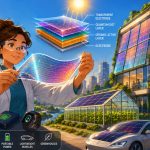
Tandem solar cells attempt to overcome this limitation by stacking materials that absorb different parts of the solar spectrum. A perovskite top layer can capture high-energy light, while a silicon layer underneath absorbs other wavelengths.
The IEA’s energy innovation tracker identifies perovskite tandem cells among technologies advancing toward commercial readiness, including certified progress in larger-area devices.
Researchers are also improving all-perovskite tandem designs. NREL reported a two-layer tin-lead perovskite cell with 25.5% efficiency, alongside improvements intended to address the technology’s long-standing stability problems.
The major challenge is no longer proving that perovskites can be efficient. It is making them durable, scalable, and safe enough to operate outdoors for decades.
Solar Panels Are Becoming Building Materials
Another major direction is building-integrated photovoltaics.
Instead of placing conventional modules on top of a structure, manufacturers are developing solar:
- Roof tiles
- Facade panels
- Balcony systems
- Skylights
- Semi-transparent windows
- Flexible films
These technologies may allow cities to generate electricity from surfaces that currently serve only architectural purposes.
Flexible and lightweight modules could also reduce installation loads on warehouses, temporary buildings, vehicles, and roofs unable to support heavy glass-covered panels.
Solar remains the largest driver of renewable expansion. The IEA projects that global renewable capacity will increase by almost 4,600 GW between 2025 and 2030, with solar representing nearly 80% of the expansion.
Long-Duration Energy Storage
Lithium-ion batteries are excellent for balancing electricity over several hours, but grids with large shares of wind and solar may also need storage lasting many hours, several days, or occasionally longer.
Long-duration storage technologies under development include:
- Flow batteries
- Iron-air batteries
- Sodium-based batteries
- Thermal storage
- Compressed-air systems
- Gravity storage
- Pumped hydropower
- Hydrogen-based storage
The purpose is not to select one universal winner. Different systems may serve different needs. A battery beside a solar farm may handle evening demand, while thermal storage may support industrial heat and pumped hydropower may balance an entire region.
The U.S. Department of Energy describes long-duration storage as important for grid reliability, renewable integration, resilient microgrids, and reducing disruption risks.
The future renewable grid needs technologies that store energy cheaply, not merely batteries that charge quickly.
Sodium-Ion and Alternative Battery Chemistry
Lithium-ion batteries dominate electric vehicles and stationary storage, but lithium is not the only useful battery material.
Sodium-ion batteries attract attention because sodium is abundant and widely available. These batteries generally store less energy per kilogram than leading lithium-ion designs, but that limitation matters less in stationary applications where weight is not critical.
Other promising chemistries use iron, zinc, sulfur, or flowing liquid electrolytes. Their potential advantages include lower material costs, reduced fire risk, longer cycle life, and less dependence on geographically concentrated minerals.
In 2026, the innovation race is increasingly about matching battery chemistry to its purpose rather than expecting one design to power every vehicle, home, factory, and national grid.
Enhanced Geothermal Systems
Traditional geothermal plants are limited to locations where hot underground water is easily accessible. Enhanced geothermal systems, or EGS, aim to expand geothermal generation by using advanced drilling and reservoir-engineering methods to access heat in areas without naturally ideal conditions.
Geothermal power is valuable because it can operate continuously and balance variable wind and solar generation. The U.S. Department of Energy describes geothermal plants as firm renewable resources with capacity factors that can reach approximately 90%.
The IEA has also highlighted how drilling and subsurface technologies developed in other industries are helping unlock geothermal potential in more countries.
If enhanced geothermal becomes economical at scale, renewable electricity could gain a powerful source of around-the-clock generation.
Smarter and More Flexible Wind Turbines
Wind innovation is moving beyond simply building taller turbines.
Modern developments include:
- Longer and lighter blades
- Improved offshore foundations
- Floating wind platforms
- Recyclable blade materials
- Digital inspection systems
- Wake-control software
- Predictive maintenance
- Better power electronics
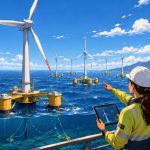
Floating offshore wind is especially important because it allows turbines to operate in deeper waters where fixed-bottom foundations are impractical.
Artificial intelligence and high-resolution weather forecasting can also improve output predictions, detect component problems, and coordinate turbines so that one machine creates less disruptive airflow for those behind it.
These improvements may increase energy production without requiring every gain to come from a larger turbine.
Hybrid Renewable Power Plants
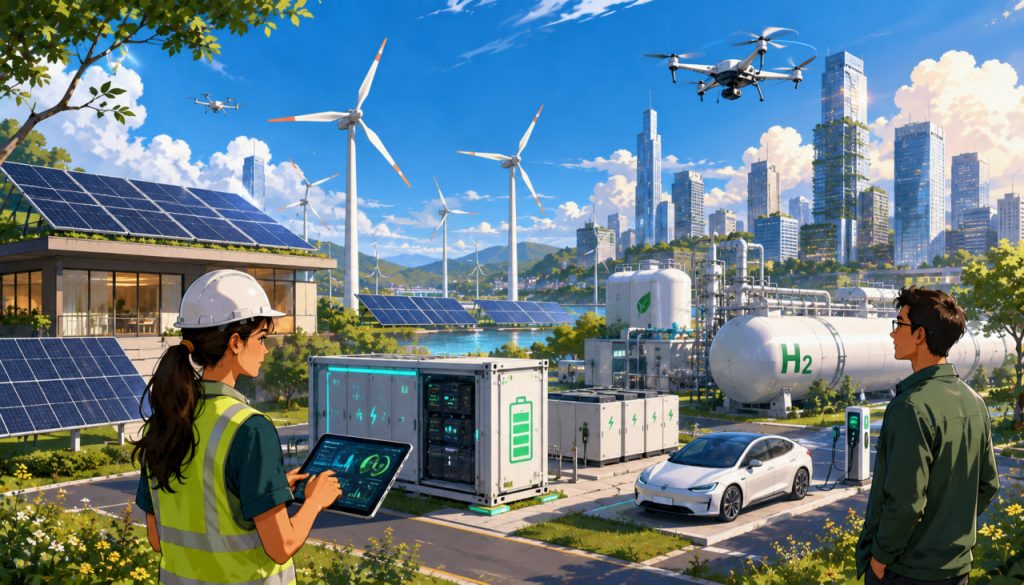
Renewable facilities are increasingly being designed as integrated systems rather than isolated technologies.
A hybrid project may combine:
- Solar panels
- Wind turbines
- Battery storage
- Green hydrogen production
- Intelligent energy management
Wind and solar can complement one another because they often generate at different times. Batteries smooth short-term fluctuations, while software decides whether electricity should be sold, stored, or used locally.
Distributed hybrid systems are also emerging for farms, rural communities, businesses, and remote sites. The Department of Energy has highlighted projects combining distributed wind, solar, and storage into customer-scale microgrids.
The next generation of renewable plants will behave less like individual machines and more like coordinated energy ecosystems.
Digital Grids and Virtual Power Plants
Producing renewable electricity is only part of the challenge. The grid must move that electricity to users at the correct moment.
Digital grid innovations include:
- Smart inverters
- Real-time sensors
- Automated substations
- Dynamic electricity pricing
- Advanced weather forecasting
- Demand-response systems
- AI-assisted grid management
- Virtual power plants
A virtual power plant coordinates thousands of distributed resources, including home batteries, electric vehicles, heat pumps, solar systems, and smart appliances. Together, they can behave like one flexible power station.
For example, software may briefly reduce selected loads during peak demand or discharge many small batteries simultaneously to support the grid.
This approach can increase reliability without requiring every problem to be solved by constructing a new conventional power plant.
Green Hydrogen Is Becoming More Selective
Renewable hydrogen is produced by using electricity to split water in an electrolyzer.
It has been proposed for transport, heating, electricity storage, fertilizers, steel, shipping fuels, and many industrial processes. However, producing, compressing, transporting, and converting hydrogen consumes considerable energy.
The emerging 2026 view is more selective: green hydrogen is most valuable where direct electrification is difficult.
Promising applications include:
- Fertilizer production
- Low-carbon steel
- Certain chemical processes
- Long-distance shipping fuels
- Seasonal energy storage in selected regions
The IEA’s Global Hydrogen Review 2026 tracks continuing developments in production, demand, infrastructure, trade, investment, and innovation.
Expert Perspective
The International Energy Agency’s Energy Technology Perspectives 2026 emphasizes that innovation must now move together with manufacturing, infrastructure, affordability, and supply-chain resilience. Falling costs have made solar, wind, batteries, and electric technologies increasingly competitive, but deployment still depends on grids, permitting, finance, and access to materials.
IRENA’s 2026 statistics also show that renewable expansion remains highly concentrated in solar and wind, while hydropower, bioenergy, and geothermal continue to grow more gradually.
The expert message is clear: the decisive innovation is not one spectacular invention, but the integration of generation, storage, grids, industry, and intelligent demand.
What Renewable Innovation Means for Everyday Life
The most important innovations may eventually become almost invisible.
Buildings may generate electricity through their roofs and windows. Cars may charge when renewable power is abundant. Home batteries and smart appliances may automatically support the grid. Industrial facilities may use geothermal heat, renewable hydrogen, or stored thermal energy.
By 2030, the IEA expects more than 400 GW of net renewable capacity to be added in the European Union alone, with solar providing about 70% of that growth between 2026 and 2030.
Renewable technology in 2026 is evolving from a collection of green devices into the foundation of a connected energy system.
Interesting Facts
- Solar is expected to provide nearly 80% of worldwide renewable capacity expansion from 2025 to 2030.
- Around 80% of global solar and wind generation already operates at lower levelized costs than coal or gas alternatives.
- Battery prices have fallen by approximately 75% over the past decade.
- Enhanced geothermal systems use advanced drilling methods to access heat beyond traditional geothermal regions.
- Floating wind turbines can operate in waters too deep for conventional seabed-mounted foundations.
- Virtual power plants combine thousands of small energy devices into one coordinated grid resource.
- Renewable capacity statistics for 2026 show continued global growth, although expansion remains uneven across technologies and regions.
Glossary
- Renewable Energy — Energy obtained from naturally replenishing sources such as sunlight, wind, water, biomass, and underground heat.
- Perovskite Solar Cell — A photovoltaic cell using a perovskite-structured light-absorbing material.
- Tandem Solar Cell — A solar cell with multiple layers designed to absorb different parts of the light spectrum.
- Long-Duration Energy Storage — Technology designed to store electricity for extended periods, often eight hours or longer.
- Enhanced Geothermal System — An engineered underground system that accesses geothermal heat where natural fluid flow is insufficient.
- Green Hydrogen — Hydrogen produced through water electrolysis powered by renewable electricity.
- Virtual Power Plant — A digitally coordinated network of distributed batteries, generators, vehicles, and controllable electricity loads.
- Smart Inverter — Power electronics that convert electricity while also helping regulate voltage, frequency, and grid stability.