
Global Climate Risk Index: Which Countries Are Most Vulnerable?
The Global Climate Risk Index (CRI) is an analytical tool that evaluates how countries are affected by extreme weather events such as storms, floods, heatwaves, and droughts.

The Global Climate Risk Index (CRI) is an analytical tool that evaluates how countries are affected by extreme weather events such as storms, floods, heatwaves, and droughts.

Climate change does not directly cause wars, but it can significantly increase pressure on already fragile regions.

Modern civilization stands at a crossroads. Technological advancement, industrial expansion, and rapid economic growth have delivered unprecedented prosperity, yet they have also intensified...
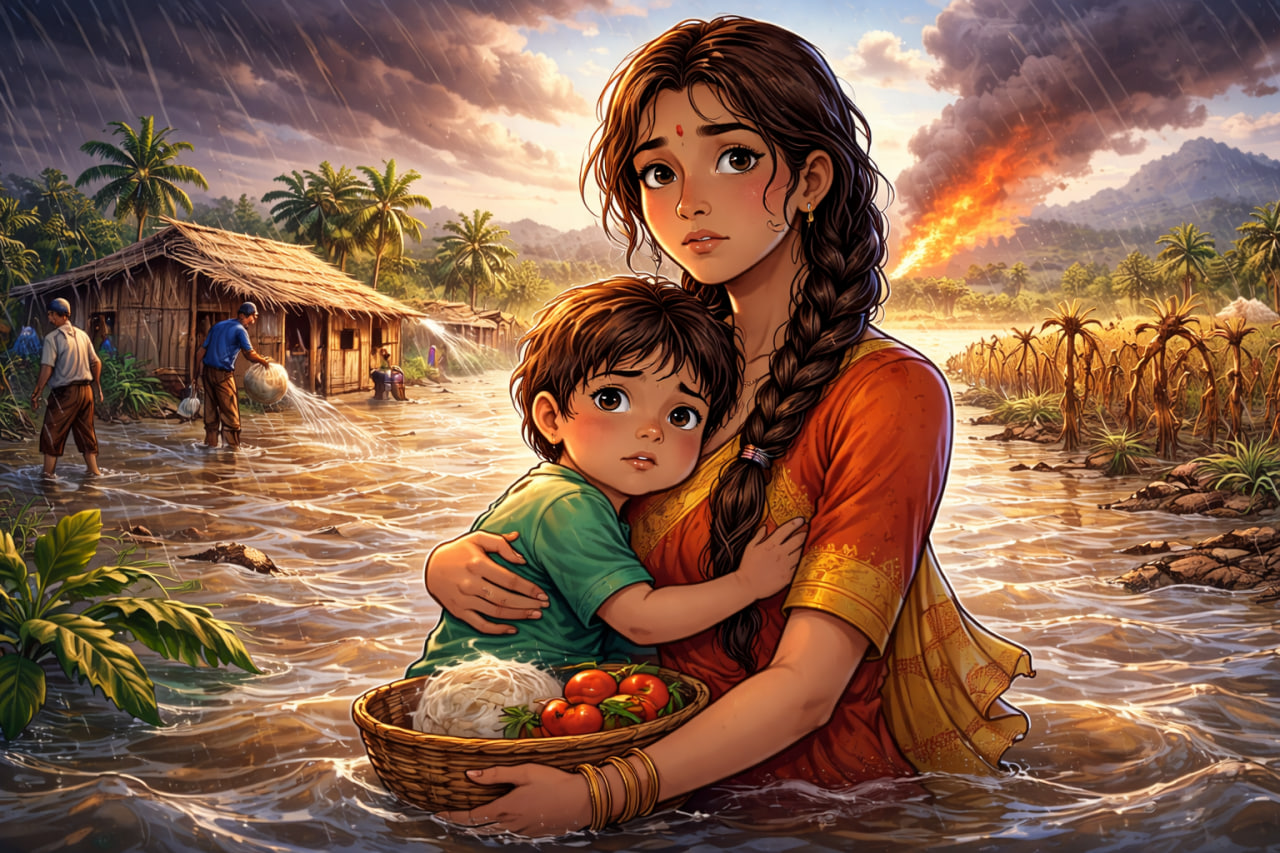
Climate change is a global phenomenon, but its consequences are distributed unevenly.

The term climate tipping point refers to a critical threshold in the Earth’s climate system beyond which changes become self-reinforcing and potentially irreversible on human timescales.

Climate change is one of the most widely studied scientific issues of the modern era, yet public opinion remains divided in some regions.

Climate change is no longer only an environmental issue — it is increasingly recognized as a public health challenge.

Plastic pollution has become one of the most visible environmental challenges of the 21st century.

Permafrost—ground that remains frozen for at least two consecutive years—covers vast regions of the Arctic, particularly in Canada and Siberia.

Climate refugees are individuals and communities forced to leave their homes due to environmental changes linked to climate disruption.