
What to Do After a Natural Disaster: Essential Safety Steps and Recovery Tips
The earthquake has stopped, the storm has passed, or the floodwater is finally receding. Outside are blocked roads, dark houses, and distant sirens.

The earthquake has stopped, the storm has passed, or the floodwater is finally receding. Outside are blocked roads, dark houses, and distant sirens.

A warm afternoon turns strangely dark. Leaves begin to twist in a rising wind, distant clouds pile up like mountains, and suddenly a brilliant flash divides the horizon.

A beach can seem calm even as an underwater earthquake sends energy toward it from thousands of kilometers away.

A field develops a shallow dent; elsewhere, a road gives way and exposes a dark hole. To onlookers, the ground seems to swallow the landscape without warning.
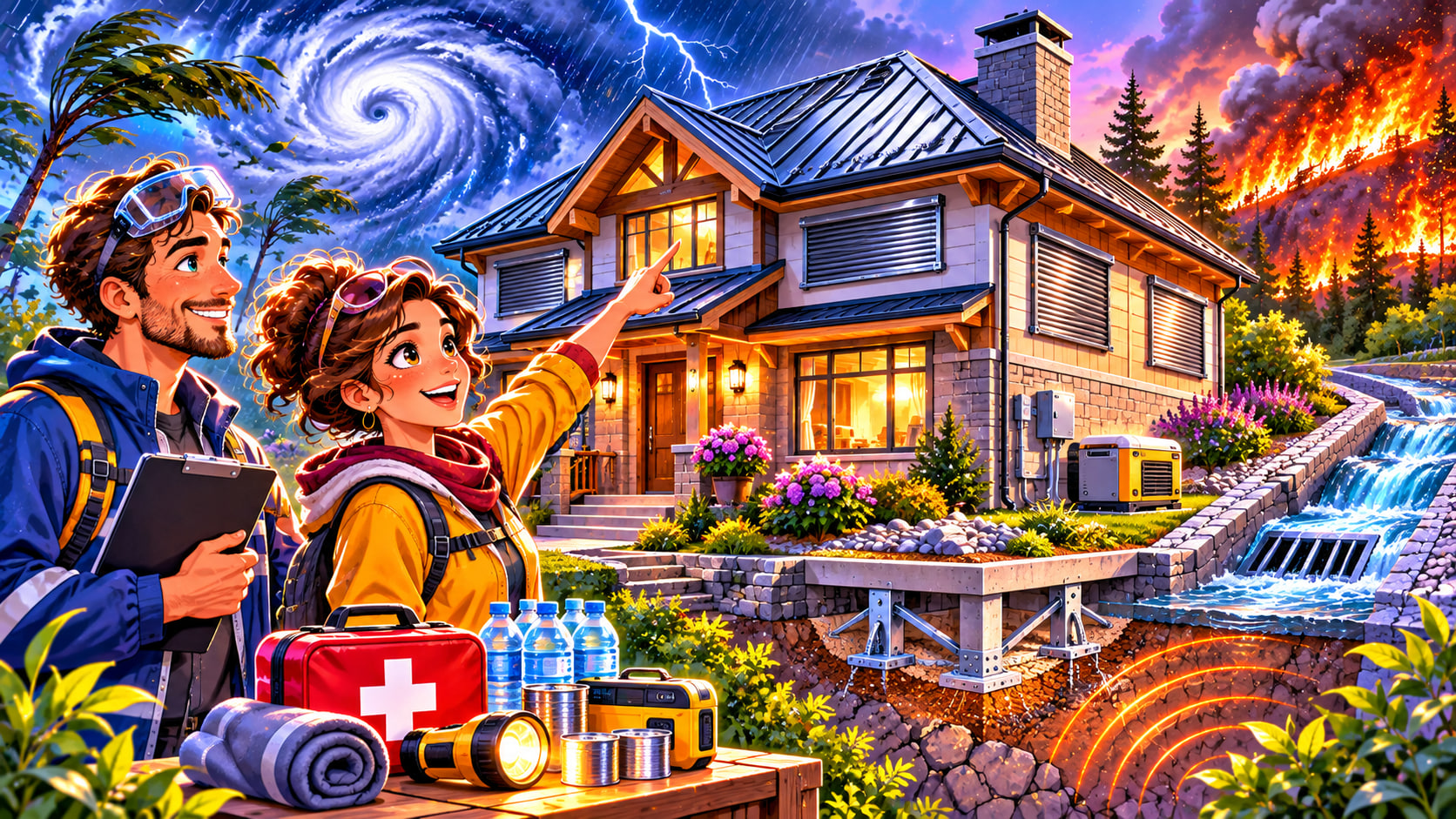
The storm arrives after midnight. Rain rattles the windows, and electricity flickers. By morning, neighboring houses may show very different damage.

Imagine walking through a beautiful forest when the trail suddenly disappears. Your phone has no signal, the temperature is dropping, and the sun is approaching the horizon.

The electricity disappears on a freezing winter evening. Radiators begin cooling, the refrigerator falls silent, and suddenly even charging a phone becomes a problem.

The sky darkens, the wind grows louder, and weather alerts begin appearing on your phone.

Imagine waking up every morning knowing that obtaining a single bucket of drinking water may require hours of walking.

The beach is only a few strokes away. Then something changes. You swim toward the sand, but the shoreline seems to drift farther away, as though an invisible conveyor belt has switched on...