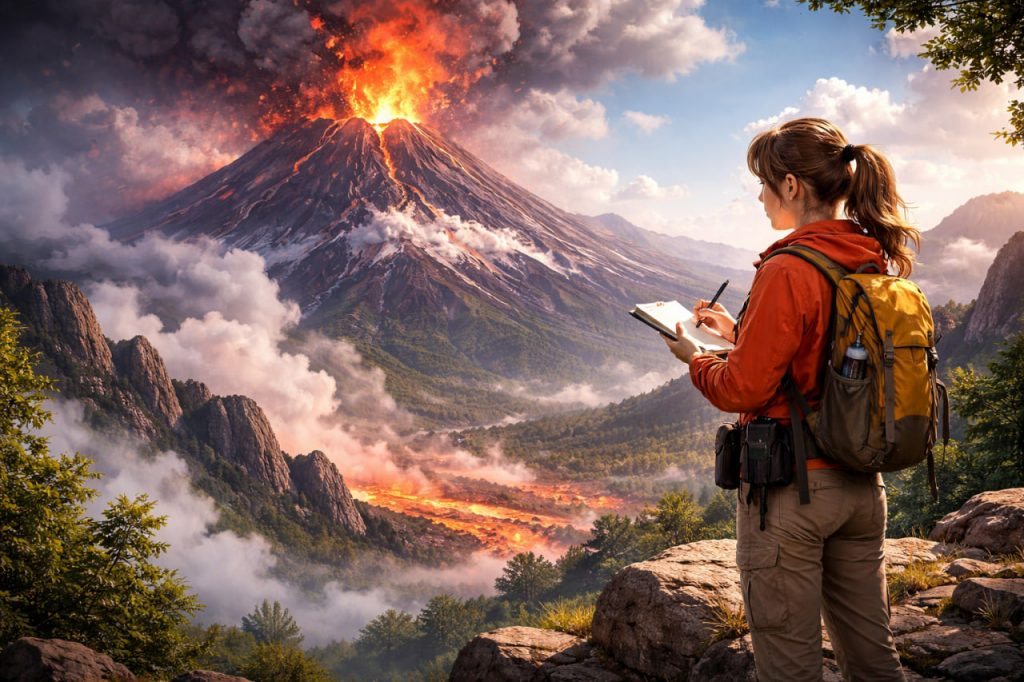
Stratovolcanoes are among the most impressive and potentially dangerous geological formations on Earth. Known for their towering shape and explosive eruptions, they play a major role in shaping landscapes and influencing natural processes. These volcanoes are built over thousands of years through repeated eruptions, creating layered structures of lava, ash, and volcanic debris. Understanding how stratovolcanoes form and behave helps scientists better predict volcanic activity and reduce risks.
What Is a Stratovolcano
A stratovolcano, also called a composite volcano, is formed by multiple layers of hardened lava and volcanic material. Unlike flatter volcanoes, stratovolcanoes have a steep, cone-shaped structure. This shape is created by alternating eruptions that produce both flowing lava and explosive ash clouds.
As experts explain:
“Stratovolcanoes are built through cycles of explosive and effusive eruptions, forming distinct layered structures.”
These layers give the volcano both its name and its characteristic appearance.
How Stratovolcanoes Form
Stratovolcanoes typically form at tectonic plate boundaries, especially in subduction zones where one plate moves beneath another. This process generates heat and pressure, causing magma to rise toward the surface. Over time, repeated eruptions build up the volcano’s height and structure.
The composition of magma plays a key role. Thick, viscous magma traps gases, which can lead to powerful and explosive eruptions when pressure is released.
Characteristics of Stratovolcanoes
Stratovolcanoes are known for several distinctive features. They often have steep slopes, a central crater, and layered deposits of different materials. Their eruptions can vary from relatively mild lava flows to highly explosive events that release ash, gas, and pyroclastic material.
Many well-known volcanoes fall into this category, making them a central focus of volcanic research.
Eruption Types and Risks
One of the defining features of stratovolcanoes is their potential for dangerous eruptions. These can include pyroclastic flows, ash clouds, and volcanic bombs. Such events can impact large areas and pose risks to nearby populations.
Monitoring systems help scientists track signs of activity, such as earthquakes, gas emissions, and ground deformation. Early detection is critical for reducing risk.
Famous Stratovolcanoes
Some of the most famous volcanoes in the world are stratovolcanoes. Examples include Mount Fuji in Japan, Mount Vesuvius in Italy, and Mount St. Helens in the United States. Each of these volcanoes has played a significant role in both geological history and human events.
The Role of Stratovolcanoes in Nature
Despite their dangers, stratovolcanoes also contribute positively to the environment. Volcanic eruptions can create fertile soils, supporting agriculture and ecosystems. Over time, volcanic regions often become rich in biodiversity.
A Balance of Power and Creation
Stratovolcanoes are a reminder of Earth’s dynamic nature. They represent both destruction and renewal, shaping landscapes while also supporting life. Studying them helps us better understand the planet and prepare for natural events.
Interesting Facts
- Stratovolcanoes are also called composite volcanoes.
- They are known for steep structures.
- Their eruptions can be highly explosive.
- Many famous volcanoes belong to this type.
- Volcanic ash can create fertile soil over time.
Glossary
- Stratovolcano — a volcano built from layers of lava and ash.
- Magma — molten rock beneath Earth’s surface.
- Crater — an opening at the top of a volcano.
- Pyroclastic Flow — a fast-moving flow of hot gas and volcanic material.
- Tectonic Plates — large sections of Earth’s crust that move over time.